“You really can’t rush a good steak,” my friend Mark grumbled one evening as we stared at the oven timer. We’d impulsively decided to cook ribeye steaks for dinner—nothing fancy, just meat and fire. But the usual sear-first method left us with a crust that was either too tough or an inside that was a gamble. Mark, ever the skeptic, rolled his eyes when I suggested trying the reverse sear technique. Honestly, I thought it sounded like one of those fancy chef tricks that only worked in pro kitchens. Yet, there we were, giving it a shot with a thick ribeye resting on the wire rack in the oven, while we waited anxiously for the next step.
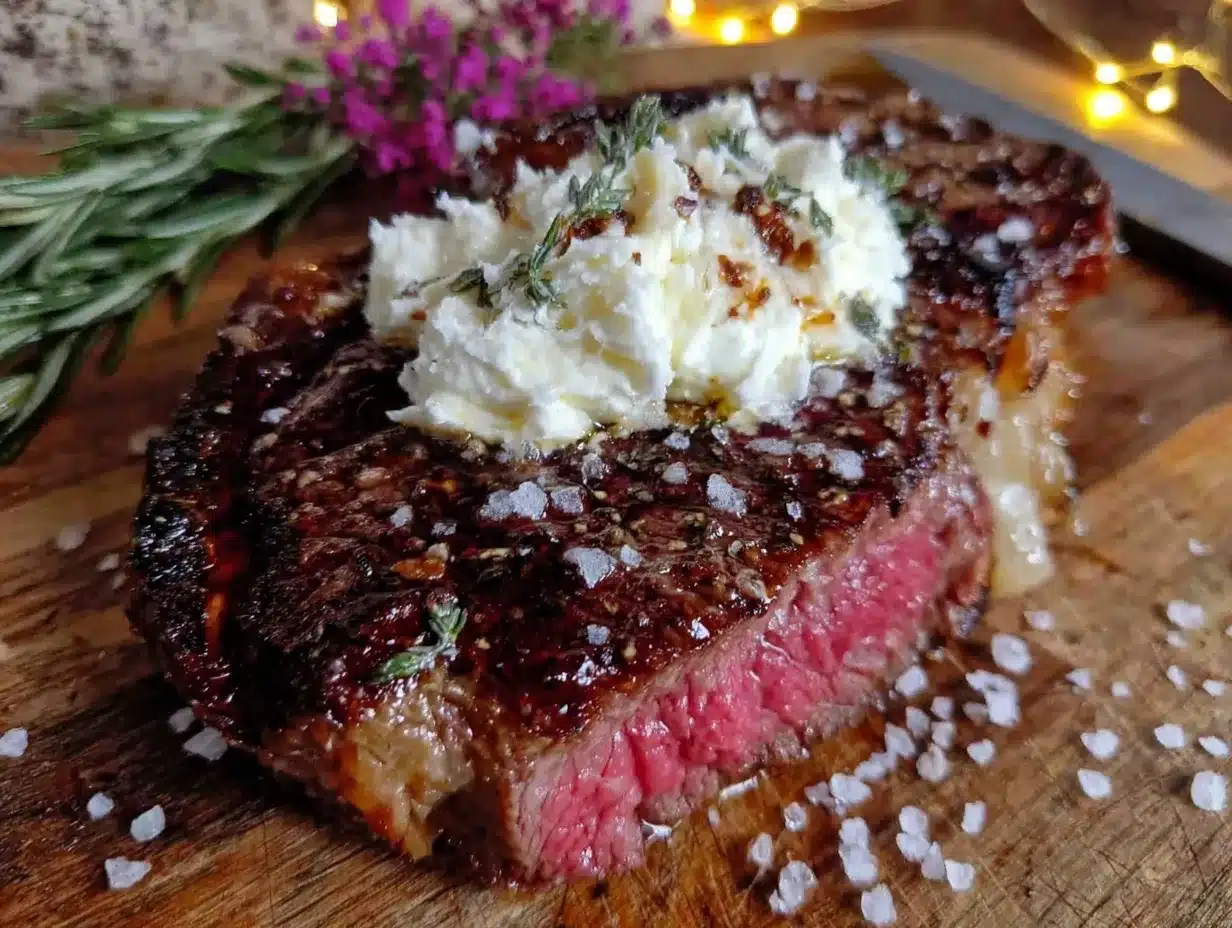
That night, when I slathered the steak with a rich garlic butter sauce and sliced into that perfectly cooked center—medium rare, pink, juicy—it was a quiet moment of triumph. The crust was crisp, the inside tender, and the garlic butter added a savory punch that made both of us pause mid-bite. It wasn’t just a steak; it was a reset from the usual, a reminder that sometimes patience pays off in the best way.
Since then, the perfect reverse seared ribeye steak with savory garlic butter has become my go-to when I want to impress with minimal stress. It’s the kind of recipe that sticks with you—not because it’s complicated, but because it’s reliably delicious every time. And honestly, that’s the kind of kitchen magic worth sharing.
Why You’ll Love This Recipe
Making the perfect reverse seared ribeye steak with savory garlic butter isn’t just about the end result—it’s about the journey and the little wins along the way. Here’s why this recipe stands out in my collection:
- Consistent perfection: The reverse sear method lets you gently bring the steak to the perfect temperature without the guesswork of overcooking the edges.
- Flavor-packed simplicity: No complicated marinades—just quality seasoning and that unforgettable garlic butter that melts over the steak like a dream.
- Great for all skill levels: Whether you’re a seasoned home cook or a “not really a baker” type who usually sticks to basics, this recipe has your back.
- Perfect for special dinners or casual nights: It’s fancy enough for guests but easy enough to enjoy solo or with family.
- Time-smart cooking: While the steak slowly cooks in the oven, you can prep sides or even a refreshing salad, like the fresh spring greens salad with strawberries and goat cheese, to balance the richness.
- Reliable technique: This isn’t just another seared steak recipe; it’s tested and tweaked to bring out the best texture and flavor every single time.
What makes this recipe really different is the way the garlic butter sauce complements the ribeye’s natural richness without overpowering it. The butter’s garlicky, slightly herbaceous notes soak into every bite, making it a comforting yet elevated experience. Plus, the crust forms crisp and beautiful—none of that burnt bitterness you sometimes get with high-heat sears. This steak recipe might just turn you into a believer, like it did for Mark and me.
What Ingredients You Will Need
This recipe keeps things straightforward, relying on quality ingredients that work together to create bold flavor and a perfectly tender texture. You probably have most of these in your kitchen already.
- Ribeye steak – 1.5 to 2 inches thick (about 12-16 oz / 340-450g). Pick a well-marbled cut for juicy, tender results. I like USDA Choice for good balance of quality and price.
- Salt – coarse kosher salt works best for seasoning and creating that crust.
- Freshly ground black pepper – to taste, added after the initial salt seasoning.
- Unsalted butter – 4 tablespoons (about 60g), softened. For the garlic butter sauce, quality matters—try Kerrygold or Plugrá for richness.
- Garlic cloves – 3 large, minced finely to release maximum flavor.
- Fresh herbs – 1 teaspoon each of chopped rosemary and thyme (optional, but highly recommended for that savory depth).
- Olive oil – 1 tablespoon, for searing. Use extra virgin for flavor, but refined olive oil tolerates heat better.
- Lemon juice – 1 teaspoon, freshly squeezed to brighten the garlic butter (optional).
For substitutions, if you don’t have fresh herbs, dried rosemary and thyme (about ½ teaspoon each) can do in a pinch. Plus, if dairy is an issue, swap butter with a vegan margarine that handles heat well. The ribeye cut is essential here—other steaks like New York strip can work, but ribeye’s marbling makes the difference.
Equipment Needed
- Oven-safe wire rack and baking sheet – to allow even air circulation around the steak during the slow cook.
- Meat thermometer – a must-have for perfect doneness; a digital instant-read thermometer is best for accuracy.
- Cast iron skillet or heavy-duty frying pan – for that final sear that locks in flavor and creates the crust.
- Spoon and small bowl – to mix and melt the garlic butter sauce.
- Tongs – for flipping the steak without piercing it and losing juices.
If you don’t have a wire rack, you can improvise by placing the steak on a rack of vegetables or foil balls to keep it off the pan. I remember once rushing without a thermometer and ended up with a steak closer to medium-well than medium-rare—lesson learned! Investing in a good thermometer changed my steak game completely.
Preparation Method
- Preheat your oven to 250°F (120°C). This low and slow start is key to the reverse sear method, gently bringing the steak to temperature.
- Season the ribeye generously with coarse kosher salt on all sides. Let it rest at room temperature for about 30 minutes to allow the salt to penetrate and the steak to come closer to room temp.
- Place the steak on a wire rack set over a baking sheet to catch drippings. Insert a meat thermometer probe into the thickest part of the steak.
- Slow roast in the oven until the internal temperature reaches 120°F (49°C) for medium-rare, about 45-60 minutes depending on thickness. This step ensures even cooking edge to edge.
- While the steak is roasting, prepare the garlic butter: In a small pan, melt the unsalted butter over low heat. Add minced garlic and cook gently until fragrant but not browned, about 2 minutes. Stir in chopped rosemary and thyme, and a squeeze of lemon juice if using. Keep warm on very low heat.
- Remove the steak from the oven and pat dry with paper towels—this helps the sear develop a crust.
- Heat your cast iron skillet over high heat until smoking hot. Add olive oil and swirl to coat.
- Sear the steak for 1-2 minutes on each side, flipping carefully with tongs, until a deep brown crust forms. Don’t forget to sear the edges for 30 seconds each.
- In the last minute of searing, spoon the warm garlic butter over the steak repeatedly to baste it, infusing flavor and richness.
- Remove steak from pan and let it rest for 5-10 minutes before slicing. Resting lets the juices redistribute, keeping the steak juicy.
- Slice against the grain and serve with the garlic butter spooned generously on top.
During roasting, if you notice the temperature rising too quickly, lower the oven slightly. The key is patience here to avoid overcooking. The crust should be deeply browned but not blackened—if it burns, reduce pan heat next time. When basting the garlic butter, the aroma fills the kitchen—it’s honestly hard to wait for that rest time before digging in.
Cooking Tips & Techniques
Reverse searing might seem like extra work, but it’s a game-changer once you get the hang of it. Here are some tips I’ve picked up after a few too many steaks gone wrong:
- Don’t skip seasoning early: Salting the steak at least 30 minutes before cooking helps draw out moisture and then reabsorb it, making the meat juicier and the crust better.
- Use a reliable meat thermometer: Guessing steak doneness is tempting, but the thermometer takes the stress out of it. Aim for 120°F (49°C) in the oven for medium-rare, knowing it will rise slightly while searing and resting.
- Pat the steak dry before searing: Moisture on the surface steams the meat instead of browning it, so paper towel it well.
- Don’t move the steak too much in the pan: Let the crust form without fussing—flip only once or twice.
- Rest the steak: This is non-negotiable. Cutting too soon lets all those lovely juices run out.
Once, I tried skipping the rest step because I was starving—the steak was dry and disappointing. Learned my lesson the hard way! Also, multitasking during the oven phase is handy. You can prep a side of garlic butter grilled ribeye steak sides or a fresh salad while the steak slowly cooks.
Variations & Adaptations
This reverse seared ribeye recipe is wonderfully flexible. Here are some ways to customize it:
- Herb variations: Swap rosemary and thyme for sage or tarragon depending on your mood or pantry. I once tried adding a pinch of smoked paprika to the garlic butter for a subtle smoky note.
- Dietary swaps: For dairy-free, replace butter with coconut oil or vegan butter spreads. The garlic flavor still shines through.
- Cooking methods: If you don’t want to use the oven, try sous vide to achieve that perfect internal temp before searing, though it requires extra equipment.
- Spice it up: Add chili flakes or cracked pink peppercorns to the seasoning mix for a bit of heat and complexity.
Personally, I’ve tried a version with browned shallots folded into the garlic butter, which adds a sweet depth that pairs beautifully with the ribeye’s richness. When grilling, reverse sear still works great—start indirectly to cook through, then finish over high direct heat for the crust.
Serving & Storage Suggestions
Serve your perfect reverse seared ribeye steak immediately after resting, ideally warm but not hot. Slice it thin against the grain to maximize tenderness. That garlic butter sauce on top? Don’t be shy—more is more here.
Pair the steak with simple sides like roasted vegetables, creamy mashed potatoes, or a crisp salad. For something fresh and light, the fresh watermelon cucumber gazpacho contrasts nicely with the steak’s richness. A full-bodied red wine or a dark beer complements the flavors beautifully.
Leftovers keep well in the fridge wrapped tightly for up to 3 days. Reheat gently in a skillet over medium-low heat with a dab of butter to avoid drying out. The garlic butter sauce can be refreshed by warming gently as well. Flavors tend to deepen after a day, making the next meal just as satisfying.
Nutritional Information & Benefits
A 12-ounce (340g) ribeye steak typically contains around 800-900 calories, with roughly 60 grams of protein and 65 grams of fat, mostly from the marbling that gives it that juicy flavor. The garlic and herbs provide antioxidants and anti-inflammatory compounds, while butter adds richness and fat-soluble vitamins.
This recipe can fit into a low-carb or keto lifestyle perfectly, thanks to its high protein and fat content with virtually zero carbs. For gluten-free diets, it’s naturally safe as long as you check any seasoning blends used. Just be mindful of the butter if lactose sensitivity is an issue—there are good substitutes available.
From a wellness perspective, ribeye offers iron and B vitamins crucial for energy, while garlic may support heart health. I appreciate this recipe because it balances indulgence with simple, whole ingredients—something you can enjoy without guilt or fuss.
Conclusion
The perfect reverse seared ribeye steak with savory garlic butter is one of those recipes that keeps me coming back, no matter how many variations I try. It’s a blend of patience, technique, and straightforward ingredients that rewards you with a steakhouse-worthy experience in your own kitchen. I love how the garlic butter sauce adds that extra layer of comfort and flavor, making every bite feel like a little celebration.
Feel free to tweak the herbs, butter, or seasoning to your liking—it’s your kitchen, after all! And if you find yourself craving something to round out the meal, a light, refreshing side like the fresh grilled watermelon with balsamic glaze brings a juicy, sweet contrast that’s surprisingly perfect with steak.
Give this recipe a try, and let me know how it changes your steak game. Your perfect ribeye night awaits!
FAQs
- What is reverse searing, and why is it better for ribeye?
Reverse searing means cooking the steak slowly at low heat first, then searing high heat last. This ensures even doneness edge-to-edge and a beautiful crust without overcooking. - Can I use this method for other steak cuts?
Yes! It works well for thick cuts like New York strip, filet mignon, or even thicker T-bones. - How do I know when the steak is done?
Use a digital meat thermometer; for medium-rare, pull at 120°F (49°C) since it will rise during searing and resting. - Can I prepare the garlic butter in advance?
Absolutely! Mix and keep it refrigerated. Warm gently before basting the steak. - What sides pair best with this steak?
Roasted veggies, creamy mashed potatoes, light salads like the fresh spring greens salad with strawberries and goat cheese, or even grilled fruits add great balance.
Pin This Recipe!
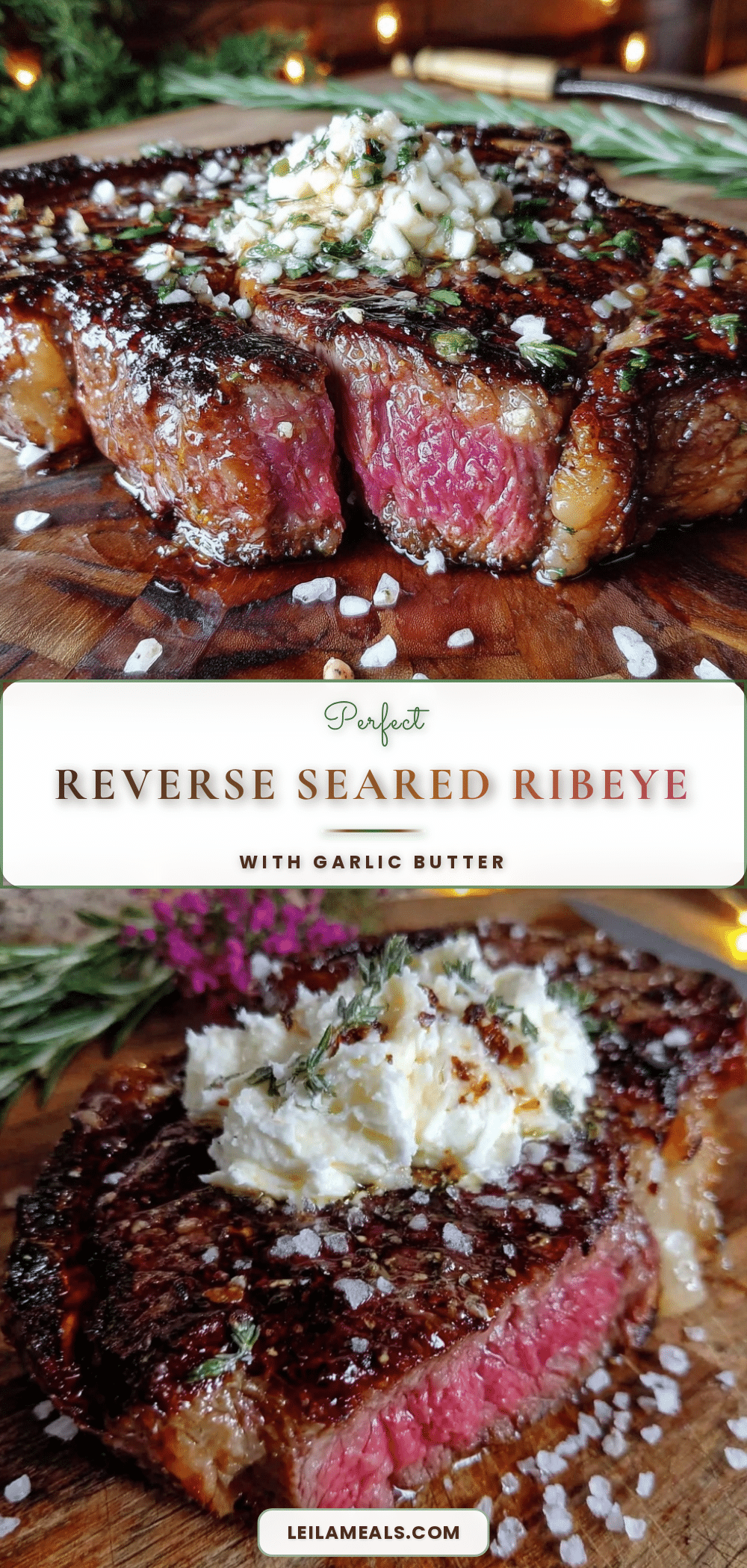
Perfect Reverse Seared Ribeye Steak Recipe with Easy Garlic Butter Sauce
This recipe uses the reverse sear method to cook a ribeye steak to perfect medium-rare with a crisp crust, complemented by a rich garlic butter sauce for a flavorful and tender steakhouse experience at home.
- Prep Time: 35 minutes
- Cook Time: 45-60 minutes
- Total Time: 1 hour 20-25 minutes
- Yield: 1 steak (serves 1-2) 1x
- Category: Main Course
- Cuisine: American
Ingredients
- 1 ribeye steak, 1.5 to 2 inches thick (12–16 oz / 340-450g), well-marbled
- Coarse kosher salt, to season generously
- Freshly ground black pepper, to taste
- 4 tablespoons (about 60g) unsalted butter, softened
- 3 large garlic cloves, minced finely
- 1 teaspoon chopped fresh rosemary (optional)
- 1 teaspoon chopped fresh thyme (optional)
- 1 tablespoon olive oil (extra virgin or refined)
- 1 teaspoon freshly squeezed lemon juice (optional)
Instructions
- Preheat your oven to 250°F (120°C).
- Season the ribeye generously with coarse kosher salt on all sides. Let it rest at room temperature for about 30 minutes.
- Place the steak on a wire rack set over a baking sheet. Insert a meat thermometer probe into the thickest part of the steak.
- Slow roast in the oven until the internal temperature reaches 120°F (49°C) for medium-rare, about 45-60 minutes depending on thickness.
- While the steak is roasting, prepare the garlic butter: melt the unsalted butter over low heat in a small pan. Add minced garlic and cook gently until fragrant, about 2 minutes. Stir in chopped rosemary, thyme, and lemon juice if using. Keep warm on very low heat.
- Remove the steak from the oven and pat dry with paper towels.
- Heat a cast iron skillet over high heat until smoking hot. Add olive oil and swirl to coat.
- Sear the steak for 1-2 minutes on each side, flipping carefully with tongs, until a deep brown crust forms. Sear the edges for 30 seconds each.
- In the last minute of searing, spoon the warm garlic butter over the steak repeatedly to baste it.
- Remove the steak from the pan and let it rest for 5-10 minutes before slicing.
- Slice against the grain and serve with the garlic butter spooned generously on top.
Notes
Use a reliable meat thermometer to avoid overcooking. Pat steak dry before searing to ensure a good crust. Rest steak after cooking to keep it juicy. If you don’t have fresh herbs, dried rosemary and thyme can be used. Butter can be substituted with vegan margarine or coconut oil for dairy-free options. Adjust oven temperature if steak cooks too quickly. Avoid moving steak too much during searing.
Nutrition
- Serving Size: 1 steak (12-16 oz)
- Calories: 850
- Sodium: 600
- Fat: 65
- Saturated Fat: 28
- Carbohydrates: 1
- Protein: 60
Keywords: reverse sear, ribeye steak, garlic butter sauce, steak recipe, medium rare steak, cast iron skillet, oven steak, easy steak recipe