I want honey roasted root vegetables right now. I have everything except the patience to peel a mountain of parsnips, which is honestly the only thing standing between me and a sheet pan full of caramelized, salty-sweet fall goodness. It’s one of those weekday afternoons where the kitchen is cold, the light is fading, and I need something that feels like a hug but takes almost no brain power. Root vegetables are the answer—they always are this time of year. They’re humble, they’re cheap, and when you hit them with a little honey and high heat, they turn into something that makes you forget you’re eating vegetables at all.
I remember the first time I made this medley. I had a sad-looking sweet potato, a couple of carrots that were starting to go limp, and a beet I bought on a whim. I tossed them in oil, drizzled some honey (maybe too much), and crossed my fingers. Twenty-five minutes later, I was picking burnt honey bits off the pan and swearing I’d never do it again. But the bits that weren’t burnt? They were incredible. That’s the thing about this recipe—it’s forgiving. You learn as you go. And now, after probably thirty batches, I’ve got it down to a science. No burnt honey, no sad textures, just perfectly roasted vegetables that taste like they took way more effort than they did.
This honey roasted root vegetable medley has become my go-to for everything. Busy weeknights when I need a hands-off side. Holiday dinners when I want something that looks impressive without stealing the show. Even meal prep, because these reheat shockingly well. It’s one of those recipes you don’t think about much until you taste it, and then you wonder why you don’t make it every single week. So let me show you exactly how I do it—no fuss, no burnt pans, just really good vegetables.
Why You’ll Love This Recipe
This isn’t just another roasted vegetable recipe. I’ve tested this one more times than I care to admit, and here’s why it keeps winning.
- Quick & Easy : From cutting board to oven in under 15 minutes. The oven does the rest of the work while you focus on the main dish.
- Simple Ingredients : Carrots, parsnips, sweet potatoes, beets, and a few pantry staples. No weird specialty items that you’ll use once and forget about.
- Perfect for Fall Gatherings : This medley fits right in next to a creamy one-pot sausage and potato soup or a cozy slow cooker chicken and wild rice casserole. It’s the side dish that ties the whole meal together.
- Crowd-Pleaser : I’ve served this to picky kids, vegetable skeptics, and full-on herbivores. Everyone goes back for seconds. The honey does something magical to even the most stubborn beet.
- Unbelievably Delicious : The edges get crispy and caramelized. The insides stay tender and almost buttery. And that honey glaze? It’s not too sweet—it’s just right.
What makes this version different from all the others is the timing. I don’t toss everything together at once. Hearty vegetables like sweet potatoes and beets go in first. Softer vegetables like parsnips and carrots join later. It sounds like extra work, but it’s actually less work than ending up with mushy parsnips and undercooked beets. Trust me on this one.
This is the kind of side dish that makes you close your eyes after the first bite. It’s comfort food that happens to be healthy. It’s impressive enough for company but easy enough for a Tuesday. And honestly? It makes your whole kitchen smell like autumn.
What Ingredients You Will Need
This recipe uses simple, wholesome ingredients that come together to create something greater than the sum of their parts. Most of these are probably already in your kitchen or your local grocery store’s produce section.
- Sweet Potatoes (2 medium, peeled and cut into 1-inch cubes) — I prefer orange-fleshed sweet potatoes for their natural sweetness and creamy texture. They caramelize beautifully. Look for firm ones without soft spots.
- Carrots (4 medium, peeled and cut into 1-inch chunks) — Regular orange carrots work great. Rainbow carrots are fun if you want extra color, but they taste the same. I’ve used both and honestly can’t tell the difference once they’re roasted.
- Parsnips (3 medium, peeled and cut into 1-inch chunks) — These are the unsung heroes of root vegetable medleys. They have a subtle peppery sweetness that gets nutty when roasted. Don’t skip them if you can help it.
- Beets (2 medium, peeled and cut into 1-inch cubes) — I know beets are divisive, but roasting them with honey transforms them. They get jammy and sweet. If you really hate beets, you can substitute with turnips or just add extra sweet potatoes.
- Red Onion (1 medium, cut into 1-inch wedges) — The onion gets soft and sweet in the oven. It adds little pockets of savory flavor throughout the medley. Yellow onion works too, but red is prettier.
- Olive Oil (3 tablespoons) — Use a good-quality extra virgin olive oil. It helps everything caramelize and adds richness. Avocado oil works too if that’s what you have.
- Honey (2 tablespoons) — Local honey is my preference. It’s less processed and has more floral notes. Maple syrup works as a substitute, but it changes the flavor profile slightly.
- Fresh Thyme (4-5 sprigs, leaves removed) — Thyme and root vegetables are a match made in heaven. Dried thyme works in a pinch—use 1 teaspoon.
- Fresh Rosemary (2 sprigs, finely chopped) — Rosemary adds that earthy, piney note that screams fall. Dried rosemary works too, but use half the amount.
- Garlic (4 cloves, smashed) — Whole smashed cloves roast into sweet, buttery nuggets. Don’t chop them fine or they’ll burn.
- Salt (1 teaspoon, plus more to taste) — I use fine sea salt. Kosher salt works too—just use a bit more.
- Black Pepper (½ teaspoon, freshly ground) — Freshly ground pepper makes a difference here. Pre-ground is fine but less aromatic.
For the finishing touch, you’ll want a sprinkle of flaky sea salt (like Maldon) and maybe a few fresh herb leaves for color. It’s optional but makes the dish look restaurant-worthy.
One ingredient tip I’ve learned the hard way: don’t crowd the pan. If your vegetables are piled on top of each other, they’ll steam instead of roast. Use two sheet pans if you need to. Your patience will be rewarded with crispy edges and tender centers.
Equipment Needed
You don’t need a fancy kitchen to make this recipe work. Here’s what I use every single time.
- Large Sheet Pan (18×13 inches or similar) — A rimmed baking sheet is non-negotiable. The rim catches any honey glaze that drips off and prevents a sticky mess in your oven. I use a heavy-duty aluminum one from Nordic Ware. It’s held up for years.
- Chef’s Knife (8-inch) — You’ll be doing a fair amount of chopping. A sharp knife makes the job faster and safer. Dull knives are actually more dangerous—they slip.
- Cutting Board — Large enough to hold all your chopped vegetables without them falling off. Wood or plastic, doesn’t matter. Just make sure it’s stable.
- Vegetable Peeler — A good peeler saves time. I like the Y-shaped ones. They’re faster than the straight kind.
- Mixing Bowl (large) — For tossing everything together. You can also do this directly on the sheet pan, but a bowl ensures even coating.
- Measuring Spoons — For the honey and oil. Honey is sticky, so spray your spoon with a little cooking oil first—it slides right off.
- Parchment Paper or Silicone Baking Mat — Not strictly necessary, but it makes cleanup a breeze. The honey glaze can get sticky and hard to scrub off bare pans.
Budget-friendly tip: If you don’t have a silicone mat, parchment paper is cheap and works just as well. If you don’t have either, oil your pan generously. You’ll be fine.
Preparation Method
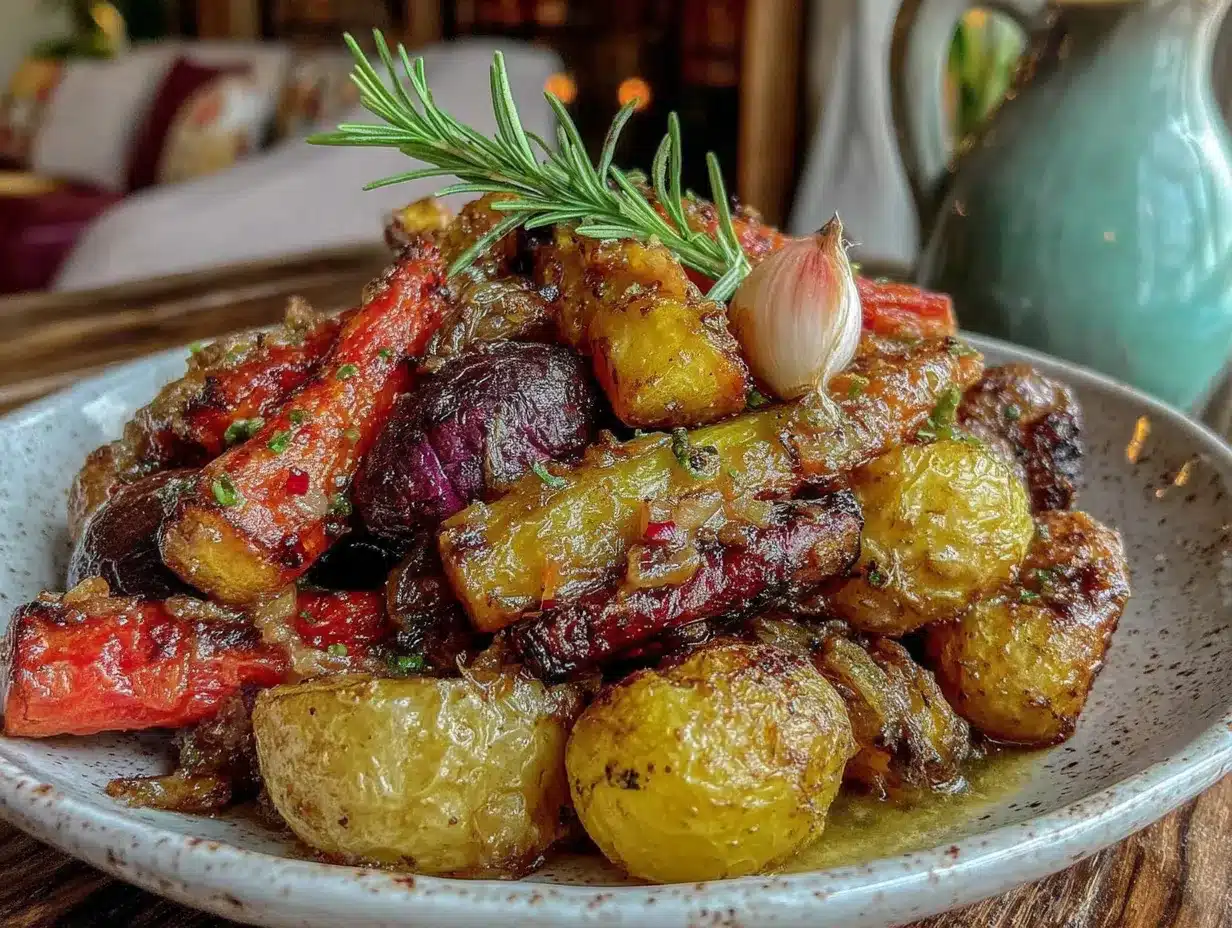
Let me walk you through this step by step. I’ll tell you exactly what to look for at each stage so you know you’re on the right track.
Step 1: Preheat your oven to 425°F (220°C). This is important. A hot oven is what gives you those caramelized edges. If your oven runs cool, bump it up to 435°F. Every oven is a little different.
Step 2: Prepare your vegetables. Peel the sweet potatoes, carrots, parsnips, and beets. Cut everything into roughly 1-inch cubes. Consistency matters here—similar-sized pieces cook at the same rate. I aim for pieces that are about the size of a thumb joint. The red onion gets cut into 1-inch wedges, not rings. Wedges hold their shape better.
Step 3: Separate the beets. Here’s a trick I learned after staining everything in my kitchen pink. Keep the beets in a separate bowl until the very end. Toss them with a little oil and a pinch of salt, then add them to the pan first. They need the most time to cook.
Step 4: Toss the remaining vegetables. In a large bowl, combine the sweet potatoes, carrots, parsnips, and red onion. Add the olive oil, honey, thyme leaves, chopped rosemary, smashed garlic, salt, and pepper. Toss well with your hands or a spatula. Make sure every piece is coated. The honey will be sticky—that’s fine.
Step 5: Arrange on the sheet pan. Spread the vegetables in a single layer on your prepared baking sheet. Don’t pile them up. If they’re crowded, they’ll steam and get soft instead of roasting and getting crispy. If your pan is too small, use two pans. Seriously—it makes a huge difference.
Step 6: Add the beets. Now add the beets to the pan, tucking them in among the other vegetables. They’ll bleed a little color, but that’s okay. It actually looks pretty.
Step 7: Roast for 20 minutes. Place the pan on the middle rack. Set a timer. Don’t open the oven door during this time—you’ll let out all the heat.
Step 8: Flip and rotate. After 20 minutes, remove the pan from the oven. Use a spatula to flip the vegetables. They should be starting to brown on the bottoms. If they’re still pale, give them another 5 minutes before flipping. Rotate the pan front to back for even cooking.
Step 9: Roast for another 15-20 minutes. Put the pan back in and roast until the vegetables are tender and caramelized. A fork should slide into the sweet potatoes and beets with little resistance. The edges should look dark and crispy in spots. Total roasting time is usually 35-40 minutes, but it depends on your oven and how big you cut your pieces.
Step 10: Finish and serve. Remove from the oven. Sprinkle with flaky sea salt and a few fresh thyme leaves. Let them rest on the pan for 2-3 minutes before serving. This lets the caramelization set.
One more thing—if you want extra crispy bits, turn on the broiler for the last 2-3 minutes. Watch it carefully. Honey burns fast under the broiler. I’ve ruined more than one batch by walking away for “just a second.”
Cooking Tips & Techniques
I’ve made every mistake in the book so you don’t have to. Here’s what I’ve learned.
Don’t skip the parsnips. I know they look like pale, sad carrots. But parsnips have a unique sweetness that blooms when roasted. They get almost nutty. If you can’t find them, substitute with celery root or extra carrots.
Cut even pieces. This is the single most important tip. If your sweet potato chunks are twice the size of your carrot chunks, one will be undercooked and the other will be mush. Take the extra 30 seconds to make them uniform.
Use two pans if needed. I cannot stress this enough. Overcrowding is the number one reason roasted vegetables turn out soggy. They need space to breathe. If your vegetables are touching each other on all sides, you have too many on one pan.
Don’t use too much honey. I know it’s tempting. More honey = more caramelization, right? Wrong. Too much honey makes the vegetables sticky and prone to burning. Stick to 2 tablespoons. You can always drizzle a little extra after roasting if you want more sweetness.
Roast at high heat. 425°F is the sweet spot. Lower temperatures won’t caramelize the sugars. Higher temperatures risk burning the honey. If your oven runs hot, check the vegetables at 30 minutes instead of 35.
Let them rest. I know you want to eat them immediately. But letting the vegetables sit on the pan for a few minutes after roasting allows the caramelized coating to firm up. They’ll be easier to serve and taste better.
One failure I’ll admit to: I once tried to make this with baby carrots and pre-cut sweet potato chunks from the grocery store. It was a disaster. The baby carrots were done in 15 minutes. The sweet potato chunks took 45. Never again. Fresh, whole vegetables cut by hand are worth the extra effort.
Variations & Adaptations
This recipe is endlessly adaptable. Here are some ways I’ve changed it up over the years.
Maple Balsamic Version : Swap the honey for maple syrup and add 1 tablespoon of balsamic vinegar to the oil mixture. The vinegar adds a tangy depth that balances the sweetness. This version is particularly good with roasted Brussels sprouts added to the mix.
Spicy Honey Version : Add ½ teaspoon of red pepper flakes or a drizzle of fiery habanero honey hot sauce to the oil mixture. The heat cuts through the sweetness and keeps things interesting. I made this for a potluck once and it disappeared first.
Herb Swap : Not a fan of thyme and rosemary? Try sage and oregano instead. Or go with dill and parsley for a brighter flavor. Each herb combination gives the dish a completely different personality.
Seasonal Additions : In the fall, add cubed butternut squash or acorn squash. In the spring, swap the sweet potatoes for new potatoes and add asparagus spears in the last 10 minutes of roasting. In the summer, zucchini and bell peppers work great—just add them later since they cook faster.
Allium Lovers : Add a few whole shallots or a head of garlic cut in half horizontally. Roasted garlic becomes sweet and spreadable. Squeeze the cloves out and mix them into the vegetables before serving.
I personally love the maple balsamic version. I make it every Thanksgiving now. It’s become my signature dish, which is funny because I started making it as a last-minute substitution when I forgot to buy marshmallows for sweet potato casserole.
Serving & Storage Suggestions
These honey roasted root vegetables are versatile enough to go with almost anything. Here’s how I serve and store them.
Serving Temperature : Serve them hot out of the oven for the best texture. The edges are crispiest right after roasting. They’re also good at room temperature—I’ve served them as part of a simple fall harvest charcuterie board with pears and honey and they fit right in.
Presentation : Transfer to a shallow serving platter. Sprinkle with fresh herbs and a pinch of flaky salt. A drizzle of extra honey right before serving makes them look glossy and inviting. Don’t serve them straight from the sheet pan unless you’re eating alone.
Pairings : These vegetables go beautifully with roast chicken, pork chops, grilled steak, or baked fish. They’re also fantastic alongside a hearty grain bowl with quinoa and tahini dressing. For a vegetarian meal, serve them with a creamy roasted tomato basil soup and crusty bread.
Storage : Cool completely, then transfer to an airtight container. They’ll keep in the refrigerator for up to 5 days. The texture softens over time, but the flavor gets even better as the honey and herbs meld together.
Reheating : The best way to reheat is in the oven or air fryer. Spread them on a baking sheet and heat at 375°F for 5-7 minutes. The microwave works in a pinch, but you’ll lose the crispy edges. If you’re meal prepping, I recommend reheating in a hot skillet with a tiny splash of oil.
Freezing : These freeze surprisingly well. Spread the cooled vegetables on a baking sheet and freeze until solid, then transfer to a freezer bag. They’ll keep for up to 3 months. Reheat from frozen in a 400°F oven for 10-12 minutes. The texture won’t be quite as good as fresh, but they’re still delicious.
One thing I’ve noticed: the flavors develop overnight. Day-old roasted vegetables taste even better than fresh ones. The honey soaks in, the herbs mellow, and everything gets more cohesive. I often make a double batch just so I have leftovers.
Nutritional Information & Benefits
This dish is packed with nutrients, which makes the indulgent honey glaze feel a little less guilty.
| Nutrient | Per Serving (approx. 1 cup) |
|---|---|
| Calories | 180-220 |
| Total Fat | 7-9g |
| Carbohydrates | 30-35g |
| Fiber | 5-7g |
| Sugar | 12-15g (naturally occurring + honey) |
| Protein | 3-4g |
| Vitamin A | 200%+ DV |
| Vitamin C | 15-20% DV |
| Potassium | 15-20% DV |
Health Benefits : Sweet potatoes are loaded with beta-carotene, which your body converts to vitamin A for healthy vision and immune function. Beets are rich in nitrates that support blood flow and may help lower blood pressure. Carrots and parsnips provide fiber for digestive health. The olive oil adds heart-healthy monounsaturated fats. Even the honey has antioxidants and antibacterial properties.
Dietary Considerations : This recipe is naturally gluten-free, dairy-free, and vegan (if you use maple syrup instead of honey). It’s also nut-free and soy-free. For a lower-carb version, reduce the sweet potatoes and add more cauliflower or turnips.
Potential Allergens : None of the common allergens are present in this recipe. However, if you’re serving someone with a honey allergy, swap in maple syrup or agave nectar.
I love that this dish feels indulgent but is actually really good for you. It’s one of those rare recipes where healthy and delicious aren’t competing with each other.
Frequently Asked Questions
Can I use frozen vegetables for this recipe?
I don’t recommend it. Frozen vegetables release a lot of water as they thaw, which prevents caramelization. You’ll end up with steamed, soggy vegetables instead of roasted ones. Fresh vegetables are worth the extra prep time here.
Why are my roasted vegetables always soggy?
Two main culprits: overcrowding the pan and not roasting at a high enough temperature. Make sure your vegetables are in a single layer with space between them. And don’t be afraid of high heat—425°F is ideal. If your oven runs cool, go up to 435°F.
Can I prepare the vegetables ahead of time?
Absolutely. You can peel and chop the vegetables up to 24 hours in advance. Store them in a covered bowl in the refrigerator. Toss them with the oil and honey just before roasting. If you toss them too early, the salt will draw out moisture and they won’t crisp up as nicely.
How do I prevent the honey from burning?
Keep an eye on your vegetables during the last 10 minutes of roasting. If they’re browning too quickly, cover the pan loosely with foil. Also, make sure you’re not using too much honey—2 tablespoons is plenty for a full sheet pan. Too much sugar equals burnt spots.
What other vegetables can I add to this medley?
So many options! Butternut squash, acorn squash, turnips, rutabaga, celery root, and Brussels sprouts all work beautifully. Just keep in mind that different vegetables have different cooking times. Add quicker-cooking vegetables like Brussels sprouts or zucchini in the last 15-20 minutes of roasting.
Conclusion
This honey roasted root vegetable medley is one of those recipes that proves simple ingredients can create something extraordinary. It’s the kind of dish that makes you look forward to fall—the crisp air, the cozy sweaters, the way your kitchen smells like thyme and honey and roasting vegetables. I’ve made this for holiday dinners, casual weeknight meals, and everything in between. It never disappoints.
I hope you give this recipe a try. Don’t be afraid to make it your own—swap in your favorite vegetables, adjust the herbs, play with the sweetness level. Cooking should be flexible and fun. And if you end up with a few burnt honey bits on your pan? That’s just part of the learning curve. I still do it sometimes too.
I’d love to hear how yours turns out. Leave a comment below and tell me about your version. Did you add something unexpected? Did you serve it with something amazing? Share your photos and tag me—I want to see your beautiful roasted vegetables. Happy cooking, friends!
Pin This Recipe!
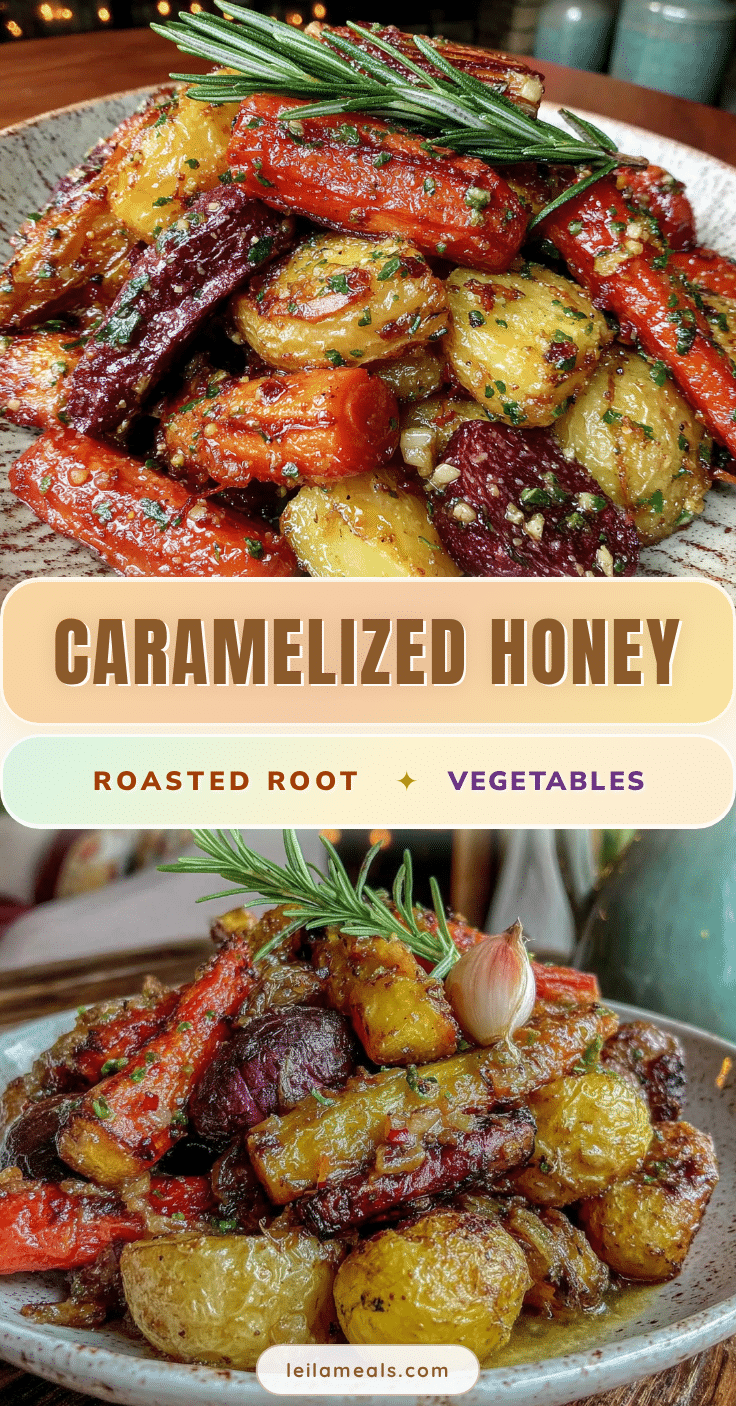
Honey Roasted Root Vegetable Medley (Easy Fall Side Dish)
A simple and forgiving side dish featuring caramelized sweet potatoes, carrots, parsnips, and beets tossed in a honey-thyme glaze. Perfect for busy weeknights or holiday dinners, this recipe delivers crispy edges and tender centers with minimal effort.
- Prep Time: 15 minutes
- Cook Time: 35-40 minutes
- Total Time: 50-55 minutes
- Yield: 4-6 servings 1x
- Category: Side Dish
- Cuisine: American
Ingredients
- 2 medium sweet potatoes, peeled and cut into 1-inch cubes
- 4 medium carrots, peeled and cut into 1-inch chunks
- 3 medium parsnips, peeled and cut into 1-inch chunks
- 2 medium beets, peeled and cut into 1-inch cubes
- 1 medium red onion, cut into 1-inch wedges
- 3 tablespoons olive oil
- 2 tablespoons honey
- 4–5 sprigs fresh thyme, leaves removed (or 1 teaspoon dried)
- 2 sprigs fresh rosemary, finely chopped (or 1 teaspoon dried)
- 4 cloves garlic, smashed
- 1 teaspoon fine sea salt, plus more to taste
- ½ teaspoon freshly ground black pepper
- Flaky sea salt (for finishing, optional)
- Fresh herb leaves (for garnish, optional)
Instructions
- Preheat your oven to 425°F (220°C).
- Peel the sweet potatoes, carrots, parsnips, and beets. Cut everything into roughly 1-inch cubes. Cut the red onion into 1-inch wedges.
- Keep the beets in a separate bowl. Toss them with a little oil and a pinch of salt, then set aside.
- In a large bowl, combine the sweet potatoes, carrots, parsnips, and red onion. Add the olive oil, honey, thyme leaves, chopped rosemary, smashed garlic, salt, and pepper. Toss well to coat evenly.
- Spread the vegetable mixture in a single layer on a large rimmed baking sheet (lined with parchment paper or a silicone mat for easy cleanup). Do not overcrowd; use two pans if needed.
- Tuck the reserved beets in among the other vegetables on the pan.
- Roast for 20 minutes on the middle rack. Do not open the oven door during this time.
- Remove the pan from the oven. Use a spatula to flip the vegetables. Rotate the pan front to back for even cooking.
- Return to the oven and roast for another 15-20 minutes, until the vegetables are tender and caramelized (a fork should slide into the sweet potatoes and beets with little resistance). Total roasting time is typically 35-40 minutes.
- Remove from the oven. Sprinkle with flaky sea salt and fresh thyme leaves if desired. Let rest on the pan for 2-3 minutes before serving.
Notes
For extra crispy bits, turn on the broiler for the last 2-3 minutes, watching carefully to prevent burning. Do not overcrowd the pan—use two pans if needed to ensure proper caramelization. The flavors develop overnight, making leftovers even better. For a vegan version, substitute honey with maple syrup.
Nutrition
- Serving Size: 1 cup
- Calories: 180220
- Sugar: 1215
- Sodium: 300400
- Fat: 79
- Saturated Fat: 12
- Carbohydrates: 3035
- Fiber: 57
- Protein: 34
Keywords: honey roasted root vegetables, fall side dish, roasted vegetables, honey glaze, easy vegetable recipe, sheet pan vegetables, healthy side dish, gluten-free, dairy-free, vegan option


