My neighbor Sam showed up at my back door holding a colander overflowing with Roma tomatoes, looking slightly panicked. His garden had gone rogue—three plants, apparently enough to feed a small army—and he needed them gone before the squirrels figured out what was happening. I took the colander, thanked him, and closed the door with about eight pounds of tomatoes I had absolutely no plan for. The counter filled up fast, and for a second I thought about just making a big pot of marinara. But it was one of those grey, drizzly afternoons where the air felt heavy, and what I really wanted was something warm and drinkable. Something that would fill the kitchen with that sweet, roasty smell that makes everything feel okay.
So I did what any reasonable person would do: I cranked the oven to 400°F, grabbed a couple of sheet pans, and started halving tomatoes. I tossed them with olive oil, salt, and a few smashed garlic cloves, then let the oven do the hard work. About forty minutes later, the tomatoes had collapsed into these jammy, caramelized little pucks of flavor. I blended them up with a handful of fresh basil from my own scraggly plant (it’s trying its best), a splash of cream, and a little chicken broth to loosen things up. The result was this deeply savory, slightly sweet, impossibly smooth creamy roasted tomato basil soup that made me forget I was supposed to be doing anything else that afternoon.
Honestly, I wasn’t planning on sharing this recipe. It felt like one of those happy accidents that only happens when you’re not trying. But I kept making it—once for lunch with a fresh caprese skewer on the side, again for a friend who was feeling under the weather, and then again because I couldn’t stop thinking about it. And every time, someone asked for the recipe. So here we are. This is the soup I didn’t know I needed, and now I’m pretty sure I’ll never go back to the canned stuff.
Why You’ll Love This Recipe
This isn’t just another tomato soup recipe. I’ve tested this thing more times than I care to admit (my family has strong opinions about soup consistency), and what I landed on is something special. The roasting step changes everything—it concentrates the tomato flavor and adds a subtle smokiness that you just can’t get from simmering on the stovetop. Trust me, I tried both ways.
- Deep, Complex Flavor: Roasting brings out the natural sweetness in tomatoes while adding a caramelized, almost nutty undertone. The basil adds freshness, and the cream ties it all together without making it heavy.
- Simple Ingredients: You probably already have most of these in your kitchen. No fancy truffle oil or imported cream—just good, honest ingredients that work together beautifully.
- Perfect for Meal Prep: This soup actually gets better after a day in the fridge. Make a big batch on Sunday, and you’ve got lunches sorted for the week.
- Freezer-Friendly: Portion it out, freeze it flat in bags, and you’ve got emergency comfort food ready to go whenever you need it.
- Comfort Food That Feels Good: It’s rich and satisfying, but it’s also packed with real vegetables and antioxidants. You can feel good about eating a big bowl of this.
What makes this version different from other tomato soups I’ve tried is the balance. Some recipes are too acidic, some are too sweet, and some are so creamy they feel more like a bisque than a soup you’d want for a casual lunch. This one hits that sweet spot—bright but mellow, creamy but not heavy, and so deeply tomato-forward that you can taste every single roasted tomato that went into it.
I’ve made this for sick friends, for lazy Sunday lunches, and even for a small dinner party where I served it in little mugs as a starter. Every single time, people go quiet for a second after that first spoonful. That’s the reaction you want.
What Ingredients You Will Need
This recipe uses simple, wholesome ingredients that come together to create something way more than the sum of their parts. Most of these are pantry staples, and the ones that aren’t are easy to find at any grocery store. Here’s what you’ll need and why each ingredient matters.
For the Roasted Tomatoes
- 3 pounds fresh Roma tomatoes, halved lengthwise (Romas are ideal because they’re meaty and less watery, but you can use any ripe tomato. If using heirlooms or beefsteaks, you might need to roast them a bit longer to cook off the extra moisture.)
- 4 cloves garlic, smashed (Don’t bother mincing them—they’ll soften during roasting and blend right in. Smashed cloves get sweeter and less pungent.)
- 3 tablespoons olive oil (Use a good-quality extra virgin olive oil here. It’s the main fat for roasting, and you’ll taste the difference.)
- 1 teaspoon kosher salt (I prefer Diamond Crystal for its clean flavor. If you’re using table salt, reduce to ¾ teaspoon.)
- ½ teaspoon black pepper, freshly ground
- 1 teaspoon dried oregano (Optional, but it adds a lovely herbal note that complements the basil.)
For the Soup Base
- 1 medium yellow onion, diced (About 1 cup. Yellow onions are perfect here—they’re sweet enough to balance the tomatoes but savory enough to add depth.)
- 2 tablespoons unsalted butter (I know olive oil is healthier, but butter adds a richness that really makes this soup sing. You can substitute with olive oil for a dairy-free version.)
- 2 cups low-sodium chicken or vegetable broth (I use chicken broth for a richer flavor, but vegetable broth works great and keeps this vegetarian. I like Better Than Bouillon for its concentrated flavor.)
- ½ cup heavy cream (Full-fat cream gives the best texture. For a lighter version, you can use half-and-half or full-fat coconut milk for a dairy-free option.)
- ¼ cup fresh basil leaves, packed, plus more for garnish (Fresh basil is non-negotiable here. Dried basil just doesn’t have the same bright, peppery flavor. I grow my own in a little pot on the windowsill, and it makes a huge difference.)
- 1 tablespoon tomato paste (This adds an extra layer of concentrated tomato flavor. It’s optional, but I highly recommend it.)
- 1 teaspoon sugar (Only if your tomatoes aren’t super sweet. A little sugar balances acidity without making the soup taste sweet.)
- Salt and pepper to taste
For Serving (Optional but Recommended)
- Fresh basil leaves
- Heavy cream or crème fraîche (for drizzling)
- Croutons or crusty bread (for dipping—this is mandatory in my house)
- Grated Parmesan cheese (adds a salty, umami finish)
Ingredient Selection Tips: Look for tomatoes that are deep red, firm but slightly yielding to pressure, and smell like a tomato should—earthy and sweet. If tomatoes are out of season, you can use canned whole San Marzano tomatoes (drained) and roast them the same way. The flavor won’t be quite as bright, but it’s still delicious. For the basil, avoid wilted or dark-spotted leaves. Fresh basil should smell fragrant and look vibrant green.
Equipment Needed
You don’t need a ton of fancy equipment for this soup, which is part of why I love it. Here’s what you’ll need:
- Large rimmed baking sheet (Half-sheet size is perfect. Rimmed is important—you don’t want tomato juices running off into your oven.)
- Parchment paper or silicone baking mat (Makes cleanup so much easier. I’m a big fan of Silpat mats for even roasting.)
- Large heavy-bottomed pot or Dutch oven (I use my 5.5-quart Le Creuset for this. The even heat distribution helps prevent scorching.)
- Immersion blender or countertop blender (An immersion blender is easier and creates less mess, but a regular blender works fine too. Just be careful with hot liquids—blend in batches and leave the lid slightly open to release steam.)
- Chef’s knife and cutting board
- Wooden spoon or silicone spatula
- Measuring cups and spoons
- Fine-mesh strainer (Optional, but it gives you an ultra-smooth soup if that’s your preference.)
Budget-Friendly Options: If you don’t have a Dutch oven, any heavy-bottomed pot will work. No immersion blender? Let the soup cool slightly, then blend it in batches in a regular blender. Just be sure to remove the center cap from the lid and cover it with a kitchen towel to let steam escape—otherwise, you’ll end up with tomato soup all over your ceiling (ask me how I know).
Preparation Method
This recipe comes together in about an hour, but most of that time is hands-off roasting. Here’s how to do it.
Step 1: Roast the Tomatoes
Preheat your oven to 400°F (200°C). Line a large rimmed baking sheet with parchment paper or a silicone mat. Arrange the halved tomatoes cut-side up on the sheet. Tuck the smashed garlic cloves in between the tomatoes. Drizzle everything with olive oil, then sprinkle with salt, pepper, and dried oregano if using. Roast for 35-45 minutes, until the tomatoes are soft, wrinkled, and starting to caramelize around the edges. The garlic should be golden and soft enough to squish with a fork. Let everything cool slightly on the baking sheet—about 5 minutes.
Step 2: Sauté the Onion
While the tomatoes are roasting, melt the butter in a large pot or Dutch oven over medium heat. Add the diced onion and cook, stirring occasionally, until soft and translucent—about 5-7 minutes. Don’t let it brown; you want sweet, gentle onion flavor, not caramelized. If the onion starts to stick, add a splash of broth.
Step 3: Combine and Simmer
Add the roasted tomatoes and garlic to the pot with the onions, scraping up any browned bits from the baking sheet (that’s pure flavor). Stir in the tomato paste and cook for 1 minute, until it darkens slightly. Pour in the chicken or vegetable broth, then bring the mixture to a gentle simmer. Let it cook for 10 minutes, stirring occasionally. The flavors need this time to get to know each other.
Step 4: Blend Until Smooth
Remove the pot from heat. Add the fresh basil leaves. Using an immersion blender, blend the soup until completely smooth. If you’re using a countertop blender, work in batches—fill the blender no more than halfway, hold the lid down with a kitchen towel, and blend on low speed to start. Be careful: hot liquids expand, and they will find a way to escape if you’re not cautious. Blend until velvety smooth.
Step 5: Finish with Cream
Return the blended soup to the pot (if you used a countertop blender). Stir in the heavy cream and sugar (if using). Taste and adjust seasoning with salt and pepper. If the soup seems too thick, add a splash more broth or water until it reaches your preferred consistency. I like mine thick enough to coat a spoon but thin enough to dip a grilled cheese sandwich into.
Step 6: Serve
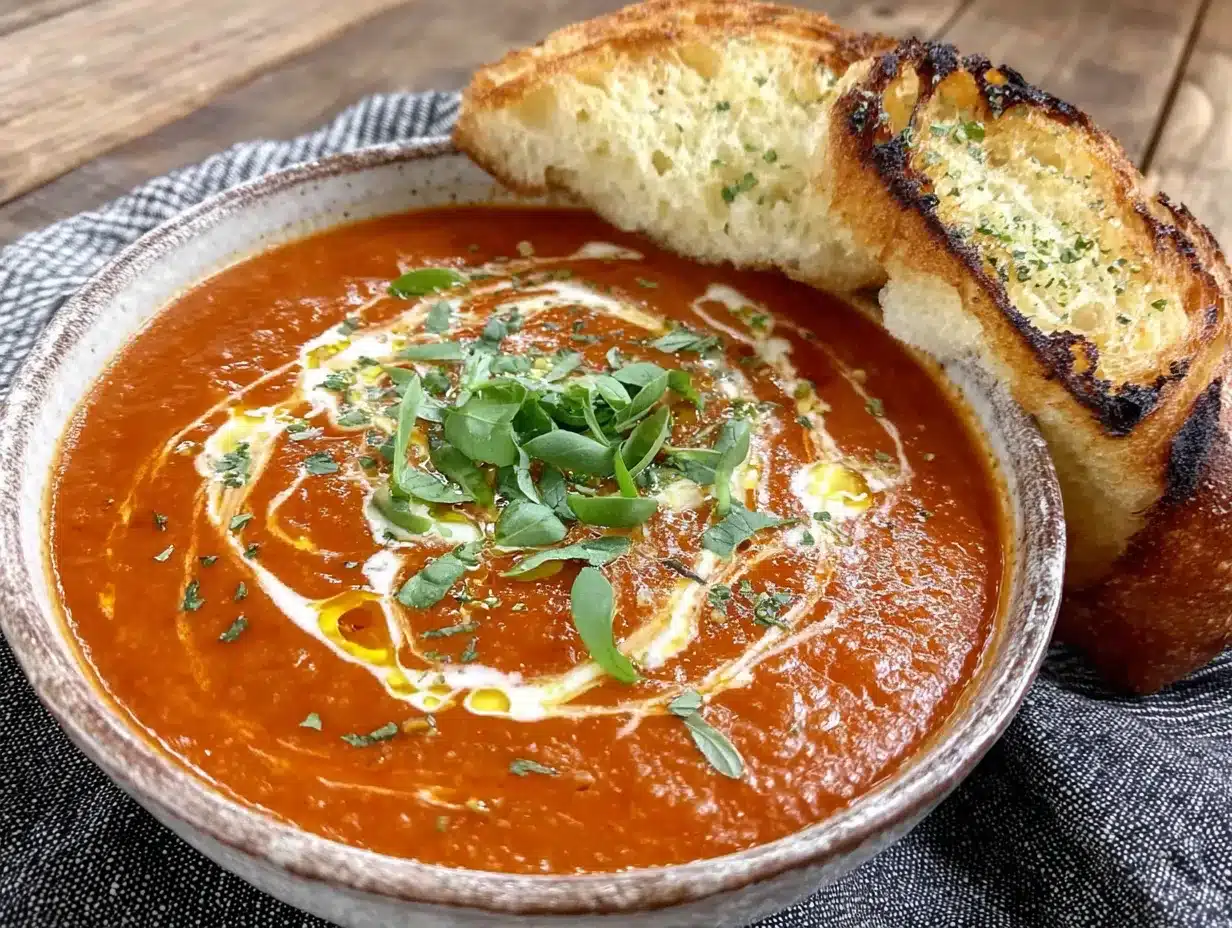
Ladle the soup into bowls. Garnish with a drizzle of cream or crème fraîche, a few fresh basil leaves, and a generous crack of black pepper. Serve immediately with crusty bread or a grilled peach caprese salad on the side for a complete meal.
Visual Cues: At every stage, trust your senses. The roasted tomatoes should look jammy and slightly shriveled, with deep brown edges. The soup should be a rich, brick-red color after blending. When you stir in the cream, it should turn a beautiful coral shade. If it looks too orange, add a little more tomato paste to deepen the color.
Cooking Tips & Techniques
I’ve made this soup probably two dozen times now, and I’ve learned a few things the hard way. Here are my best tips for getting it right every time.
Don’t skip the roasting step. I know it adds time, but it’s the single most important thing you can do for flavor. Roasting concentrates the natural sugars in the tomatoes and adds a complexity that stovetop simmering alone can’t achieve. I once tried to shortcut this by using canned tomatoes and simmering them with a little tomato paste, and the result was fine—but it wasn’t this. It was just tomato soup. The roasted version is something else entirely.
Use room-temperature cream. If you add cold cream to hot soup, it can curdle or separate. Take the cream out of the fridge when you start roasting the tomatoes, and by the time you’re ready to add it, it’ll be at room temperature. Same goes for the broth—if it’s cold from the fridge, warm it up slightly before adding it to the pot.
Blend carefully. Hot soup in a blender is one of the most dangerous things in a kitchen. I’ve had my share of soup explosions (including one memorable incident that involved my white kitchen ceiling), and I’ve learned that an immersion blender is genuinely safer and easier. If you must use a countertop blender, let the soup cool for 10-15 minutes first, blend in small batches, and always—always—remove the center cap from the lid and cover it with a folded towel.
Taste and adjust. Tomatoes vary wildly in sweetness and acidity depending on the season and variety. That’s why I always taste the soup before adding the cream and adjust the seasoning accordingly. If it’s too acidic, add a pinch of sugar. If it’s too flat, add more salt or a squeeze of lemon juice to brighten it up. Trust your palate.
Make it ahead of time. This soup actually improves after a day in the fridge. The flavors meld and deepen, and the texture becomes even smoother. I often make this the day before I plan to serve it, then reheat it gently over low heat, adding a splash of broth or water to loosen it up if needed.
Variations & Adaptations
One of the best things about this soup is how flexible it is. Here are a few ways to change it up depending on what you have on hand or what you’re craving.
Dairy-Free/Vegan Version: Substitute the butter with olive oil and use full-fat coconut milk instead of heavy cream. The coconut milk adds a subtle sweetness that pairs beautifully with the roasted tomatoes. I’ve made this version for friends with dairy sensitivities, and no one missed the cream.
Smoky Roasted Red Pepper Twist: Add 2 roasted red bell peppers (from a jar is fine) along with the roasted tomatoes before blending. The peppers add a smoky sweetness and a gorgeous deep orange color. This is my go-to variation in the winter when I want something extra cozy.
Spicy Version: Add ½ teaspoon of red pepper flakes or one small dried chipotle pepper (rehydrated) along with the tomatoes before roasting. The heat builds slowly and adds a wonderful warmth without overwhelming the tomato flavor. I like to serve this version with a dollop of sour cream to cool things down.
Herb Variations: Basil is classic, but you can experiment with other herbs. Thyme and rosemary both work beautifully with roasted tomatoes. Try adding a sprig of fresh thyme to the pot while the soup simmers, then remove it before blending. Or swap the basil entirely for fresh oregano or marjoram for a different flavor profile.
Roasted Vegetable Addition: Toss a couple of carrots, a celery stalk, or half a fennel bulb onto the baking sheet with the tomatoes. Roasted carrots add natural sweetness and a beautiful color. Roasted fennel adds a subtle licorice note that’s surprisingly good with tomatoes.
Grilled Cheese Dippers: This isn’t really a variation of the soup itself, but it’s the best way to serve it. Make a simple grilled cheese with sharp cheddar on sourdough, cut it into strips, and dunk away. It’s the ultimate comfort food combo.
Serving & Storage Suggestions
Serving Temperature: This soup is best served hot, straight from the pot. But I’ve also enjoyed it at room temperature on warm summer days, and it’s surprisingly good that way too—like a sophisticated gazpacho, but better.
Presentation Ideas: For a simple but elegant presentation, ladle the soup into shallow bowls, drizzle a swirl of cream or crème fraîche on top, and drag a toothpick through it to create a decorative pattern. Scatter a few small fresh basil leaves and a crack of black pepper over the top. Serve with a wedge of crusty bread or a grilled cheese sandwich cut into triangles.
What to Serve With It: A classic grilled cheese is the obvious choice, but this soup also pairs beautifully with a simple green salad dressed with lemon vinaigrette, or with mini caprese skewers for a light lunch. For a heartier meal, serve it alongside a roasted chicken or a simple pasta dish.
Storage Instructions: Let the soup cool completely, then transfer it to an airtight container. It will keep in the refrigerator for up to 5 days. The flavors actually improve after a day or two, so don’t be afraid to make it ahead.
Freezer Instructions: This soup freezes beautifully. Let it cool completely, then portion it into freezer-safe containers or zip-top bags. If using bags, lay them flat in the freezer for easy stacking. The soup will keep for up to 3 months. To thaw, transfer the container to the refrigerator overnight, or run the sealed bag under warm water until it releases from the container.
Reheating Instructions: Reheat the soup gently over medium-low heat on the stovetop, stirring occasionally. If it seems too thick after thawing, add a splash of broth or water to loosen it up. You can also reheat individual portions in the microwave—just use a microwave-safe bowl and heat in 30-second intervals, stirring between each.
Nutritional Information & Benefits
This soup is surprisingly nutritious for something that tastes so indulgent. Here’s the estimated nutritional breakdown per serving (based on 4 servings):
- Calories: 280
- Fat: 18g
- Carbohydrates: 24g
- Fiber: 5g
- Sugar: 12g
- Protein: 6g
- Sodium: 650mg
- Vitamin C: 45% of Daily Value
- Vitamin A: 35% of Daily Value
- Potassium: 20% of Daily Value
Health Benefits: Tomatoes are packed with lycopene, a powerful antioxidant that’s been linked to reduced risk of heart disease and certain cancers. The roasting process actually makes the lycopene more bioavailable, so your body can absorb it more easily. The basil adds vitamin K and anti-inflammatory compounds, while the garlic supports immune function. This soup is also relatively low in calories for how satisfying it is, making it a great option for weight management.
Dietary Considerations: This recipe is vegetarian and can easily be made vegan and dairy-free (see variations above). It’s also naturally gluten-free. If you’re watching your sodium intake, use low-sodium broth and go easy on the added salt.
Conclusion
This creamy roasted tomato basil soup has become a staple in my kitchen, and I have a feeling it will become one in yours too. It’s the kind of recipe that feels special enough to serve to guests but simple enough to make on a random Tuesday when you need a little comfort. The roasting step does all the heavy lifting, turning ordinary supermarket tomatoes into something deeply flavorful and satisfying.
I love that this soup is endlessly adaptable—you can make it dairy-free, add extra vegetables, or spice it up depending on your mood. But honestly, the original version is so good that I usually just stick with it. There’s something about that combination of sweet roasted tomatoes, fragrant basil, and a touch of cream that just works.
I’d love to hear how this turns out for you. Did you add your own twist? Serve it with something unexpected? Have a soup-explosion story of your own? Drop a comment below and let me know. And if you loved it, share it with a friend who needs a little comfort food in their life. Happy cooking!
Frequently Asked Questions
Can I use canned tomatoes instead of fresh?
Yes, you can. Use two 28-ounce cans of whole San Marzano tomatoes, drained. Roast them the same way you would fresh tomatoes, but reduce the roasting time to about 20-25 minutes since they’re already cooked. The flavor won’t be quite as bright as fresh, but it’s still delicious—especially in the winter when fresh tomatoes are out of season.
How do I make this soup extra smooth?
For an ultra-smooth texture, blend the soup in a high-speed blender (like a Vitamix) until it’s completely silky. If you want it even smoother, press the blended soup through a fine-mesh strainer using the back of a ladle. This removes any remaining tomato skins or seeds. It’s an extra step, but the result is restaurant-quality smooth.
Can I make this soup in a slow cooker?
Absolutely. Roast the tomatoes as directed, then transfer them to a slow cooker along with the sautéed onions, garlic, and broth. Cook on low for 4-6 hours or high for 2-3 hours. Blend, stir in the cream, and serve. The slow cooker version is great for busy days when you want dinner ready when you walk in the door.
What’s the best way to reheat leftover soup?
The best way is on the stovetop over medium-low heat, stirring occasionally. If the soup has thickened in the fridge, add a splash of broth or water to loosen it up. You can also reheat individual portions in the microwave—just use a microwave-safe bowl and heat in 30-second intervals, stirring between each. Avoid boiling the soup once the cream has been added, as it can cause the cream to separate.
Can I freeze this soup with the cream already added?
Yes, but the texture might change slightly. Cream-based soups can sometimes separate after freezing and thawing. To avoid this, you can freeze the soup without the cream, then stir in the cream when you reheat it. If you’ve already added the cream, don’t worry—just whisk the soup vigorously while reheating to bring it back together.
Pin This Recipe!
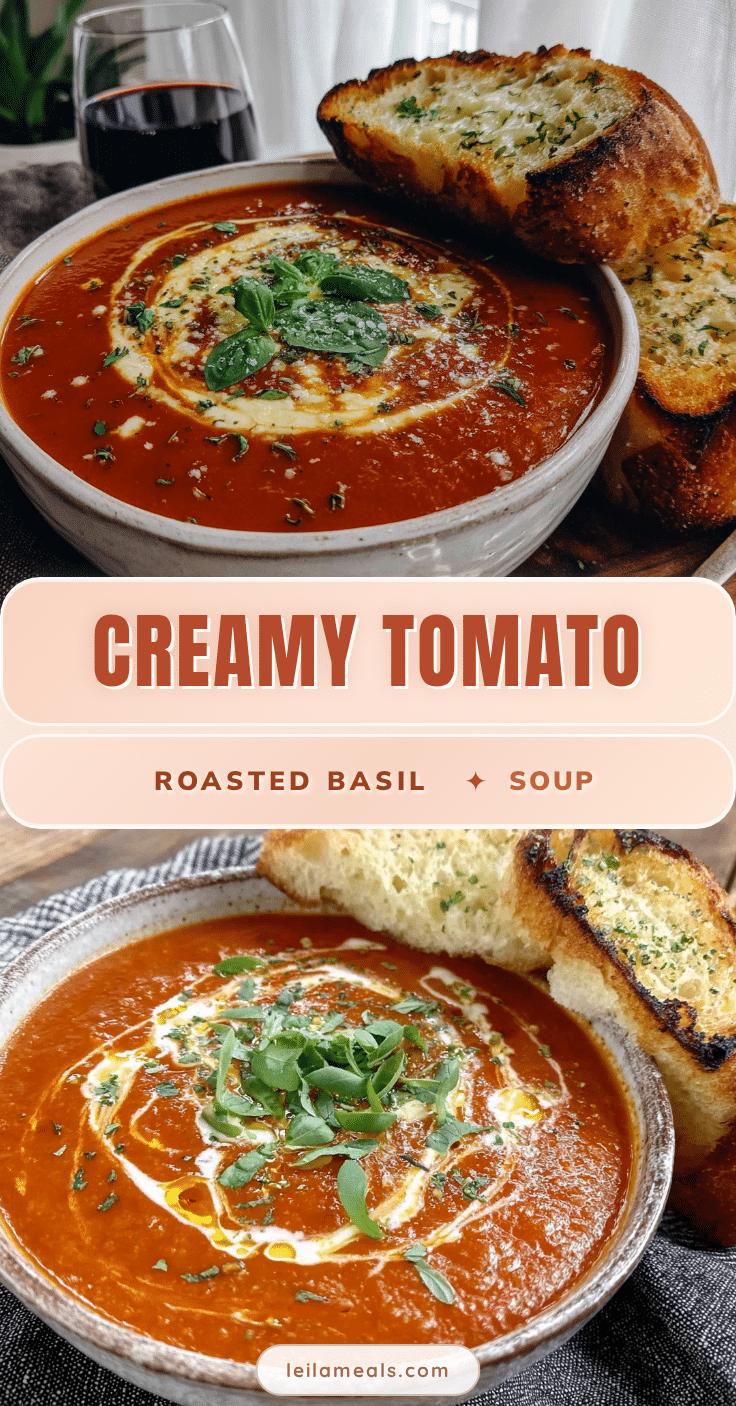
Creamy Roasted Tomato Basil Soup
A deeply savory, slightly sweet, and impossibly smooth tomato soup made with roasted Roma tomatoes, fresh basil, and a touch of cream. This comforting soup is perfect for meal prep and freezes beautifully.
- Prep Time: 15 minutes
- Cook Time: 45 minutes
- Total Time: 1 hour
- Yield: 4 servings 1x
- Category: Soup
- Cuisine: American
Ingredients
- 3 pounds fresh Roma tomatoes, halved lengthwise
- 4 cloves garlic, smashed
- 3 tablespoons olive oil
- 1 teaspoon kosher salt
- ½ teaspoon black pepper, freshly ground
- 1 teaspoon dried oregano (optional)
- 1 medium yellow onion, diced (about 1 cup)
- 2 tablespoons unsalted butter
- 2 cups low-sodium chicken or vegetable broth
- ½ cup heavy cream
- ¼ cup fresh basil leaves, packed, plus more for garnish
- 1 tablespoon tomato paste (optional)
- 1 teaspoon sugar (optional, if tomatoes aren’t sweet)
- Salt and pepper to taste
- Fresh basil leaves (for serving)
- Heavy cream or crème fraîche (for drizzling)
- Croutons or crusty bread (for serving)
- Grated Parmesan cheese (for serving)
Instructions
- Preheat oven to 400°F (200°C). Line a large rimmed baking sheet with parchment paper or a silicone mat.
- Arrange halved tomatoes cut-side up on the sheet. Tuck smashed garlic cloves between tomatoes. Drizzle with olive oil, sprinkle with salt, pepper, and dried oregano (if using). Roast for 35-45 minutes until tomatoes are soft, wrinkled, and caramelized around the edges. Let cool slightly on the baking sheet for about 5 minutes.
- While tomatoes roast, melt butter in a large pot or Dutch oven over medium heat. Add diced onion and cook, stirring occasionally, until soft and translucent, about 5-7 minutes. Do not let it brown.
- Add roasted tomatoes and garlic to the pot with onions, scraping up any browned bits from the baking sheet. Stir in tomato paste and cook for 1 minute until darkened slightly. Pour in broth and bring to a gentle simmer. Cook for 10 minutes, stirring occasionally.
- Remove pot from heat. Add fresh basil leaves. Using an immersion blender, blend soup until completely smooth. If using a countertop blender, work in batches, filling no more than halfway, and blend carefully with lid slightly open to release steam.
- Return blended soup to pot (if using countertop blender). Stir in heavy cream and sugar (if using). Taste and adjust seasoning with salt and pepper. Add more broth or water if soup is too thick.
- Ladle into bowls. Garnish with a drizzle of cream or crème fraîche, fresh basil leaves, and black pepper. Serve immediately with crusty bread or grilled cheese.
Notes
Don’t skip the roasting step—it concentrates the tomato flavor and adds a subtle smokiness. Use room-temperature cream to prevent curdling. Blend carefully with hot liquids. This soup improves after a day in the fridge. For a dairy-free version, substitute butter with olive oil and use full-fat coconut milk instead of heavy cream.
Nutrition
- Serving Size: 1 serving (about 2 c
- Calories: 280
- Sugar: 12
- Sodium: 650
- Fat: 18
- Saturated Fat: 9
- Carbohydrates: 24
- Fiber: 5
- Protein: 6
Keywords: tomato soup, roasted tomato soup, creamy tomato soup, basil soup, comfort food, fall soup, winter soup, vegetarian soup, gluten-free soup