“You gotta try these burnt ends,” my buddy Curtis said over the grill smoke, handing me a plate piled high with smoky, sticky nuggets of brisket glory. Honestly, I was skeptical—burnt ends sounded like a fancy BBQ term, maybe a bit overhyped. But one bite of those Flavorful Smoked Brisket Burnt Ends with BBQ Sauce changed the whole game. That crispy, caramelized crust with the tender, juicy meat inside? Game changer.
It wasn’t a planned cook, really. That afternoon, I had a brisket I’d underestimated in size and time. Instead of tossing the fatty point into the usual stew, I decided to dice it up and throw it back on the smoker with some homemade BBQ sauce. The result? Pure magic that had everyone asking for seconds and the recipe. Funny how sometimes a happy accident turns into your new favorite dish, right?
These burnt ends aren’t just about smoking meat; they’re about the patience of slow cooking meeting the sweet tang of BBQ sauce, creating something that’s both rustic and downright addictive. I keep coming back to this recipe not just because it’s delicious but because it reminds me of that easy afternoon with friends, laughter, and the kind of comfort food that sticks with you. So, here’s how you can make that same smoky, flavorful magic at home.
Why You’ll Love This Recipe
Having tested this smoked brisket burnt ends recipe countless times, I’ve learned what works and what doesn’t. The balance between smoky, sweet, and savory is just right, and the texture hits that perfect note of tender inside with a caramelized crust. Here’s why this recipe stands out:
- Quick & Easy: While smoked brisket sounds intimidating, these burnt ends come together with simple steps and mostly hands-off smoking for about 6 hours total—perfect for a weekend BBQ or a relaxed day off.
- Simple Ingredients: No hunting for obscure spices or sauces; the ingredients are straightforward and likely already in your pantry or fridge.
- Perfect for Gatherings: Whether it’s a backyard party or a cozy dinner, these burnt ends impress without stress. They pair amazingly with classic sides like cornbread or baked beans.
- Crowd-Pleaser: Kids, adults, BBQ aficionados, and newbies alike can’t get enough of these smoky bites.
- Unbelievably Delicious: The homemade BBQ sauce is tangy with a touch of sweetness, complementing the rich brisket flavor perfectly. The slow smoke infuses a depth you just can’t fake.
Unlike many brisket recipes that can be dry or overcomplicated, this one nails a juicy, tender texture with an irresistible bark. I love that the burnt ends have a bit of chew but still melt in your mouth. Plus, if you want to wow guests without spending all day at the grill, this is your go-to recipe. It’s comfort food with personality, and honestly, it’s the kind of dish that makes you close your eyes and savor every bite.
What Ingredients You Will Need
This recipe uses simple, wholesome ingredients to deliver bold flavor and satisfying texture without the fuss. Most of these are pantry staples, and you can find them easily at any grocery store.
- Beef Brisket Point: About 4 to 5 pounds (1.8 to 2.3 kg) – This is the fatty, flavorful part perfect for burnt ends. If you can’t find the point cut, a whole brisket trimmed well works too.
- BBQ Rub:
- 2 tbsp paprika (smoked paprika if you want more smokiness)
- 1 tbsp brown sugar (adds caramel sweetness)
- 1 tsp garlic powder
- 1 tsp onion powder
- 1 tsp kosher salt
- 1 tsp black pepper
- 1/2 tsp cayenne pepper (optional, for heat)
- BBQ Sauce:
- 1 cup ketchup (I prefer brands like Hunt’s for a balanced base)
- 1/4 cup apple cider vinegar (gives that tangy zip)
- 1/4 cup brown sugar (for sweetness)
- 2 tbsp Worcestershire sauce
- 1 tbsp Dijon mustard (adds a subtle bite)
- 1 tsp smoked paprika
- Salt and pepper to taste
- Wood Chips or Chunks: Hickory or oak work beautifully for that classic BBQ flavor.
- Optional Glaze: Honey or molasses (1-2 tbsp) added near the end for extra stickiness and shine.
For substitutions, if you want a bit of a twist, try swapping apple cider vinegar with balsamic for a deeper flavor. Use a sugar substitute like maple syrup if you want to avoid refined sugars. And if you’re after a gluten-free option, double-check your Worcestershire sauce labels or use tamari instead.
Equipment Needed
- Smoker or Grill: A charcoal or pellet smoker is ideal for authentic flavor, but a gas grill with a smoker box works fine too.
- Meat Thermometer: Essential for checking internal temps to nail that perfect tenderness without drying out the brisket.
- Sharp Knife: For trimming and dicing the brisket point into cubes.
- Mixing Bowls: For the rub and BBQ sauce prep.
- Aluminum Foil or Disposable Pans: Helpful for wrapping the brisket or holding the burnt ends during the final glaze phase.
- Tongs and Heat-Resistant Gloves: For safe handling of hot meat and smoker racks.
If you don’t have a dedicated smoker, try the indirect heat method on a grill with wood chips soaked in water—this can get you close to that rich smoke flavor. For measuring temperature, an instant-read thermometer like the Thermapen is a game changer. I’ve tried everything from cheap candy thermometers to high-end gadgets, and honestly, spending a little more here pays off in perfectly cooked meat every time.
Preparation Method
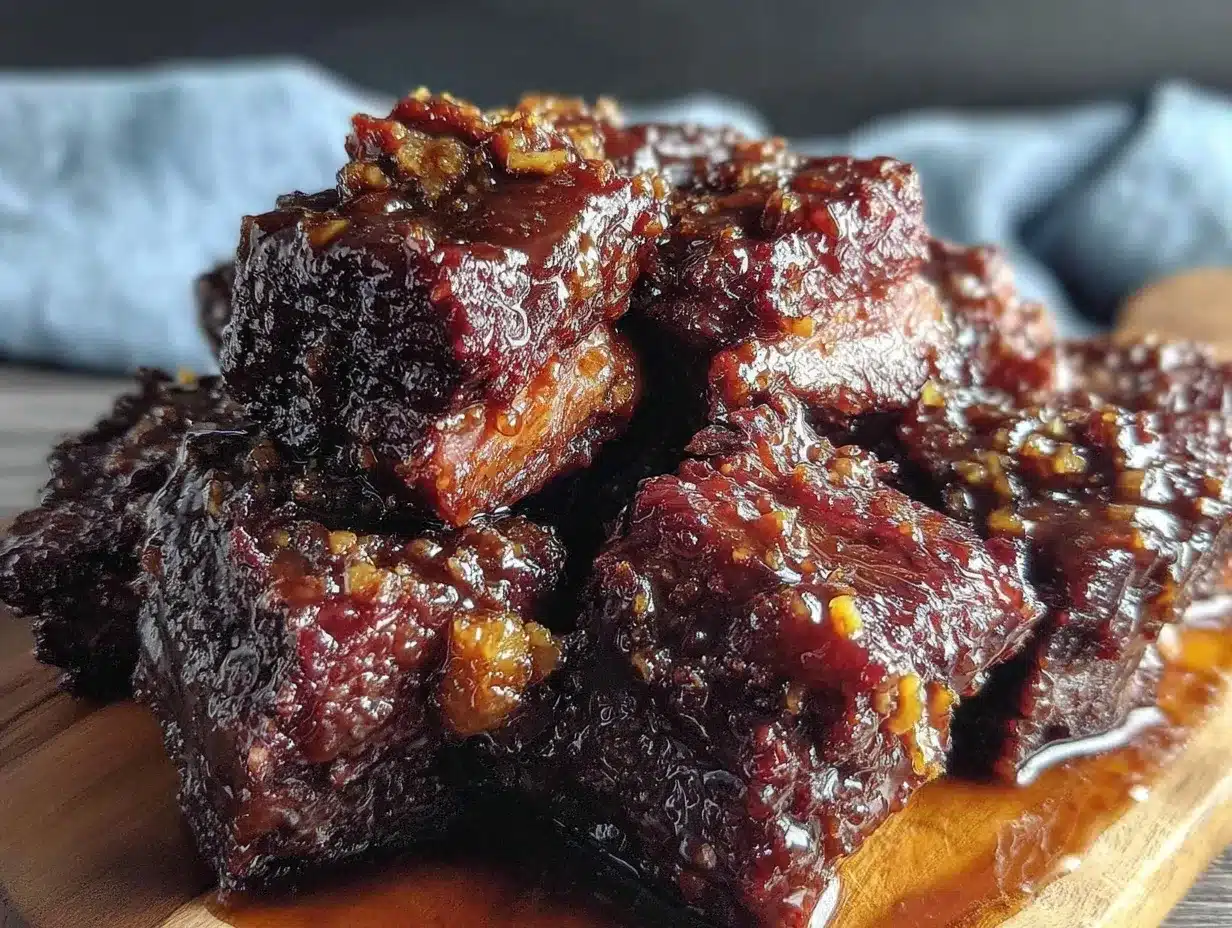
- Trim the Brisket Point: Trim excess fat, leaving about 1/4 inch for flavor and moisture. Slice the point into roughly 1.5-inch (4 cm) cubes. This helps the smoke penetrate and the bark to form nicely.
Tip: Keep some of the fat cap intact on a few pieces for extra juiciness. - Apply the Rub: In a bowl, mix paprika, brown sugar, garlic powder, onion powder, salt, pepper, and cayenne. Coat the brisket cubes evenly, pressing the rub into the meat.
Tip: Let the rubbed meat rest for at least 30 minutes at room temperature to absorb flavors. - Prepare the Smoker: Preheat to 225°F (107°C). Add your wood chips or chunks to generate smoke. Maintain a consistent temperature throughout cooking.
Note: Avoid opening the smoker too often to keep the heat steady. - Smoke the Brisket Cubes: Place the cubes directly on the smoker racks or in a foil tray with space between pieces. Smoke for about 3 hours until the bark forms and the internal temperature reaches around 165°F (74°C).
Look for: Dark, crispy edges and a smoky aroma filling the air. - Mix the BBQ Sauce: While smoking, whisk ketchup, apple cider vinegar, brown sugar, Worcestershire, Dijon mustard, smoked paprika, salt, and pepper in a bowl. Adjust sweetness or tanginess to your liking.
- Toss and Glaze: Remove brisket cubes from the smoker and put them in a disposable pan. Pour half the BBQ sauce over the cubes and gently toss to coat evenly.
Tip: Use tongs to keep the bark intact. - Return to Smoker: Place the pan back on the smoker for another 1.5 to 2 hours at 225°F (107°C). This allows the sauce to thicken and caramelize.
Optional: Add honey or molasses during the last 30 minutes for an extra sticky glaze. - Check for Tenderness: The burnt ends are done when they’re tender and the sauce is sticky and caramelized. Internal temperature should be around 195°F (90°C) for maximum tenderness.
Warning: Don’t overcook, or they may dry out. - Rest Before Serving: Let the burnt ends rest for about 10 minutes to lock in juices.
Note: This also allows the sauce to set beautifully.
This method might seem long, but the hands-off smoking time lets you relax or prep sides like my easy stuffed sweet potatoes with black beans. Plus, the reward of that smoky bark and tender meat is worth every minute.
Cooking Tips & Techniques
Smoking brisket burnt ends is an art, but a few tricks make it way easier:
- Keep the Smoke Thin: Thick, heavy smoke can make the meat bitter. Use dry wood and avoid over-smoking.
- Maintain Steady Temperature: Fluctuations can mess with the bark and tenderness. I usually check my smoker every hour but resist opening too often.
- Patience is Key: Don’t rush the internal temperature. Low and slow is the secret to that melt-in-your-mouth texture.
- Resting Makes a Difference: I learned the hard way—cutting into burnt ends too soon causes juicy flavor to leak out.
- Use a Good Rub: The spice mix forms the bark, so don’t skimp. Experiment with adding a pinch of cumin or chili powder for a smoky twist.
- Don’t Over-Sauce Early: Apply sauce at the right time to avoid soggy bark. The final glaze phase is where the sauce caramelizes perfectly.
One time, I left the brisket cubes on the smoker too long without sauce—they turned out dry and tough. Lesson learned: timing and layering flavors matter. Also, multitasking by prepping the BBQ sauce and trimming other ingredients while smoking keeps the process smooth.
Variations & Adaptations
There’s room to make this recipe your own:
- Spicy Kick: Add chipotle powder or cayenne to the rub and sauce for a smoky heat that lingers.
- Sweet & Tangy: Swap apple cider vinegar for pineapple juice in the BBQ sauce for tropical sweetness.
- Gluten-Free: Use gluten-free Worcestershire sauce and check your ketchup label to keep it safe for gluten-sensitive eaters.
- Oven Method: No smoker? Bake the brisket cubes at 275°F (135°C) on a wire rack, then finish under the broiler with sauce for caramelization.
- Personal Twist: I once tried this with a splash of bourbon in the BBQ sauce—adds a warm, boozy depth that’s surprisingly good.
Serving & Storage Suggestions
These burnt ends are best served warm and fresh off the smoker with a drizzle of extra BBQ sauce. They go great alongside smoky sides like baked beans, coleslaw, or even something sweet like the creamy sweet potato casserole.
Store leftovers in an airtight container in the fridge for up to 4 days. When reheating, do it gently in a low oven (about 300°F/150°C) covered with foil to keep moisture locked in. Microwaving works in a pinch but can dry them out.
Flavors actually deepen the next day as the smoky, tangy sauce melds into the meat, so burnt ends often taste even better as leftovers.
Nutritional Information & Benefits
This recipe is rich in protein and packed with flavor without relying on heavy fats or artificial additives. The brisket provides essential nutrients like iron and zinc, important for energy and immune health. The homemade BBQ sauce cuts down on added preservatives and sugars often found in store-bought versions.
While not low-calorie, the recipe balances indulgence with wholesome ingredients. You can easily adapt it for gluten-free diets or reduce sugar by adjusting the sauce components. For those mindful of sodium, reducing the salt in the rub is an option without sacrificing taste.
Conclusion
Making Flavorful Smoked Brisket Burnt Ends with BBQ Sauce might take some time, but the result is a smoky, tender, and sticky bite that’s hard to beat. It’s a recipe that welcomes customization and invites you to experiment with your favorite spice blends and sauces. I love it because it turns a humble brisket point into the star of any meal, and every time I make it, I’m reminded of those easy afternoons with friends and good food.
Give it a try, tweak it to your liking, and let those burnt ends speak for themselves. And if you’re in the mood for other comforting, flavorful dishes, you might enjoy the Texas smoked brisket chili or the ultimate homemade French dip sandwich — both great ways to use smoked beef in tasty, crowd-pleasing forms.
Let me know how your burnt ends turn out, and don’t hesitate to share your favorite twists or questions!
FAQs
Can I use a whole brisket instead of just the point for burnt ends?
Yes, you can. The point is preferred for its fat content, but if you use the whole brisket, just separate the point from the flat and cut the point into cubes for burnt ends. The flat can be cooked separately or used for other dishes.
How long do burnt ends typically take to smoke?
Expect about 5 to 6 hours total—around 3 hours to develop the bark, then another 1.5 to 2 hours after saucing to caramelize. Temperature consistency is key during this time.
Can I make burnt ends without a smoker?
Yes, you can bake them in the oven at 275°F (135°C) and finish with a broiler blast for caramelization. Adding liquid smoke to the BBQ sauce also helps mimic that smoky flavor.
What’s the best wood for smoking brisket burnt ends?
Hickory and oak are classic choices for a bold, traditional flavor. Fruit woods like apple or cherry offer milder, sweeter smoke if you prefer something lighter.
How should I store leftover burnt ends?
Keep them in an airtight container in the fridge for up to 4 days. Reheat gently in the oven covered with foil to maintain moisture and flavor. They often taste even better after a day or two.
Pin This Recipe!
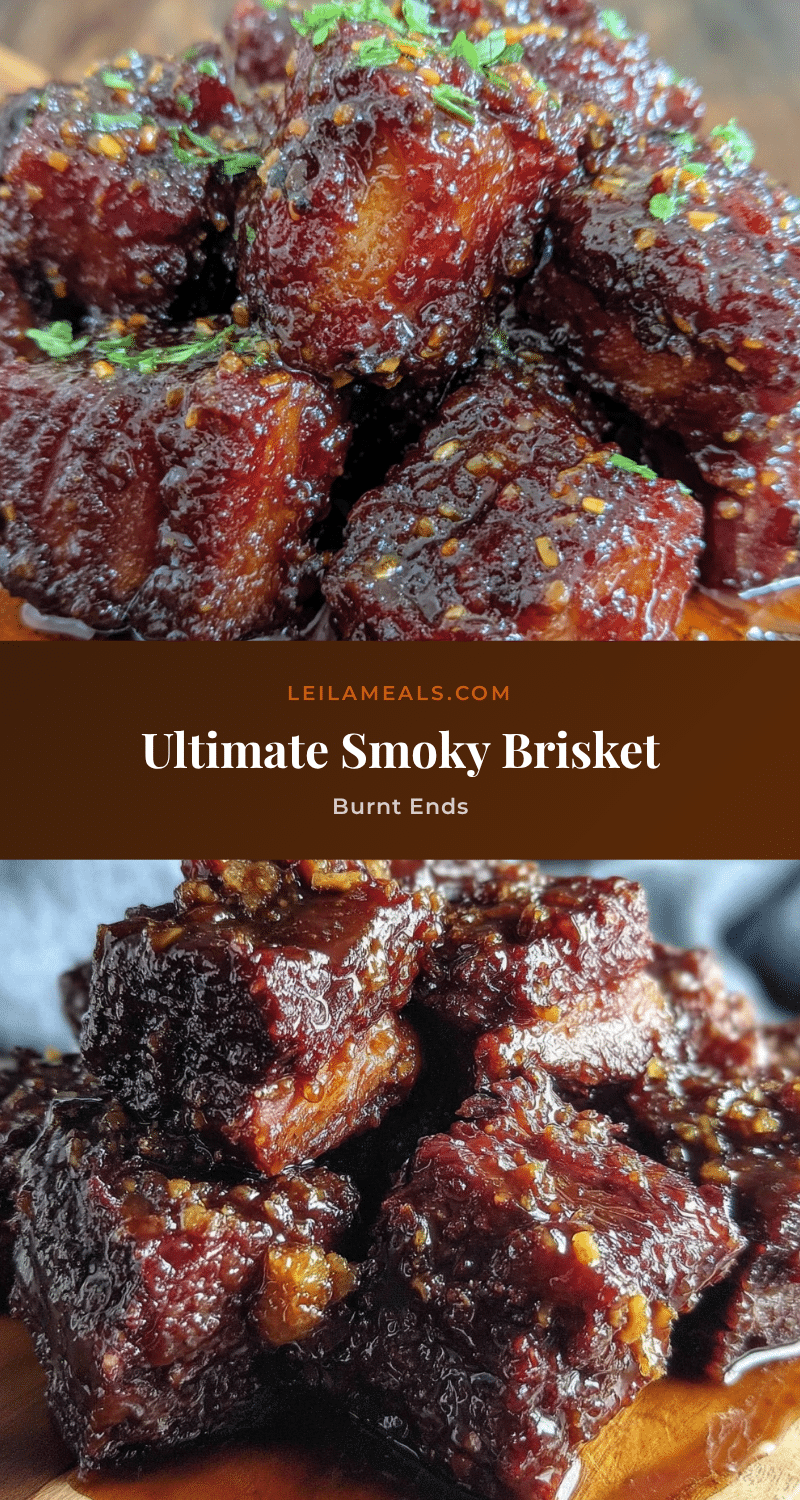
Smoked Brisket Burnt Ends Recipe Easy BBQ Sauce for Perfect Flavor
These flavorful smoked brisket burnt ends feature a crispy, caramelized crust with tender, juicy meat inside, enhanced by a tangy homemade BBQ sauce. Perfect for BBQ gatherings, this recipe balances smoky, sweet, and savory flavors with simple ingredients and mostly hands-off smoking.
- Prep Time: 45 minutes
- Cook Time: 5 to 6 hours
- Total Time: 6 to 6 hours 45 minutes
- Yield: 6 to 8 servings 1x
- Category: Main Course
- Cuisine: American BBQ
Ingredients
- 4 to 5 pounds beef brisket point (fatty, flavorful part)
- 2 tbsp paprika (smoked paprika optional)
- 1 tbsp brown sugar
- 1 tsp garlic powder
- 1 tsp onion powder
- 1 tsp kosher salt
- 1 tsp black pepper
- 1/2 tsp cayenne pepper (optional)
- 1 cup ketchup
- 1/4 cup apple cider vinegar
- 1/4 cup brown sugar
- 2 tbsp Worcestershire sauce
- 1 tbsp Dijon mustard
- 1 tsp smoked paprika
- Salt and pepper to taste
- Hickory or oak wood chips or chunks
- Optional glaze: 1-2 tbsp honey or molasses
Instructions
- Trim excess fat from the brisket point, leaving about 1/4 inch for flavor and moisture. Cut into roughly 1.5-inch cubes, keeping some fat cap intact on a few pieces.
- Mix paprika, brown sugar, garlic powder, onion powder, salt, pepper, and cayenne in a bowl. Coat brisket cubes evenly with the rub and let rest at room temperature for at least 30 minutes.
- Preheat smoker to 225°F (107°C). Add wood chips or chunks to generate smoke and maintain consistent temperature.
- Place brisket cubes on smoker racks or in a foil tray with space between pieces. Smoke for about 3 hours until bark forms and internal temperature reaches 165°F (74°C).
- While smoking, whisk together ketchup, apple cider vinegar, brown sugar, Worcestershire sauce, Dijon mustard, smoked paprika, salt, and pepper to make BBQ sauce. Adjust to taste.
- Remove brisket cubes from smoker and place in a disposable pan. Pour half the BBQ sauce over cubes and gently toss to coat evenly.
- Return pan to smoker for another 1.5 to 2 hours at 225°F (107°C) to allow sauce to thicken and caramelize. Optionally add honey or molasses during the last 30 minutes for extra glaze.
- Check for tenderness; burnt ends are done when tender and sauce is sticky and caramelized, internal temperature around 195°F (90°C). Avoid overcooking.
- Let burnt ends rest for about 10 minutes before serving to lock in juices and allow sauce to set.
Notes
Keep smoke thin to avoid bitterness. Maintain steady temperature and avoid opening smoker too often. Let rubbed meat rest before smoking. Apply sauce late to prevent soggy bark. Rest burnt ends before serving to lock in juices. For oven method, bake at 275°F (135°C) on wire rack and finish under broiler with sauce for caramelization.
Nutrition
- Serving Size: About 4 to 6 burnt e
- Calories: 350
- Sugar: 12
- Sodium: 700
- Fat: 22
- Saturated Fat: 8
- Carbohydrates: 15
- Fiber: 1
- Protein: 28
Keywords: smoked brisket burnt ends, BBQ sauce, smoked meat, brisket recipe, burnt ends recipe, BBQ, smoked brisket, easy BBQ sauce, backyard BBQ, smoked beef


