This was supposed to be a slow-roasted whole chicken—the kind you spend all Sunday babysitting with a thermometer and a prayer. I had the herb butter mixed, the bird rinsed, and my grandmother’s roasting pan preheated. Then my phone rang, my kid spilled milk everywhere, and I realized I had forty-five minutes, not four hours. I grabbed the wrong thing from the fridge—a pack of boneless breasts instead of the whole bird—and shoved them in a baking dish. I was already annoyed, already convinced dinner was ruined before it started.
What came out of that oven was nothing like my original plan. It was better. The herb butter melted into the meat instead of just sitting under the skin. The high heat locked in juices I didn’t think boneless breasts could hold. Honestly, I stood there at the counter eating a piece straight from the pan, half-disbelieving. It was tender, flavorful, and done in under thirty minutes. That disaster of a Tuesday night became the recipe I’ve made more than any other since.
Maybe you’ve been there—staring at a pack of chicken breasts at 5:30 PM with no plan and less patience. I get it. This recipe was born from that exact moment. It’s the weeknight dinner that actually works when nothing else does. You know that feeling when you just need something on the table that everyone will actually eat? This is that recipe. It stayed with me because it proved I didn’t need hours to make something worth sitting down for. And honestly? I think I like it more than the original bird.
Why You’ll Love This Recipe
After testing this method at least two dozen times (and ruining plenty of dry chicken along the way), I can tell you exactly why this one works when others fail. It’s not magic—it’s a smart technique that respects your time and your taste buds.
- Quick & Easy: From fridge to table in under 30 minutes. No marinating, no complicated steps, no all-day commitment.
- Simple Ingredients: You probably have butter, garlic, and dried herbs in your kitchen right now. No specialty grocery trip required.
- Perfect for Weeknights: This is the dinner you make when you’re tired, hungry, and out of ideas. It delivers every single time.
- Crowd-Pleaser: My kids fight over the last piece. My husband requests it weekly. Even picky eaters clean their plates.
- Unbelievably Juicy: The herb butter creates a protective barrier that locks in moisture. You will not get dry chicken—I promise.
What makes this different from every other baked chicken recipe out there? It’s the combination of high heat and compound butter. Most recipes either bake chicken low and slow (which dries it out) or sear it first (which dirties another pan). This one does neither. The butter melts into the meat as it cooks, infusing every bite with flavor while keeping things ridiculously tender. It’s the kind of recipe that makes you close your eyes after the first bite. I’ve tested it with different oven temperatures, different butter amounts, and different herb combinations—this version is the one that works every time.
What Ingredients You Will Need
This recipe uses simple, everyday ingredients to create something genuinely special. Most of these are pantry staples, which is exactly what you want on a busy weeknight when you’re already running late.
For the Herb Butter:
- Unsalted butter, 4 tablespoons (56g), softened — Salted butter works in a pinch, but unsalted lets you control the final salt level. I prefer Kerrygold for its rich flavor, but any good-quality butter works.
- Garlic, 3 cloves, minced — Fresh garlic makes a real difference here. The jarred stuff won’t give you the same punch. If you’re in a hurry, use a microplane to grate it directly into the butter.
- Fresh parsley, 2 tablespoons, finely chopped — Flat-leaf Italian parsley has the best flavor. Dried parsley won’t give you the same fresh pop, but you can substitute 1 teaspoon dried if that’s all you have.
- Dried thyme, 1 teaspoon — I like dried here because it blends evenly into the butter. Fresh thyme works too—use 2 teaspoons of fresh leaves.
- Dried rosemary, 1/2 teaspoon — Crush it between your fingers before adding to release the oils. Fresh rosemary works wonderfully too; just chop it very fine so you don’t get big needle-like pieces.
- Salt, 1/2 teaspoon — I use fine sea salt. If you’re using kosher salt, increase to 3/4 teaspoon.
- Black pepper, 1/4 teaspoon, freshly ground — Pre-ground pepper is fine, but fresh cracked pepper adds a subtle heat that makes a difference.
For the Chicken:
- Boneless, skinless chicken breasts, 2 large (about 1.5 pounds or 680g total) — Look for breasts that are roughly the same thickness so they cook evenly. If one end is much thicker than the other, pound it gently to even it out.
- Olive oil, 1 tablespoon — Just enough to help the seasoning stick. Avocado oil works too.
- Salt, 1/2 teaspoon — Season generously. Chicken breast needs more salt than you think.
- Black pepper, 1/4 teaspoon
- Paprika, 1/2 teaspoon (optional but recommended) — Adds color and a subtle smoky sweetness. Smoked paprika is especially good here.
Ingredient Selection Tips: For the juiciest results, look for chicken breasts that are labeled “air-chilled” rather than “water-chilled.” Air-chilled chicken hasn’t absorbed extra water, so it browns better and has a more concentrated flavor. I’ve noticed a real difference since switching to Bell & Evans or similar brands. If you can only find standard grocery store chicken, just pat it extra dry with paper towels before seasoning—that extra step makes a noticeable difference in how well the herb butter adheres.
Equipment Needed
You don’t need much for this recipe, which is part of why I love it on busy nights. Here’s what you’ll need:
- Small mixing bowl — For combining the herb butter. Any small bowl works.
- Baking dish, 9×13-inch or similar — Glass, ceramic, or metal all work. I prefer a ceramic dish because it heats evenly and looks nice for serving. If you only have a metal pan, reduce the oven temperature by 25°F to prevent over-browning.
- Meat thermometer — This is non-negotiable if you want perfectly cooked chicken. A simple instant-read thermometer costs about $10 and will save you from dry chicken forever. I use a Thermapen, but any reliable thermometer works.
- Sharp knife and cutting board — For mincing garlic and chopping parsley. A dull knife makes prep take twice as long.
- Measuring spoons — For the herbs and seasonings.
- Paper towels — For patting the chicken dry. This step matters more than you’d think.
Budget-Friendly Options: If you don’t own a baking dish, a rimmed baking sheet lined with foil works perfectly. No meat thermometer? You can check doneness by cutting into the thickest part of the breast—the juices should run clear and the meat should be opaque throughout. But honestly, a thermometer is worth the investment. I ruined so many chicken breasts before I bought one.
Preparation Method
Let me walk you through this step by step. I’ve made this recipe more times than I can count, so I know exactly where things can go wrong and how to fix them.
- Preheat your oven to 425°F (218°C). This high temperature is the secret to juicy chicken. It cooks fast enough that the meat doesn’t have time to dry out. Give your oven a full 15 minutes to come to temperature—don’t rush this step.
- Make the herb butter. In a small bowl, combine 4 tablespoons softened unsalted butter, 3 minced garlic cloves, 2 tablespoons chopped fresh parsley, 1 teaspoon dried thyme, 1/2 teaspoon dried rosemary, 1/2 teaspoon salt, and 1/4 teaspoon black pepper. Mash everything together with a fork until it’s well combined. The butter should be spreadable but not melted. If your butter is too cold, microwave it for 5-10 seconds—just until it’s soft, not liquid. Taste the butter on a piece of bread if you want to check the seasoning. I always do this.
- Prep the chicken. Pat the chicken breasts dry with paper towels. This is crucial—wet chicken won’t brown properly and the butter won’t stick. Place the breasts in your baking dish. Drizzle with 1 tablespoon olive oil and rub it all over. Season both sides with 1/2 teaspoon salt, 1/4 teaspoon pepper, and 1/2 teaspoon paprika if using.
- Apply the herb butter. Divide the herb butter evenly between the two chicken breasts. Spread it over the top of each breast, covering as much surface area as possible. Don’t worry if some falls into the pan—it will melt and create a sauce. I usually use my fingers to spread it because it’s faster, but a spatula works too.
- Bake the chicken. Place the dish in the preheated oven and bake for 18-22 minutes, depending on the thickness of your breasts. Do not open the oven door for the first 15 minutes—every time you open it, heat escapes and your cooking time increases. At 18 minutes, start checking the internal temperature. Insert your thermometer into the thickest part of the breast. You’re looking for 160-165°F (71-74°C).
- Rest the chicken. This is the step most people skip, and it’s the one that makes the biggest difference. Remove the chicken from the oven and let it rest in the pan for 5-10 minutes. The temperature will continue to rise to 165°F during this time. The resting period allows the juices to redistribute throughout the meat instead of running out onto your plate. I know it’s tempting to cut right into it, but trust me—wait.
- Serve. Spoon the pan juices over the chicken before serving. The butter and chicken juices have combined into a delicious sauce that you don’t want to waste. Slice against the grain if you’re serving sliced, or serve the breasts whole.
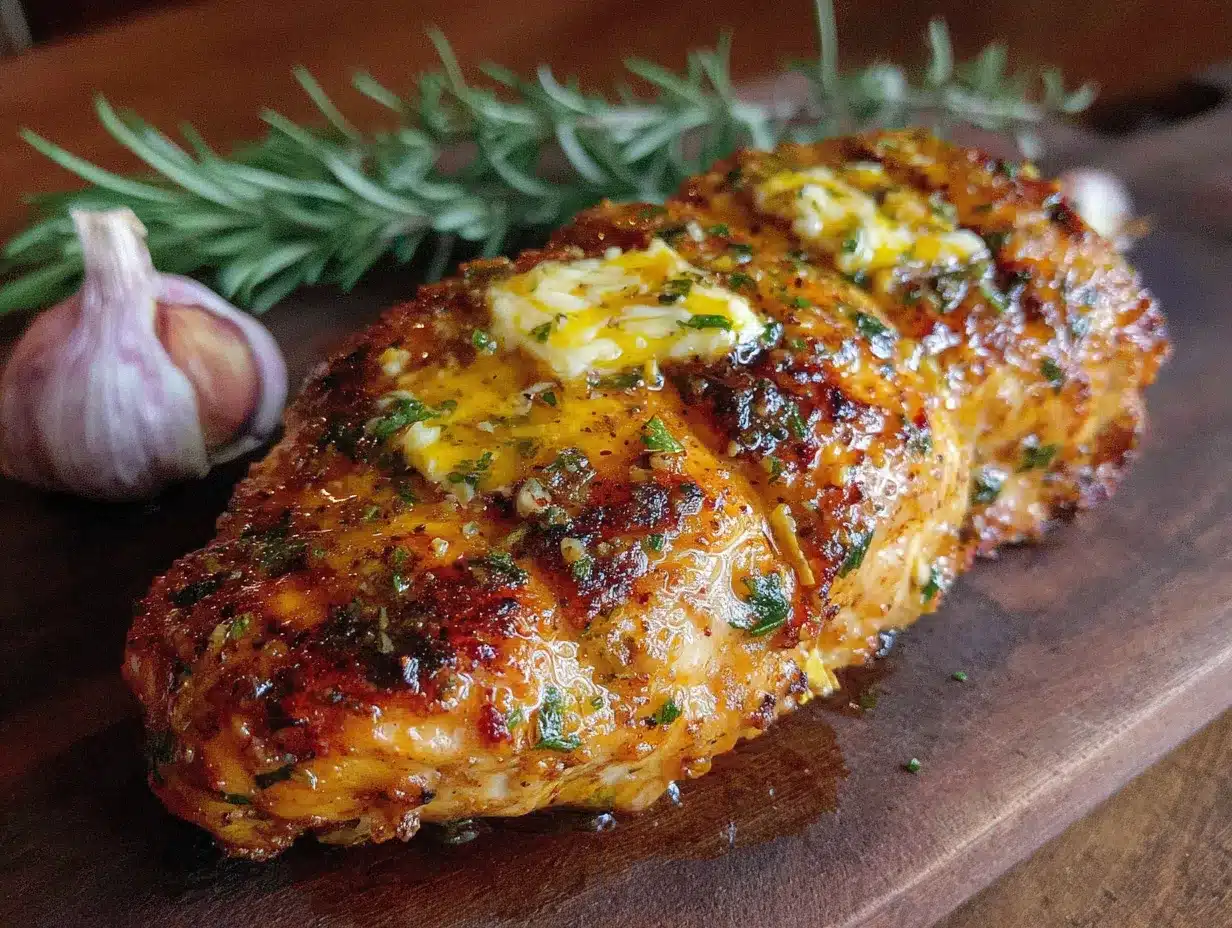
Sensory Cues: The chicken should be golden brown on top with visible herb flecks. You’ll smell garlic and herbs filling your kitchen around the 10-minute mark. When you insert the thermometer, it should slide in with minimal resistance. If you cut into it, the meat should be opaque all the way through with no pinkness, and the juices should run clear. A properly cooked chicken breast will feel firm but still have a slight give when pressed.
Cooking Tips & Techniques
I’ve learned these lessons the hard way so you don’t have to. Here’s what I wish someone had told me years ago.
Pound for even thickness. If your chicken breasts are thicker at one end than the other, place them between two sheets of plastic wrap and pound gently with a rolling pin or heavy pan until they’re about 1 inch thick all over. This ensures even cooking so one end isn’t dry while the other is undercooked. I learned this after serving my family chicken that was somehow both dry and raw in the same piece.
Let the butter soften properly. Cold butter won’t spread evenly over the chicken, which means some bites get all the flavor while others get none. Take the butter out of the fridge 30 minutes before you start cooking. If you forgot (which I do constantly), microwave it in 5-second bursts, checking between each one. You want it soft, not melted.
Don’t overcrowd the pan. If you’re doubling the recipe, use a larger dish or two separate pans. Crowded chicken steams instead of bakes, and you’ll lose that nice golden color. The breasts should have at least an inch of space between them.
Use a thermometer, always. I cannot stress this enough. Chicken breast is incredibly forgiving when you cook it to exactly 160°F and let it rest. It’s incredibly unforgiving when you cook it to 170°F or higher, which happens in about 30 seconds if you’re not paying attention. A $10 thermometer saves $10 worth of chicken in one use.
Let it rest, seriously. I once skipped the resting step because I was starving and in a rush. The chicken was noticeably drier and tougher. That five-minute rest isn’t optional—it’s where the magic happens. The juices settle, the fibers relax, and the texture transforms.
Variations & Adaptations
This recipe is endlessly adaptable, which is another reason it’s become my weeknight go-to. Here are some of my favorite variations:
Lemon Herb Butter: Add 1 teaspoon of lemon zest and 1 tablespoon of lemon juice to the butter mixture. The acidity brightens everything up and cuts through the richness. I make this version in spring and summer when I want something lighter.
Spicy Southwest Version: Replace the thyme and rosemary with 1 teaspoon chili powder, 1/2 teaspoon cumin, and a pinch of cayenne. Add 2 tablespoons of chopped cilantro instead of parsley. This version is amazing with black beans and rice on the side.
Creamy Mushroom Adaptation: After removing the chicken to rest, add 8 ounces of sliced mushrooms to the pan juices and cook on the stovetop for 3-4 minutes. Stir in 1/4 cup of heavy cream and simmer until thickened. Pour over the chicken before serving. This turns a simple weeknight dinner into something that feels fancy.
Dairy-Free Option: Substitute the butter with 4 tablespoons of olive oil or your favorite dairy-free butter alternative. The texture will be slightly different—less creamy, more oily—but still delicious. I’ve used Miyoko’s vegan butter with excellent results.
Thighs Instead of Breasts: Boneless, skinless chicken thighs work beautifully here. Bake them for 22-25 minutes at the same temperature. Thighs are more forgiving than breasts, so they’re a great option if you’re nervous about overcooking.
Herb Variations: Don’t have thyme and rosemary? Use 1 teaspoon of dried oregano and 1 teaspoon of dried basil instead. Or try 2 teaspoons of herbes de Provence. The beauty of this recipe is that it works with whatever herbs you have on hand.
Serving & Storage Suggestions
Serving: Serve the chicken hot, straight from the oven, with the pan juices spooned over the top. I like to slice the breasts on a diagonal and fan them out on a platter for a prettier presentation, but on weeknights, we just eat them whole from the baking dish. The chicken pairs beautifully with roasted vegetables, rice, quinoa, or a simple green salad. For a complete meal in under 30 minutes, toss some asparagus or green beans in olive oil and salt, and roast them on a separate pan alongside the chicken during the last 12 minutes of cooking.
Storage: Leftover chicken keeps well in an airtight container in the refrigerator for up to 4 days. The flavors actually deepen overnight as the herbs continue to infuse the meat. I often make extra on purpose so I can use the leftovers for lunches.
Reheating: The trick to reheating without drying out the chicken is to add moisture. Place the chicken in a baking dish with a splash of chicken broth or water, cover with foil, and warm in a 300°F oven for 10-15 minutes. You can also microwave it, but add a damp paper towel over the top to create steam. Avoid high heat—it will dry the chicken out faster than you’d believe.
Freezing: Cooked chicken freezes beautifully for up to 3 months. Wrap each breast individually in plastic wrap, then place in a freezer bag. To thaw, move to the refrigerator overnight. Reheat using the method above. I keep a few portions in the freezer for nights when I don’t feel like cooking at all.
Make-Ahead Note: You can prepare the herb butter up to 3 days in advance and keep it in the refrigerator. Let it come to room temperature before spreading on the chicken. You can also season the chicken and apply the butter up to 8 hours before cooking—just keep it covered in the fridge. This makes dinner assembly almost embarrassingly easy.
Nutritional Information & Benefits
Per serving (1 chicken breast with herb butter, based on 2 servings):
- Calories: 385
- Protein: 48g
- Fat: 20g
- Saturated Fat: 10g
- Carbohydrates: 2g
- Fiber: 0g
- Sugar: 0g
- Sodium: 680mg
Chicken breast is an excellent source of lean protein, which supports muscle maintenance and keeps you feeling full and satisfied. The garlic in the herb butter contains allicin, a compound linked to immune support and heart health. Fresh parsley is rich in vitamins A, C, and K, plus it acts as a natural breath freshener—which is handy after a garlic-heavy meal.
This recipe is naturally low-carb and keto-friendly, with zero sugar and minimal carbohydrates. If you’re watching your sodium, you can reduce the salt to 1/4 teaspoon per breast and use unsalted butter. For a lower-fat version, reduce the butter to 2 tablespoons per breast—it won’t be quite as luxurious, but it will still be far more flavorful than plain baked chicken.
Conclusion
This quick baked chicken breast with herb butter is the recipe I make when I need dinner to work. No fuss, no stress, no complicated techniques—just good food that comes together fast. It started as a mistake, became a habit, and now it’s the meal I turn to more than any other. The herb butter keeps things juicy, the high heat keeps things quick, and the result is chicken that actually tastes like something.
I hope you make this your own. Swap the herbs, change up the spices, serve it with whatever vegetables you have in the fridge. The method is forgiving and the flavor is flexible. That’s the beauty of a simple recipe done right—it becomes a canvas for whatever you need it to be.
If you try this recipe, I’d love to hear how it turned out. Drop a comment below and let me know what herbs you used, what you served it with, or whether your family fought over the last piece like mine does. And if you have a go-to weeknight chicken recipe of your own, share that too—I’m always looking for new ideas.
Now go make some dinner. You’ve got this.
Frequently Asked Questions
Can I use frozen chicken breasts for this recipe?
I don’t recommend it. Frozen chicken releases too much water as it thaws in the oven, which creates steam and prevents the herb butter from sticking. The result is pale, watery chicken instead of golden, flavorful chicken. If you only have frozen breasts, thaw them completely in the refrigerator overnight, pat them very dry, and then proceed with the recipe.
How do I know when the chicken is fully cooked without a thermometer?
Without a thermometer, your best bet is the cut test. Slice into the thickest part of the breast—the meat should be completely white with no pinkness, and the juices should run clear, not pink or red. The texture should be firm but not hard. That said, I really recommend getting a thermometer. It takes all the guesswork out and guarantees perfect results every time.
Can I make this recipe with bone-in chicken breasts?
Absolutely, but you’ll need to adjust the cooking time. Bone-in breasts typically take 30-35 minutes at 425°F. The internal temperature should still reach 160-165°F before resting. The herb butter works beautifully on bone-in chicken, and the bone adds even more flavor to the pan juices.
What can I serve with this chicken for a complete meal?
This chicken pairs well with just about anything. For a quick weeknight meal, I love it with roasted vegetables (asparagus, broccoli, or green beans), rice or quinoa, or a simple green salad. For something more substantial, serve it with mashed potatoes to soak up the herb butter sauce, or slice it over pasta with a light cream sauce.
How long does the herb butter last in the refrigerator?
The herb butter keeps well for up to a week in an airtight container in the refrigerator. You can also freeze it for up to 3 months—roll it into a log in plastic wrap, then slice off portions as needed. Having herb butter ready in the fridge is one of my favorite time-saving tricks. It’s great on chicken, fish, steak, vegetables, or even spread on crusty bread.
Pin This Recipe!
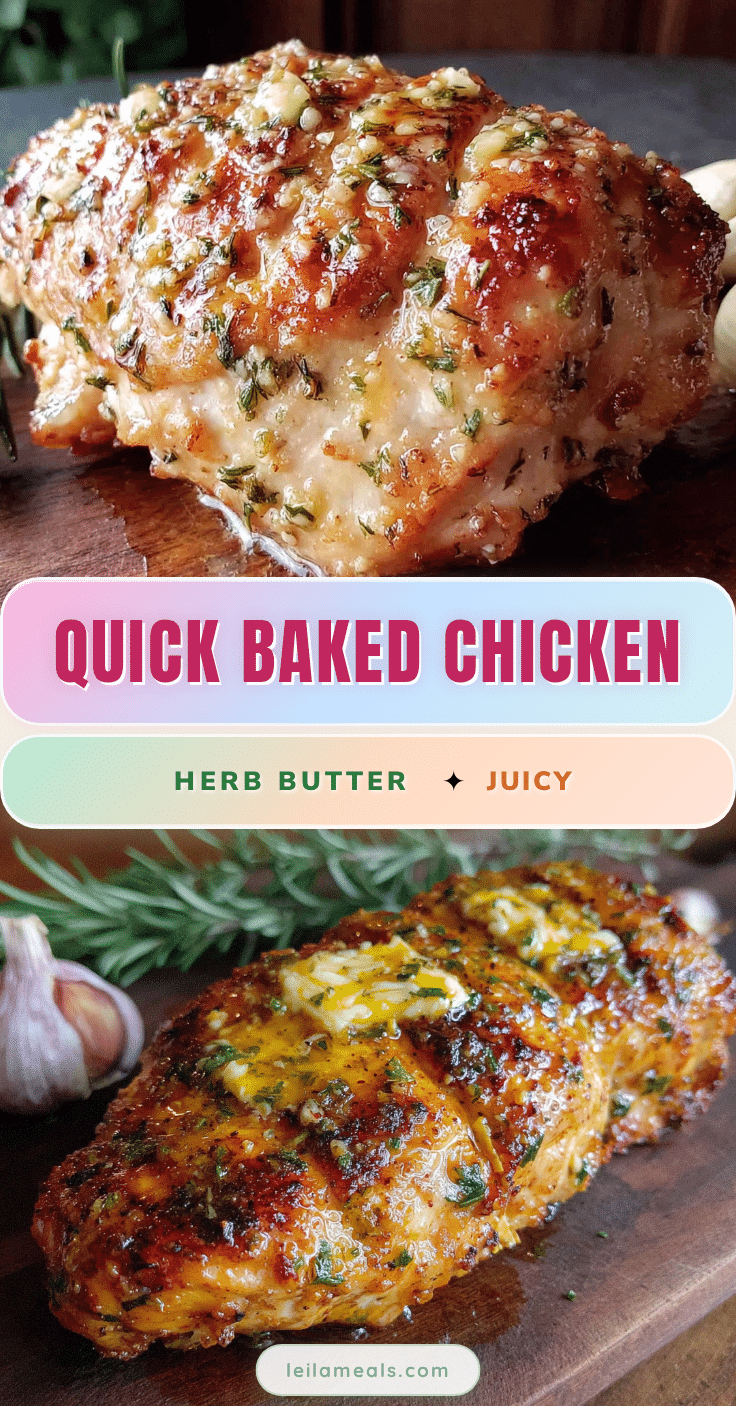
Quick Baked Chicken Breast with Herb Butter (Perfectly Juicy)
A quick and easy weeknight dinner featuring juicy baked chicken breasts topped with a flavorful herb butter. Ready in under 30 minutes, this recipe delivers tender, golden chicken with minimal effort.
- Prep Time: 10 minutes
- Cook Time: 20 minutes
- Total Time: 30 minutes
- Yield: 2 servings 1x
- Category: Main Course
- Cuisine: American
Ingredients
- 4 tablespoons (56g) unsalted butter, softened
- 3 cloves garlic, minced
- 2 tablespoons fresh parsley, finely chopped
- 1 teaspoon dried thyme
- 1/2 teaspoon dried rosemary
- 1/2 teaspoon salt
- 1/4 teaspoon black pepper, freshly ground
- 2 large boneless, skinless chicken breasts (about 1.5 pounds or 680g total)
- 1 tablespoon olive oil
- 1/2 teaspoon salt
- 1/4 teaspoon black pepper
- 1/2 teaspoon paprika (optional but recommended)
Instructions
- Preheat your oven to 425°F (218°C). Give your oven a full 15 minutes to come to temperature.
- Make the herb butter: In a small bowl, combine 4 tablespoons softened unsalted butter, 3 minced garlic cloves, 2 tablespoons chopped fresh parsley, 1 teaspoon dried thyme, 1/2 teaspoon dried rosemary, 1/2 teaspoon salt, and 1/4 teaspoon black pepper. Mash everything together with a fork until well combined.
- Prep the chicken: Pat the chicken breasts dry with paper towels. Place the breasts in your baking dish. Drizzle with 1 tablespoon olive oil and rub it all over. Season both sides with 1/2 teaspoon salt, 1/4 teaspoon pepper, and 1/2 teaspoon paprika if using.
- Apply the herb butter: Divide the herb butter evenly between the two chicken breasts. Spread it over the top of each breast, covering as much surface area as possible.
- Bake the chicken: Place the dish in the preheated oven and bake for 18-22 minutes, depending on the thickness of your breasts. Do not open the oven door for the first 15 minutes. At 18 minutes, start checking the internal temperature. Insert your thermometer into the thickest part of the breast. You’re looking for 160-165°F (71-74°C).
- Rest the chicken: Remove the chicken from the oven and let it rest in the pan for 5-10 minutes. The temperature will continue to rise to 165°F during this time.
- Serve: Spoon the pan juices over the chicken before serving. Slice against the grain if serving sliced, or serve the breasts whole.
Notes
For the juiciest results, look for air-chilled chicken breasts. Let the butter soften properly before spreading. Use a meat thermometer for perfect doneness. Let the chicken rest before serving to redistribute juices.
Nutrition
- Serving Size: 1 chicken breast wit
- Calories: 385
- Sodium: 680
- Fat: 20
- Saturated Fat: 10
- Carbohydrates: 2
- Protein: 48
Keywords: baked chicken breast, herb butter chicken, quick chicken dinner, juicy chicken breast, weeknight chicken