“You won’t believe what I made from those wild yellow flowers in the yard,” my friend texted me one spring afternoon. I was skeptical—dandelions? Jelly? Honestly, I’d always pegged dandelions as those pesky weeds you try to avoid while mowing. But curiosity got the better of me, and that’s how I stumbled into making fresh dandelion jelly with honey and lemon. Turns out, it’s a surprisingly delightful homemade treat that’s both sweet and floral, with just the right zing from lemon.
The whole process started on a quiet weekend morning when I found myself with a basket of freshly picked dandelion petals and a stubborn craving for something new to spread on toast. Mixing the petals with honey and lemon felt like a small kitchen experiment that quickly became my go-to. I made it multiple times that week—each batch better than the last—and I finally understood why this recipe has such a loyal following among foragers and home cooks alike.
What really sold me was the way the kitchen filled with a soft, honeyed aroma, mingled with subtle citrus notes, as the jelly simmered gently on the stove. It reminded me that sometimes the simplest ingredients, gathered from your own backyard or local market, can turn into something unexpectedly special. This fresh dandelion jelly isn’t just a condiment; it’s a little jar of sunshine you can savor year-round. And if you’re anything like me, you’ll find yourself quietly hoping those dandelions keep popping up every spring.
Why You’ll Love This Recipe
Making fresh dandelion jelly with honey and lemon is honestly a charming way to connect with nature and your kitchen, and here’s why it stands out:
- Quick & Easy: You can get this jelly from flower to fridge in about 2 hours, with most of that being gentle simmering—perfect for a weekend afternoon project.
- Simple Ingredients: No need for fancy or hard-to-find items. Just dandelion petals, honey, lemon, and a few pantry staples.
- Perfect for Spring & Summer: Ideal for fresh seasonal breakfasts, brunch spreads, or gifting to friends who appreciate something homemade and unique.
- Crowd-Pleaser: The blend of floral sweetness and citrus tang always gets compliments. It’s especially fun to pair with warm buttered biscuits or cream cheese on crackers.
- Unbelievably Delicious: The jelly’s texture is silky and smooth, with a flavor that feels familiar yet surprisingly fresh—nothing like the usual store-bought jams.
This recipe is different because it respects the delicate nature of dandelion petals, gently coaxing out their flavor without overpowering them. The subtle tartness from the lemon cuts through the honey’s sweetness, creating balance that feels light but satisfying. Plus, I like to use raw honey from local apiaries (it adds a lovely depth), which makes the final product feel even more connected to place and season.
Honestly, this jelly has become my little secret for turning simple breakfasts into moments of quiet joy. It’s the kind of recipe that makes you pause, savor, and feel glad you tried something a little outside the usual jar lineup.
What Ingredients You Will Need
This recipe uses simple, wholesome ingredients to deliver bold flavor and satisfying texture without the fuss. Most are pantry staples, and the dandelion petals are the star, bringing a unique floral note that’s hard to find elsewhere.
- Dandelion petals – about 4 cups, loosely packed (freshly picked and rinsed; avoid yellow-green parts to reduce bitterness)
- Filtered water – 4 cups (to gently extract the flavor from petals)
- Granulated sugar – 4 cups (classic for jelly-making; you can swap with organic cane sugar if preferred)
- Honey – 1 cup (raw local honey recommended for a richer flavor)
- Fresh lemon juice – 1/4 cup (about 1-2 lemons, depending on size; adds brightness and natural pectin)
- Lemon zest – from 1 lemon (optional, for extra citrus aroma)
- Pectin – 1 package (powdered, to ensure proper gel set; I prefer Sure-Jell brand for consistent results)
- Butter – 1 teaspoon (optional; helps reduce foaming during cooking)
If fresh dandelions aren’t in season, you can freeze petals ahead of time, though fresh always yields the best flavor. For a vegan version, substitute honey with maple syrup or agave nectar, but keep in mind the flavor will shift slightly.
Equipment Needed
- Large saucepan or stockpot: Ideally 4 to 6 quarts to comfortably hold the petals and water without boiling over.
- Fine mesh strainer or cheesecloth: To separate petals from the infused liquid smoothly.
- Measuring cups and spoons: Accurate measurements are key for jelly consistency.
- Wooden spoon or heatproof spatula: For stirring the jelly mixture gently.
- Jelly jars with lids: Sterilized glass jars, 8-ounce size works well for this recipe.
- Jar funnel (optional): Makes filling jars less messy.
I used a heavy-bottomed stainless steel pot, which helped prevent scorching during simmering. If you don’t have pectin, a reliable alternative is to use naturally high-pectin fruits like apples or add lemon peel to boost gel formation. Also, a candy thermometer isn’t necessary but can help you get a feel for when the jelly reaches its setting point (around 220°F or 104°C).
Preparation Method
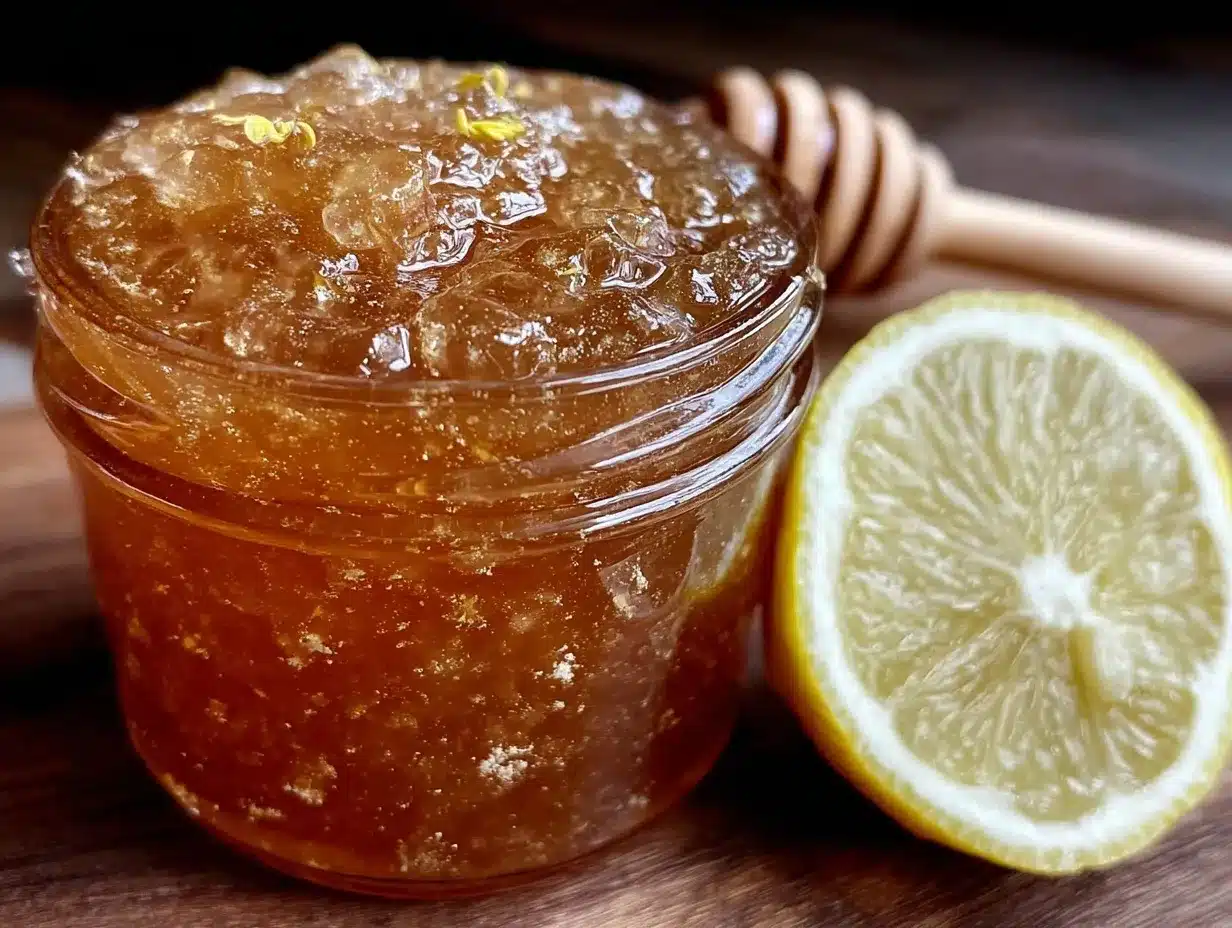
- Harvest and prepare petals: Pick fresh dandelion petals on a dry day, avoiding the green parts to reduce bitterness. Rinse gently in cold water and drain well.
- Make the dandelion infusion: In a large pot, combine the petals with 4 cups (1 liter) of filtered water. Bring to a gentle simmer over medium heat. Let it steep for 20-30 minutes until the water turns a golden yellow and smells floral but not grassy.
- Strain the petals: Using a fine mesh strainer or cheesecloth, carefully drain the liquid into a clean bowl or pot. Press lightly to extract as much flavor as possible, but avoid forcing too much plant matter through.
- Add sugar and pectin: Return the strained liquid to the pot. Stir in the sugar and pectin powder thoroughly before turning on the heat to prevent clumps.
- Cook the jelly base: Bring the mixture to a full rolling boil over medium-high heat, stirring constantly. Boil hard for 1-2 minutes to activate the pectin, then remove from heat.
- Incorporate honey, lemon juice, and zest: Stir in the honey, freshly squeezed lemon juice, and lemon zest. If using, add the teaspoon of butter to minimize foam.
- Jar the jelly: While still hot, ladle the jelly into sterilized jars, leaving about 1/4 inch (0.6 cm) headspace. Wipe jar rims with a clean cloth and seal tightly.
- Cool and store: Allow jars to cool completely on a towel or rack at room temperature. Jelly will thicken further as it cools. Store unopened jars in a cool, dark place for up to a year.
Pro tip: If the jelly doesn’t set after cooling, you can re-boil it with a bit more pectin or use it as a delicious syrup for pancakes or tea.
Cooking Tips & Techniques
Jelly-making can feel tricky the first time, but a few pointers from my trials made all the difference:
- Pick petals carefully: Only bright yellow petals, no stems or green bits. They give the best flavor and color without bitterness.
- Don’t rush the infusion: Let the petals steep gently; a quick boil extracts bitterness instead of sweetness.
- Stir constantly when boiling sugar and pectin: This prevents burning and ensures even gel formation.
- Use fresh lemon juice: Bottled lemon juice can lack the acidity needed for proper setting.
- Watch the boil: Jelly needs a full rolling boil to activate pectin, but too long can cause a tougher set or darker color.
- Prepare jars in advance: Sterilize jars by boiling or dishwasher hot cycle to keep jelly shelf-stable.
One time, I accidentally left the jelly to simmer too long without stirring—it turned darker and a little bitter. Lesson learned: patience and attention pay off! Also, multitasking by prepping your jars and washing utensils while the jelly cooks can save time and keep the process smooth.
Variations & Adaptations
This fresh dandelion jelly recipe is wonderfully adaptable. Here are some ways I’ve tweaked it based on what I had on hand or mood:
- Floral twist: Add a teaspoon of dried lavender or rose petals during infusion for a subtly perfumed jelly.
- Low-sugar version: Reduce sugar by 1 cup and compensate with extra honey, but expect a softer set.
- Fruit infusion: Toss in a handful of fresh berries or chopped rhubarb while cooking for a fruity blend.
- Vegan option: Swap honey with maple syrup or agave, adjusting simmering time as needed for consistency.
- Alternative citrus: Use lime or orange juice and zest instead of lemon for a different citrus profile.
Once, I tried adding a splash of vanilla extract after cooking—it added a warm layer of flavor that was unexpectedly delicious. For a modern twist, the jelly also pairs nicely with savory dishes like garlic butter shrimp and grits, where a dollop of sweet jelly balances the richness beautifully.
Serving & Storage Suggestions
Serve fresh dandelion jelly chilled or at room temperature to really savor its delicate flavors. It’s fantastic spread on crusty bread, warm biscuits, or alongside soft cheeses like brie or cream cheese for a quick snack or appetizer.
For a light breakfast, try it swirled into plain yogurt or drizzled over pancakes. It’s also a lovely pairing with herbal teas or a mild sparkling wine for springtime gatherings.
Store unopened jars in a cool, dark pantry. Once opened, keep refrigerated and use within 3-4 weeks. Reheating gently in a warm water bath can loosen the jelly if it firms up too much. Over time, the flavors mellow and deepen, making it even more comforting.
Leftover jelly can be stirred into sauces or glazes, adding a hint of floral sweetness to dishes like creamy Cajun chicken pasta or roasted vegetables for a surprising twist.
Nutritional Information & Benefits
Per 2-tablespoon (30 ml) serving, fresh dandelion jelly with honey and lemon roughly contains:
| Calories | 70-80 kcal |
|---|---|
| Carbohydrates | 18-20 g (mostly sugars) |
| Fat | 0 g |
| Protein | 0 g |
| Fiber | 0 g |
Dandelion petals are rich in antioxidants and vitamins A and C, while lemon juice adds a boost of vitamin C and natural pectin. Honey provides antimicrobial benefits and natural sweetness without refined sugars. This jelly is gluten-free and can be made vegan with substitutions.
From a wellness perspective, making your own jelly means avoiding preservatives and artificial colors, which I appreciate for everyday eating. It’s a sweet treat that feels honest and light.
Conclusion
Fresh dandelion jelly with honey and lemon is one of those recipes that quietly wins you over, jar by jar. It’s approachable, fun to make, and tastes like sunshine caught in a spoon. Whether you’re a seasoned forager or just curious about homemade preserves, this recipe offers a gentle introduction to the joys of turning wildflowers into something truly delicious.
I love how it brings a little magic to ordinary mornings and pairs perfectly with dishes from my kitchen, like the garlic butter pan-seared scallops I often serve for simple dinners. Feel free to tweak the honey, lemon, or even add your own twist to make it yours.
Give it a try and let me know how your jars turn out—I’m always excited to hear what variations you discover or how you enjoy this floral delight in your meals.
FAQs About Fresh Dandelion Jelly with Honey and Lemon
Can I use dandelion leaves or stems for this jelly?
It’s best to avoid leaves and stems since they can add bitterness. Stick to bright yellow petals for the sweetest flavor and best texture.
How do I know when the jelly is set?
After cooling, jelly should be firm but slightly jiggly. You can test by spooning a small amount onto a cold plate—if it wrinkles when pushed, it’s ready.
Is it safe to eat dandelions from my yard?
Only if you’re sure they haven’t been treated with pesticides or herbicides. Foraging from clean, chemical-free areas is essential for safety.
Can I make this jelly without pectin?
Yes, but it may take longer to set and might be softer. Adding lemon peel or using high-pectin fruits can help improve gel formation.
How long does homemade dandelion jelly last?
Unopened and properly sealed jars last up to a year in a cool pantry. Once opened, refrigerate and use within a month for best flavor and safety.
Pin This Recipe!
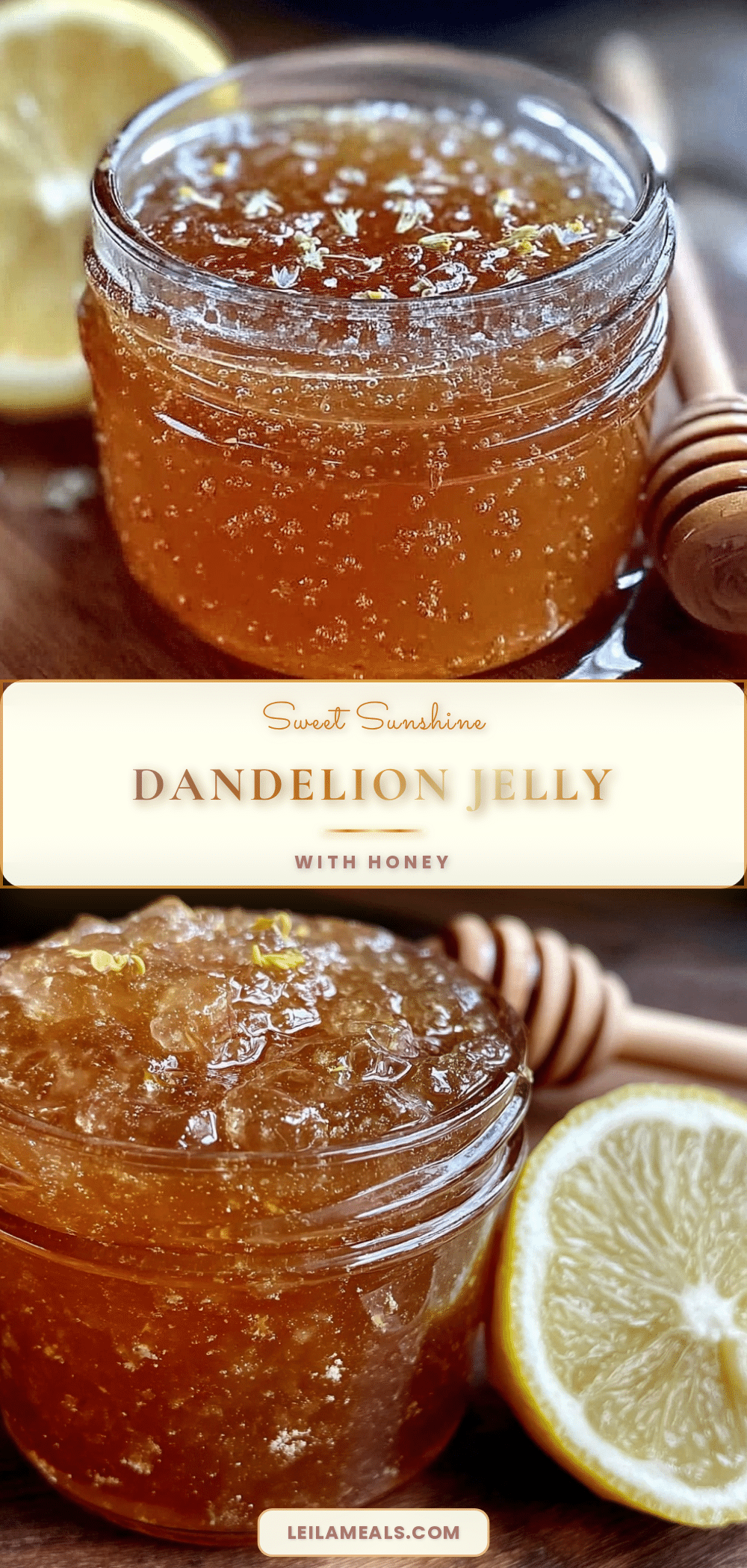
Fresh Dandelion Jelly Recipe with Honey and Lemon
A delightful homemade jelly made from fresh dandelion petals, honey, and lemon, offering a sweet floral flavor with a citrus zing. Perfect for spring and summer breakfasts or gifting.
- Prep Time: 15 minutes
- Cook Time: 1 hour 45 minutes
- Total Time: 2 hours
- Yield: About 4 to 5 jars (8-ounce each) 1x
- Category: Condiment
- Cuisine: American
Ingredients
- 4 cups fresh dandelion petals, loosely packed (rinsed, avoid yellow-green parts)
- 4 cups filtered water
- 4 cups granulated sugar
- 1 cup honey (raw local honey recommended)
- 1/4 cup fresh lemon juice (about 1–2 lemons)
- Lemon zest from 1 lemon (optional)
- 1 package powdered pectin (e.g., Sure-Jell brand)
- 1 teaspoon butter (optional, to reduce foaming)
Instructions
- Pick fresh dandelion petals on a dry day, avoiding green parts to reduce bitterness. Rinse gently in cold water and drain well.
- In a large pot, combine the petals with 4 cups of filtered water. Bring to a gentle simmer over medium heat and steep for 20-30 minutes until the water turns golden yellow and smells floral.
- Strain the petals using a fine mesh strainer or cheesecloth into a clean bowl or pot, pressing lightly to extract flavor but avoiding forcing plant matter through.
- Return the strained liquid to the pot. Stir in sugar and pectin powder thoroughly before heating to prevent clumps.
- Bring the mixture to a full rolling boil over medium-high heat, stirring constantly. Boil hard for 1-2 minutes to activate the pectin, then remove from heat.
- Stir in honey, fresh lemon juice, lemon zest, and if using, the teaspoon of butter to minimize foam.
- While still hot, ladle the jelly into sterilized 8-ounce jars, leaving about 1/4 inch headspace. Wipe jar rims clean and seal tightly.
- Allow jars to cool completely at room temperature. Jelly will thicken as it cools. Store unopened jars in a cool, dark place for up to one year.
Notes
Use only bright yellow dandelion petals, avoid stems and green parts to reduce bitterness. Let petals steep gently without boiling to avoid bitterness. Stir constantly when boiling sugar and pectin to prevent burning. Use fresh lemon juice for proper gel setting. Sterilize jars before filling. If jelly doesn’t set, re-boil with more pectin or use as syrup.
Nutrition
- Serving Size: 2 tablespoons (30 ml
- Calories: 75
- Sugar: 19
- Carbohydrates: 19
Keywords: dandelion jelly, homemade jelly, honey jelly, lemon jelly, wildflower jelly, spring recipe, homemade preserves, floral jelly


