The way the steam curls off the first slice—that’s what I was after. Not the pumpkin spice aroma (though that’s lovely), not the tang of the sourdough (though that’s the backbone), but the actual sight of the heat rising from a crumb that’s neither too tight nor too open. A crumb that catches the morning light just so. That steam, honestly, is the whole point of baking bread overnight. You wake up to it. You cut into it before the house is even fully awake, and there it is—proof that patience, even the sleepy kind, pays off.
I have a complicated relationship with pumpkin spice. I like it, but I don’t need it in everything. What I wanted was a loaf where the pumpkin was more than a flavor—it was a function. A loaf that used the moisture and natural sugars of real pumpkin to feed the sourdough starter, to soften the crumb without making it gummy, to tint the dough a pale sunset orange that feels less like a holiday decoration and more like something you’d actually want to eat every week. This Easy Overnight Pumpkin Spice Sourdough Bread is that loaf. It’s the one I kept making until the steam told me I’d gotten it right.
I’m not a morning person. I’m the person who sets the coffee timer the night before and measures flour into a bowl while half-asleep. That’s why this recipe works for me—and why I think it’ll work for you. The dough does its thing on the counter while you do yours in bed. By the time you’re ready for breakfast, the bread is ready for the oven. It’s a quiet kind of magic, the kind that doesn’t require you to be fully functional to pull off.
Why You’ll Love This Recipe
This isn’t just another pumpkin bread. It’s a sourdough loaf that happens to be perfect for fall, and it comes together with almost zero active effort. Here’s why it’s earned a permanent spot in my weekly baking rotation:
- Overnight Magic: Mix the dough before bed, let it bulk ferment overnight, and bake it fresh in the morning. No early alarms required.
- Real Pumpkin, Real Flavor: Canned pumpkin puree adds moisture, subtle sweetness, and a soft crumb that plain sourdough just doesn’t have. No pumpkin spice extract here—just the real thing.
- Simple Ingredients: You probably already have flour, water, salt, and a sourdough starter. Add a can of pumpkin and a few warm spices, and you’re set.
- Perfect Texture: The crust is crackly and golden. The inside is tender but sturdy enough for toast, sandwiches, or just eating warm with butter.
- Versatile: Great for breakfast, brunch, or even as a side for a cozy fall soup like this creamy roasted butternut squash soup.
This loaf is the kind of bread that makes you feel like you’ve got your life together, even if you’re still in your pajamas at 10 AM. And honestly? That’s the best kind of bread.
What Ingredients You Will Need
This recipe keeps things straightforward. No fancy flours, no obscure additives. Just pantry staples that come together to create something genuinely special. The pumpkin does double duty here—it adds flavor, yes, but it also hydrates the dough in a way that water alone can’t replicate.
- Bread Flour (400g / about 3 cups): I use King Arthur Bread Flour for its higher protein content, which gives the loaf structure and a good rise. All-purpose flour works in a pinch, but the crumb will be slightly less chewy.
- Whole Wheat Flour (100g / about ¾ cup): Adds a nutty depth and helps feed the sourdough starter during the long fermentation. If you only have all-purpose, you can substitute, but you’ll lose some complexity.
- Pumpkin Puree (200g / about ¾ cup): Make sure it’s 100% pure pumpkin, not pumpkin pie filling. Libby’s is my go-to—it’s consistent and not too watery. If your puree seems very wet, blot it with a paper towel before using.
- Active Sourdough Starter (100g / about ½ cup): Fed and bubbly. I feed mine about 6-8 hours before mixing the dough. A ripe starter is key for good rise and that signature tang.
- Water (150g / about ⅔ cup): Lukewarm, around 80°F. The pumpkin adds moisture, so you need less water than a standard sourdough loaf.
- Pumpkin Spice Blend (2 teaspoons): I make my own with cinnamon, ginger, nutmeg, and a pinch of cloves. Store-bought works too, but check the label—some blends have added sugar.
- Salt (10g / about 1½ teaspoons): Fine sea salt. Don’t skip it—salt controls fermentation and strengthens the gluten structure.
- Brown Sugar (25g / about 2 tablespoons): Optional, but I like the subtle molasses note it adds. It also helps the crust caramelize beautifully.
Pro Tip for the Starter: If your starter is sluggish, give it a warm spot (like the top of your fridge) after feeding. A happy starter makes for a happy loaf.
Equipment Needed
You don’t need a professional bakery setup to make this bread. Here’s what I use, along with some honest notes on what you can skip or swap.
- Digital Kitchen Scale: Non-negotiable for sourdough. Measuring by weight is far more accurate than cups, especially with wet ingredients like pumpkin. I use a simple OXO scale—it’s under $30 and has lasted years.
- Large Mixing Bowl: Any bowl big enough to hold the dough as it rises. Glass or ceramic works best because they don’t retain heat.
- Dutch Oven (5-6 quart): The key to that crackly crust. The lid traps steam, creating a perfect baking environment. No Dutch oven? Use a heavy baking sheet with a metal bowl inverted over the loaf for the first 20 minutes.
- Banneton or Proofing Basket: I use a 9-inch oval banneton. A colander lined with a floured kitchen towel works just as well—I’ve done it many times.
- Lame or Sharp Knife: For scoring the loaf before baking. A razor blade works beautifully. A sharp serrated knife is my backup.
- Plastic Dough Scraper: Helps with folding and shaping. A metal bench scraper works too, or just use your hands.
- Parchment Paper: Makes transferring the dough to the Dutch oven effortless.
Budget-Friendly Tip: If you’re new to sourdough, don’t rush out and buy everything at once. Start with a bowl, a scale, and a baking dish. You can improvise the rest.
Preparation Method
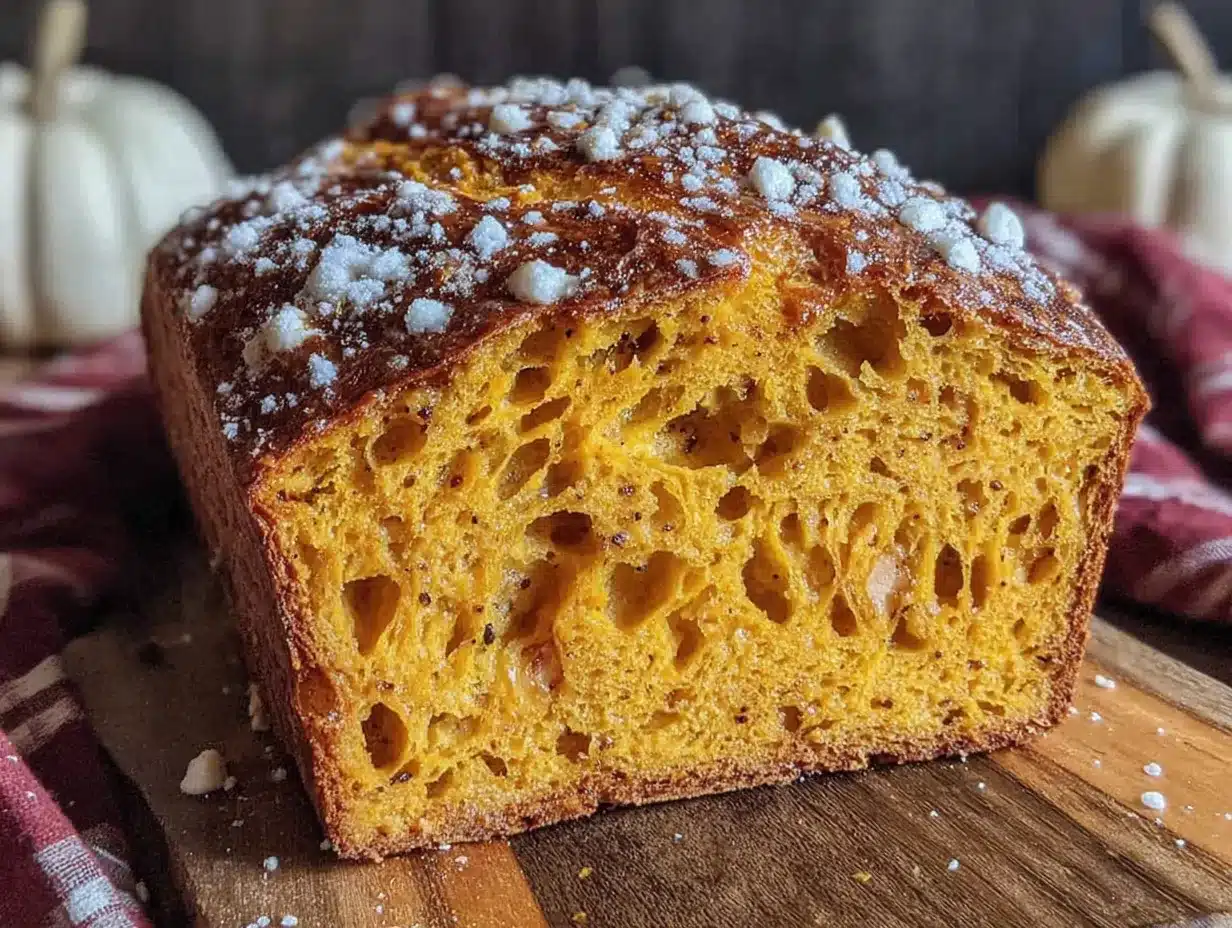
This recipe is designed to fit into your evening routine. The active time is about 20 minutes—the rest is just waiting. Here’s how it goes.
- Mix the Dough (Evening, 10 minutes): In a large bowl, combine 400g bread flour, 100g whole wheat flour, 10g salt, and 2 teaspoons pumpkin spice blend. Whisk dry ingredients together. In a separate bowl, whisk 200g pumpkin puree, 150g lukewarm water, 100g active sourdough starter, and 25g brown sugar until smooth. Pour the wet mixture into the dry and stir with a dough scraper or your hand until no dry flour remains. The dough will be sticky and shaggy—that’s normal. Cover the bowl with a damp towel and let it rest for 30 minutes. This is called the autolyse, and it helps the flour absorb the liquid.
- Stretch and Fold (Evening, 5 minutes): After the rest, perform 4 sets of stretch and folds, spaced 15-20 minutes apart. To do this, wet your hand, grab one side of the dough, stretch it up, and fold it over the center. Rotate the bowl and repeat on all four sides. This builds strength without kneading. After the last fold, the dough should feel smoother and slightly more cohesive.
- Bulk Fermentation (Overnight, 8-12 hours): Cover the bowl tightly with plastic wrap or a reusable lid. Let it sit at cool room temperature (65-70°F) overnight. The dough should rise by about 50%—it won’t double like yeasted bread, but it should look puffy and have bubbles on the surface. If your kitchen is warmer, check it after 8 hours. If it’s cooler, give it up to 12.
- Shape the Loaf (Morning, 5 minutes): Lightly flour your work surface. Turn the dough out gently—try not to deflate it too much. Fold the left side to the center, then the right, then roll it up from the bottom. Pinch the seam closed. Place the dough seam-side up in a floured banneton or lined bowl. Cover with a towel and let it rest at room temperature for 30-45 minutes while you preheat the oven.
- Preheat the Oven (Morning, 45 minutes): Place your Dutch oven inside the oven and preheat to 475°F. Give it a full 45 minutes to get screaming hot—this is what creates that beautiful crust.
- Score and Bake (Morning, 40 minutes): Carefully remove the hot Dutch oven. Flip the dough onto a piece of parchment paper. Score the top with a sharp lame or knife—a single deep slash or a cross pattern works well. Lower the dough into the Dutch oven using the parchment as a sling. Cover and bake for 30 minutes. Remove the lid and bake for another 10-15 minutes, until the crust is deep golden brown and the internal temperature reaches 200-205°F.
- Cool Completely (Morning, 2 hours): Transfer the loaf to a wire rack. I know it’s tempting to slice right away, but let it cool fully. The crumb sets as it cools, and cutting too early will give you a gummy texture. Trust me on this one.
Sensory Cue: When you tap the bottom of the baked loaf, it should sound hollow. That’s how you know it’s done.
Cooking Tips & Techniques
I’ve made this recipe more times than I can count, and I’ve learned a few things the hard way. Here’s what I wish someone had told me.
Watch the Hydration: Pumpkin puree varies in water content. If your dough feels too wet and slack after mixing, add 10-20g more flour during the first stretch and fold. If it feels dry and stiff, add a splash of water. The dough should be tacky but not sticky—it should hold its shape when you fold it.
Don’t Rush the Bulk Fermentation: This is the most common mistake. Under-fermented dough won’t rise properly and will be dense. Look for visual cues: the dough should look puffy, have a few bubbles on the surface, and feel aerated when you poke it. If it springs back quickly, it needs more time. If it holds the indentation, it’s ready.
Manage Sticky Dough: Sourdough with pumpkin is stickier than plain dough. Keep your hands and bench scraper lightly wet during the stretch and folds. A light dusting of flour on the work surface during shaping helps, but don’t overdo it—too much flour will dry out the dough.
My Biggest Failure: The first time I made this, I used pumpkin pie filling by accident. The loaf was so sweet and dense it barely rose. It tasted like a mediocre pumpkin bar. Learn from my mistake—check the label. You want 100% pure pumpkin.
Timing Strategy: Mix the dough at 9 PM, do the folds by 10 PM, and let it ferment until 7 AM. That gives you a 9-hour bulk fermentation, which is perfect for most kitchens. Adjust based on your schedule—sourdough is forgiving within reason.
Variations & Adaptations
This recipe is a solid base, but I love playing with it. Here are a few ways to make it your own.
- Add Mix-Ins: Fold in 100g of toasted pecans or walnuts during the last stretch and fold. Or add 80g of dark chocolate chips for a sweet twist. I’ve done both, and they’re equally delicious.
- Spice It Up: Swap the pumpkin spice for 1 teaspoon cinnamon and ½ teaspoon cardamom for a warmer, more aromatic loaf. Or add a pinch of black pepper for a subtle kick that pairs beautifully with the pumpkin.
- Make It Vegan: This recipe is already vegan as written—no butter or eggs needed. Just make sure your brown sugar is vegan (some brands use bone char in processing).
- Gluten-Free Option: I’ve tested this with a 1:1 gluten-free flour blend, and it works, but the texture is denser and more crumbly. Add an extra 30g of water to compensate for the drier flour.
- Sweet Version: Increase the brown sugar to 50g and add a cinnamon-sugar swirl before shaping. It’s more of a dessert loaf, but it’s incredible toasted with butter.
Personal Favorite: I once added a handful of dried cranberries and orange zest to the dough. The tartness cut through the pumpkin sweetness perfectly. It’s now my go-to holiday variation.
Serving & Storage Suggestions
This bread is at its best the day it’s baked, but it keeps well if stored properly. Here’s how I handle it.
Serving: Slice and serve warm with a generous pat of salted butter. It’s also fantastic toasted—the crust gets extra crispy, and the interior softens. For a fall breakfast, pair it with a cozy pumpkin spice cold brew for the ultimate seasonal combo. It’s also great alongside a bowl of soup or stew for dipping.
Storage: Store the loaf cut-side down on a cutting board at room temperature for up to 3 days. Wrap it in a clean kitchen towel rather than plastic—the crust stays crisper that way. For longer storage, slice the loaf and freeze the slices in a zip-top bag. They toast straight from frozen, which is perfect for busy mornings.
Reheating: Toast slices in a toaster or under the broiler for 2-3 minutes. For a whole loaf, wrap it in foil and warm it in a 350°F oven for 10 minutes. The crust won’t be as crackly as fresh, but it’ll still be delicious.
Flavor Development: Honestly, this bread gets better on day two. The pumpkin and spice flavors meld together, and the sourdough tang becomes more pronounced. If you can resist eating it all on day one, you’re in for a treat.
Nutritional Information & Benefits
This bread is a healthier take on fall baking, thanks to the whole wheat flour and pumpkin. Here’s a rough breakdown per slice (assuming 12 slices per loaf):
| Nutrient | Per Slice |
|---|---|
| Calories | 180 |
| Protein | 6g |
| Carbohydrates | 35g |
| Fiber | 3g |
| Sugar | 4g |
| Fat | 1g |
| Sodium | 300mg |
Health Highlights: Pumpkin is packed with vitamin A and fiber, which supports digestion and eye health. The sourdough fermentation process breaks down phytic acid, making the minerals in the flour more bioavailable. Plus, the long fermentation may make the bread easier to digest for some people. It’s not a health food, but it’s a whole lot better than most store-bought pumpkin breads.
Dietary Notes: This recipe is dairy-free, egg-free, and vegan. It contains gluten. For a lower-carb option, this bread isn’t ideal—sourdough is still bread. But if you’re looking for a satisfying, nutrient-dense treat, this fits the bill.
Conclusion
This Easy Overnight Pumpkin Spice Sourdough Bread is the kind of recipe that makes you feel like a bread pro, even if you’re still figuring out your starter. It’s forgiving enough for beginners and rewarding enough for experienced bakers. The overnight fermentation does the heavy lifting, and you wake up to a loaf that fills your kitchen with the best kind of fall aroma.
I love this bread because it’s not fussy. It doesn’t require a stand mixer or a proofing box or a degree in food science. It just needs a little planning, a little patience, and a little trust in the process. And the payoff is a loaf that’s beautiful, delicious, and genuinely satisfying to share.
Now I want to hear from you. Have you tried baking with pumpkin and sourdough? What’s your favorite fall bread? Drop a comment below—I read every single one. And if you make this loaf, tag me in your photos. I love seeing your steam curls.
Frequently Asked Questions
Can I use active dry yeast instead of sourdough starter?
Yes, but it won’t be the same bread. If you want a yeasted version, use 2 teaspoons of active dry yeast dissolved in the water, skip the starter, and reduce the bulk fermentation to 2-3 hours at room temperature. The tang and texture will be different, but it’ll still be tasty.
Why didn’t my loaf rise much?
Most likely, your starter wasn’t active enough. Make sure it’s fed and bubbly before you mix the dough. Also, check your bulk fermentation time—if your kitchen is cold, the dough may need an extra 2-3 hours. Finally, make sure your oven is fully preheated before baking.
Can I use fresh pumpkin instead of canned?
Yes, but you’ll need to roast and puree it first. Fresh pumpkin has more water than canned, so drain the puree in a cheesecloth-lined sieve for an hour before using. Otherwise, your dough will be too wet.
How do I store my sourdough starter?
Keep it in the fridge if you bake once a week. Feed it weekly with equal parts flour and water. If you bake more often, keep it on the counter and feed it daily. A happy starter is a fed starter.
Can I double this recipe?
Absolutely. Double all ingredients and divide the dough into two loaves after bulk fermentation. Bake them one at a time if you only have one Dutch oven, or bake both on a sheet pan with steam for a slightly different crust.
Pin This Recipe!
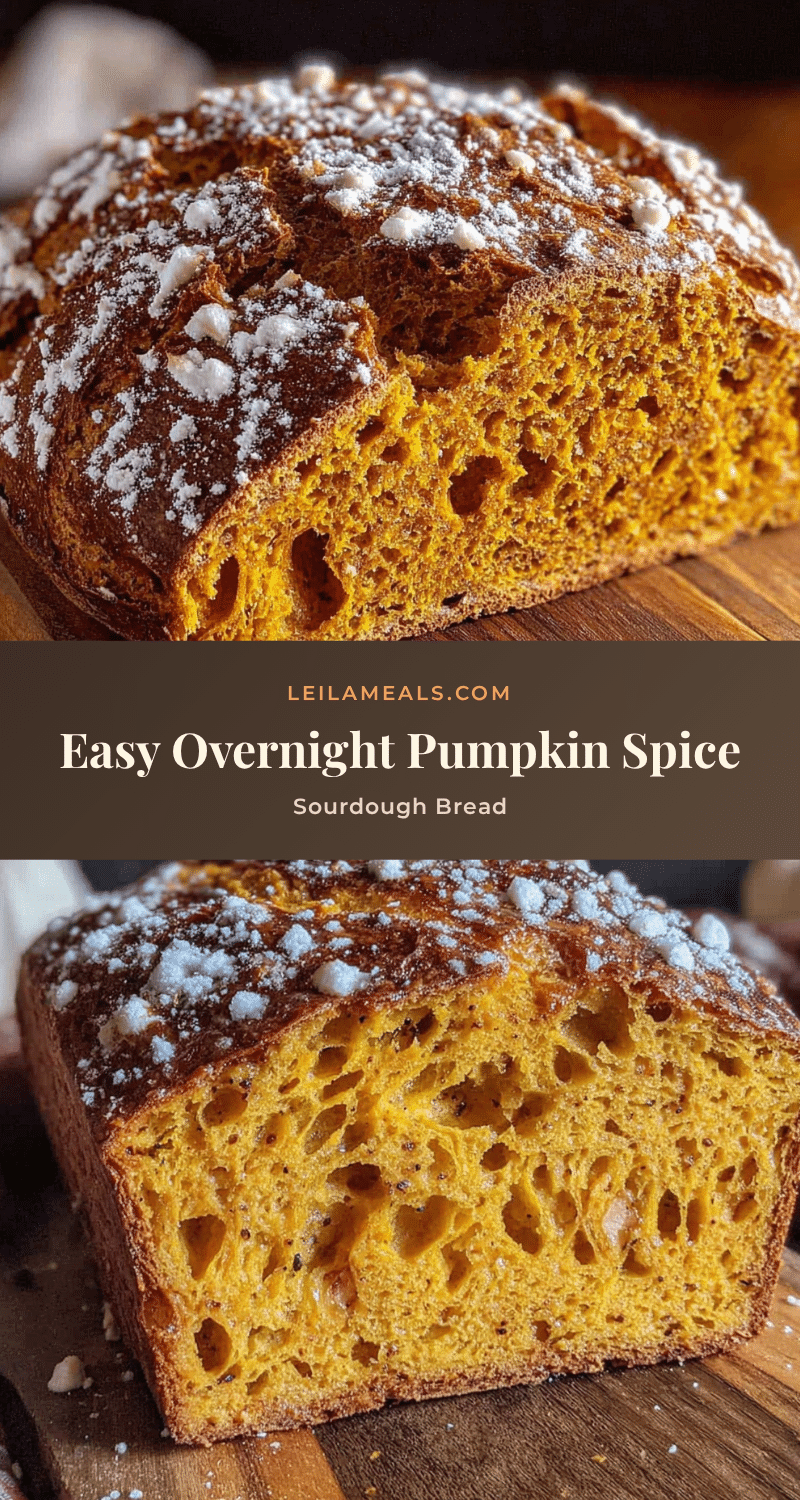
Easy Overnight Pumpkin Spice Sourdough Bread – Perfect Fall Recipe
This Easy Overnight Pumpkin Spice Sourdough Bread is a forgiving, no-fuss recipe that uses real pumpkin puree and warm spices to create a tender, flavorful loaf with a crackly crust. The dough does its thing overnight while you sleep, so you wake up to fresh bread ready for the oven.
- Prep Time: 20 minutes
- Cook Time: 40 minutes
- Total Time: 8 hours 40 minutes (includes overnight fermentation)
- Yield: 12 servings 1x
- Category: Bread
- Cuisine: American
Ingredients
- 400g bread flour (about 3 cups)
- 100g whole wheat flour (about ¾ cup)
- 200g pumpkin puree (about ¾ cup, 100% pure pumpkin)
- 100g active sourdough starter (about ½ cup, fed and bubbly)
- 150g lukewarm water (about ⅔ cup, around 80°F)
- 2 teaspoons pumpkin spice blend
- 10g fine sea salt (about 1½ teaspoons)
- 25g brown sugar (about 2 tablespoons, optional)
Instructions
- Mix the Dough (Evening, 10 minutes): In a large bowl, combine 400g bread flour, 100g whole wheat flour, 10g salt, and 2 teaspoons pumpkin spice blend. Whisk dry ingredients together. In a separate bowl, whisk 200g pumpkin puree, 150g lukewarm water, 100g active sourdough starter, and 25g brown sugar until smooth. Pour the wet mixture into the dry and stir with a dough scraper or your hand until no dry flour remains. The dough will be sticky and shaggy—that’s normal. Cover the bowl with a damp to…
- Stretch and Fold (Evening, 5 minutes): After the rest, perform 4 sets of stretch and folds, spaced 15-20 minutes apart. To do this, wet your hand, grab one side of the dough, stretch it up, and fold it over the center. Rotate the bowl and repeat on all four sides. This builds strength without kneading. After the last fold, the dough should feel smoother and slightly more cohesive.
- Bulk Fermentation (Overnight, 8-12 hours): Cover the bowl tightly with plastic wrap or a reusable lid. Let it sit at cool room temperature (65-70°F) overnight. The dough should rise by about 50%—it won’t double like yeasted bread, but it should look puffy and have bubbles on the surface. If your kitchen is warmer, check it after 8 hours. If it’s cooler, give it up to 12.
- Shape the Loaf (Morning, 5 minutes): Lightly flour your work surface. Turn the dough out gently—try not to deflate it too much. Fold the left side to the center, then the right, then roll it up from the bottom. Pinch the seam closed. Place the dough seam-side up in a floured banneton or lined bowl. Cover with a towel and let it rest at room temperature for 30-45 minutes while you preheat the oven.
- Preheat the Oven (Morning, 45 minutes): Place your Dutch oven inside the oven and preheat to 475°F. Give it a full 45 minutes to get screaming hot—this is what creates that beautiful crust.
- Score and Bake (Morning, 40 minutes): Carefully remove the hot Dutch oven. Flip the dough onto a piece of parchment paper. Score the top with a sharp lame or knife—a single deep slash or a cross pattern works well. Lower the dough into the Dutch oven using the parchment as a sling. Cover and bake for 30 minutes. Remove the lid and bake for another 10-15 minutes, until the crust is deep golden brown and the internal temperature reaches 200-205°F.
- Cool Completely (Morning, 2 hours): Transfer the loaf to a wire rack. Let it cool fully before slicing to avoid a gummy texture.
Notes
Use 100% pure pumpkin puree, not pumpkin pie filling. If your starter is sluggish, give it a warm spot after feeding. For a gluten-free option, use a 1:1 gluten-free flour blend and add an extra 30g water. Store the loaf cut-side down at room temperature for up to 3 days, or freeze slices for longer storage.
Nutrition
- Serving Size: 1 slice
- Calories: 180
- Sugar: 4
- Sodium: 300
- Fat: 1
- Carbohydrates: 35
- Fiber: 3
- Protein: 6
Keywords: sourdough bread, pumpkin spice, overnight bread, fall recipe, sourdough, pumpkin bread, easy sourdough