It was 10:47 PM on a random Wednesday in October, and I had a craving so specific it almost felt ridiculous. I wanted that deep, savory, beer-and-onion smell that fills up a beer hall. I wanted the snap of a good bratwurst and that tangy, melt-in-your-mouth sauerkraut. I didn’t have a grill, I didn’t have a giant pot of boiling water, and I definitely didn’t have the energy for a multi-step Oktoberfest production. But I had a package of bratwurst in the fridge, a jar of sauerkraut that was dangerously close to its expiration date, and one very good idea.
I figured, why not just throw it all in one skillet? I mean, it’s all going to the same place anyway, right? My neighbor, bless his heart, had dropped off a bottle of dark beer earlier that week (a thank you for watching his cat), and it was just sitting there on the counter. So, I chopped an onion, sliced the brats, and tossed everything into my trusty cast iron. Honestly, I was half expecting a disaster. I thought the kraut would burn or the beer would just make everything soggy.
Thirty minutes later, I was standing over the stove, eating straight out of the pan with a fork. The smell was exactly what I was after—rich, a little bit smoky, and undeniably comforting. The bratwurst had soaked up all that beer and onion flavor, and the sauerkraut had softened into something almost sweet. It was the easiest, most satisfying dinner I’d made in weeks. Maybe you’ve been there—wanting a big, bold flavor without the big, bold effort. That’s exactly what this Easy Oktoberfest Bratwurst and Sauerkraut Skillet is. It’s the weeknight warrior version of a festival celebration, and I’ve been making it on repeat ever since.
Why You’ll Love This Recipe
This isn’t just another sausage recipe. This is the one that makes you look forward to a Tuesday night. After testing this skillet about five times in the last month (my neighbors are very happy), I can confidently say it checks every box for a meal that feels special but takes almost no real work.
- One-Pan Wonder: Everything cooks in a single skillet. Less cleanup means more time to actually enjoy your evening.
- Ready in 30 Minutes: From fridge to table in under half an hour. Perfect for those nights when you’re hungry now.
- Bold, Authentic Flavor: The beer and caramelized onions create a deep, savory broth that the brats soak up. It tastes like you spent hours on it.
- Simple Pantry Ingredients: You likely have the beer, onions, and spices on hand. The only specialty items are bratwurst and sauerkraut, both of which are easy to find.
- Naturally Gluten-Free Friendly: As long as you use a gluten-free beer (like a gluten-free lager), this recipe is totally safe for gluten-free diets.
- Crowd-Pleaser: I served this to my dad who “doesn’t like sauerkraut,” and he asked for seconds. The cooking process mellows the kraut’s bite into something wonderfully savory.
What makes this different from other sausage skillets is the technique. Instead of just boiling the brats in beer, we sear them first to get that beautiful brown crust. Then, we deglaze the pan with the beer, scraping up all those flavorful browned bits. It’s a chef-y trick that takes zero extra effort but makes a world of difference. This recipe is comfort food reimagined—faster, simpler, but with the same soul-soothing satisfaction that makes you close your eyes after the first bite.
What Ingredients You Will Need
This recipe uses simple, wholesome ingredients to deliver big, bold flavor without any fuss. Most of these are pantry staples or easy to find at any grocery store.
- Bratwurst (4 links, about 1 lb): The star of the show. I prefer fresh bratwurst from the butcher counter, but pre-cooked or smoked brats work great too. If using pre-cooked, just sear them a minute or two less per side.
- Sauerkraut (1 lb or about 2 cups, drained): Look for refrigerated sauerkraut in the deli section—it has a much better texture and flavor than the canned stuff. I like the brand Bubbies for its crispness.
- Yellow Onion (1 large): The foundation of the flavor. As it cooks down in the beer, it becomes sweet and almost jammy.
- Beer (12 oz, one bottle): A dark lager or Oktoberfest-style beer is ideal for that authentic flavor. Avoid IPAs, as the bitterness can throw off the dish. A light lager like a Pilsner works in a pinch. For a non-alcoholic version, use a non-alcoholic dark beer or beef broth.
- Butter (2 tablespoons): For searing the brats and sautéing the onions. It adds richness that oil alone can’t match.
- Caraway Seeds (1 teaspoon): Optional, but highly recommended. They add that classic rye-bread aroma that pairs perfectly with sauerkraut.
- Brown Sugar (1 tablespoon): Just a touch to balance the acidity of the sauerkraut and the bitterness of the beer. It doesn’t make it sweet; it just rounds out the flavors.
- Salt and Black Pepper: To taste. Go easy on the salt, as both the brats and sauerkraut can be salty.
- Fresh Parsley (for garnish): A sprinkle of green at the end adds a fresh pop of color and a bit of herbaceousness.
Ingredient Swap: If you can’t find bratwurst, kielbasa or smoked sausage are excellent substitutes. For a lighter version, you can use chicken or turkey bratwurst.
Equipment Needed
You don’t need a full German beer hall setup for this one. Just a few basics will do the trick.
- Large Skillet (12-inch): A cast-iron skillet is my go-to for this. It holds heat beautifully and gives the brats a fantastic sear. A heavy-bottomed stainless steel or non-stick pan works well too.
- Sharp Knife: For slicing the bratwurst and chopping the onion.
- Cutting Board: Preferably wooden or plastic.
- Spatula or Wooden Spoon: For stirring and scraping up those browned bits.
- Measuring Spoons: For the caraway seeds and brown sugar.
Pro Tip on Skillets: If you’re using a non-stick pan, be careful not to get it too hot, as it can damage the coating. Cast iron is practically indestructible and gets better with age. I bought my Lodge skillet for about $20, and it’s one of the best kitchen investments I’ve ever made.
Preparation Method
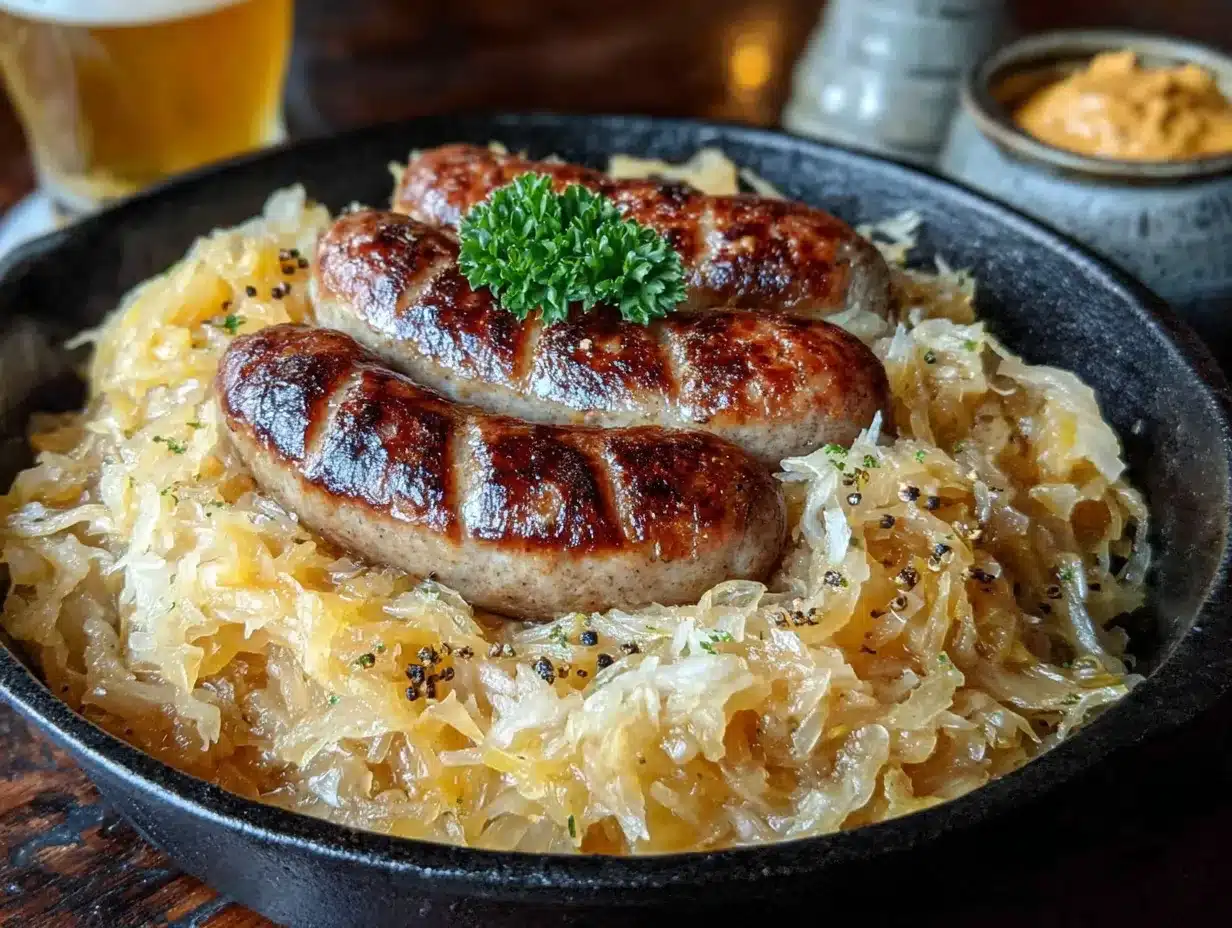
This comes together faster than you think. Follow these steps, and you’ll have a steaming skillet of Oktoberfest goodness in about 30 minutes.
- Prep the Ingredients: Start by slicing the bratwurst links. Cut each link on a diagonal into 1-inch thick pieces. This increases the surface area for browning and makes them easier to eat. Thinly slice the yellow onion into half-moons. Drain the sauerkraut in a colander, but don’t rinse it—you want that tangy flavor.
- Sear the Brats: Place your large skillet over medium-high heat. Add the 2 tablespoons of butter and let it melt until it sizzles. Add the sliced bratwurst in a single layer. Let them cook undisturbed for 3-4 minutes until the bottoms are deeply golden brown. Flip each piece and cook for another 2-3 minutes. You want a nice crust. Don’t crowd the pan; if your skillet is small, do this in two batches. Use a slotted spoon to transfer the browned brats to a plate and set aside.
- Caramelize the Onions: Reduce the heat to medium. Add the sliced onions to the same skillet (don’t wipe it out!). There should be enough butter left; if not, add a splash of olive oil. Cook the onions for 5-7 minutes, stirring occasionally, until they are soft and starting to turn golden. If they start to stick, that’s good—those are flavor bits.
- Deglaze with Beer: Pour in the entire bottle of beer. It will hiss and steam—that’s the sound of flavor being unlocked! Use your wooden spoon to scrape up all the browned bits from the bottom of the pan. Let the beer come to a simmer and cook for 2 minutes to burn off some of the alcohol.
- Add the Kraut and Seasonings: Stir in the drained sauerkraut, caraway seeds, and brown sugar. Give everything a good mix. The mixture should look like a saucy, brothy bed of kraut and onions.
- Return the Brats: Nestle the seared bratwurst pieces back into the skillet, pushing them down so they’re mostly covered by the kraut and liquid.
- Simmer to Perfection: Bring the skillet to a gentle simmer. Reduce the heat to low, cover the pan with a lid, and let it cook for 10 minutes. This allows the brats to soak up all that beer flavor and the kraut to soften beautifully.
- Finish and Serve: After 10 minutes, remove the lid. The liquid should have reduced slightly, creating a nice, slightly thickened “gravy.” Taste and add a pinch of salt and a crack of black pepper if needed. Sprinkle with fresh parsley and serve immediately.
Sensory Cue: At the end, you want the kraut to look glossy and the liquid to be reduced by about a third. The smell should be deeply savory, with the sweetness of the onions and the tang of the kraut mingling perfectly.
Cooking Tips & Techniques
I’ve made this skillet about eight times now, and I’ve learned a few things the hard way so you don’t have to.
- Don’t Skip the Sear: This is the most important step. If you just boil the brats in beer, they end up pale and rubbery. A good sear gives you that textural contrast—crispy edges with a juicy inside.
- Watch the Heat: When you add the beer, the pan is hot. Be careful of the steam—it’s very hot and can burn your hand. Stand back a bit when pouring.
- Use a Good Beer: Don’t use a beer you wouldn’t drink. The flavor concentrates as it cooks, so a cheap, watery beer will result in a watery, bland sauce. I’ve had great luck with Samuel Adams Octoberfest or Spaten Oktoberfest.
- The “Sticking” Factor: If your onions are sticking to the pan while you’re cooking them, that’s a good sign. It means you’re building a fond (those delicious browned bits). Just keep stirring and add the beer when they look like they might burn.
- My Biggest Failure: The first time I made this, I used an IPA. The bitterness from the hops completely overwhelmed the dish. It was genuinely unpleasant. Stick with a malty lager or a dark beer for the best result.
Variations & Adaptations
This skillet is incredibly forgiving. Here are a few ways to make it your own.
- Make it Low-Carb/Keto: Skip the brown sugar and use a low-carb beer or just beef broth. Serve it over cauliflower rice or with a side of roasted broccoli.
- Add Some Veggies: Sliced bell peppers and mushrooms are fantastic additions. Add them to the skillet along with the onions and cook until softened.
- Spicy Version: Use spicy bratwurst or add a teaspoon of red pepper flakes along with the caraway seeds. A drizzle of hot mustard at the end is also amazing.
- Slow Cooker Adaptation: Brown the brats and onions in a skillet first, then transfer everything to a slow cooker. Cook on low for 4-6 hours. This makes the brats incredibly tender.
- Smoky Twist: Use smoked bratwurst and add a teaspoon of smoked paprika. It gives the whole dish a wonderful campfire-like aroma.
Serving & Storage Suggestions
This dish is a meal in itself, but it pairs beautifully with a few classic sides.
- Serving Temperature: Serve it piping hot, straight from the skillet. It’s meant to be a hearty, warming meal.
- Classic Pairings: Serve with a dollop of spicy brown mustard on the side. For a full meal, add some crusty rye bread or soft pretzels to soak up the juices. A simple side salad with a tangy vinaigrette cuts through the richness nicely.
- Beverage Pairing: The obvious choice is a cold Oktoberfest beer or a dark lager. For a non-alcoholic option, try a sparkling apple cider or a ginger beer.
- Storage: Store leftovers in an airtight container in the refrigerator for up to 4 days. The flavors actually get better as they meld together overnight.
- Reheating: Reheat in a skillet over medium-low heat with a splash of water or beer to loosen the sauce. You can also microwave it, but the brats will lose their snap. I prefer the stovetop method.
- Freezing: This freezes well! Let it cool completely, then transfer to a freezer-safe container. Freeze for up to 3 months. Thaw in the fridge overnight and reheat as directed.
Nutritional Information & Benefits
This is a satisfying, protein-rich meal that fits well into a balanced diet. The numbers below are estimates for one serving (about 1.5 cups).
- Calories: ~480
- Protein: 28g
- Fat: 35g
- Carbohydrates: 12g
- Fiber: 4g
- Sugar: 6g
Health Benefits: Sauerkraut is a fantastic source of probiotics, which are great for gut health. It’s also packed with Vitamin C and iron. The onions provide prebiotic fiber, which feeds those good gut bacteria. While bratwurst is higher in fat, it’s also a great source of B vitamins and protein, which helps keep you full and satisfied.
Dietary Notes: This recipe is naturally low-carb and high in protein. To make it gluten-free, simply use a certified gluten-free beer. It is not suitable for a dairy-free diet due to the butter, but you can substitute it with a high-smoke-point oil like avocado oil.
Conclusion
This Easy Oktoberfest Bratwurst and Sauerkraut Skillet is proof that you don’t need a special occasion or a complicated recipe to eat like you’re at a festival. It’s the kind of meal that feels like a warm hug on a cold night, and it comes together with almost no effort. I love that I can make it on a busy weeknight and still feel like I’ve accomplished something delicious.
I encourage you to make this your own. Play with the beer, add some extra veggies, or serve it over some buttery egg noodles. The beauty of this dish is its simplicity and its ability to adapt. If you make it, I’d love to hear how it turned out. Leave a comment below and tell me what you paired it with, or if you tried a fun variation. Happy cooking, and prost!
Frequently Asked Questions
Can I use pre-cooked bratwurst for this recipe?
Yes, absolutely. If using pre-cooked bratwurst, just sear them for about 1-2 minutes per side instead of 3-4. You’re just looking to warm them through and get a bit of color, not fully cook them.
What is the best beer to use for this skillet?
A dark lager, Oktoberfest beer, or Märzen is ideal. The malty sweetness complements the sauerkraut and onions perfectly. Avoid hoppy beers like IPAs, as they will make the dish bitter.
Can I make this in a slow cooker?
Yes! Sear the brats and onions in a skillet first to build flavor, then transfer everything to a slow cooker. Cook on low for 4-6 hours. It’s a great set-it-and-forget-it option for a party.
How do I prevent the sauerkraut from being too sour?
If you’re sensitive to sour flavors, you can rinse the sauerkraut in a colander before adding it to the skillet. This will wash away some of the brine. The brown sugar in the recipe also helps balance the acidity.
Can I add potatoes to this skillet?
Definitely. Add 1-2 cups of diced, parboiled potatoes along with the sauerkraut. They will soak up all the delicious beer broth as they cook. It makes the dish even heartier and more filling.
PrintEasy Oktoberfest Bratwurst and Sauerkraut Skillet
This one-pan wonder delivers deep, savory beer-and-onion flavor with the snap of bratwurst and tangy sauerkraut, all ready in 30 minutes. It’s the weeknight warrior version of a festival celebration.
- Prep Time: 10 minutes
- Cook Time: 20 minutes
- Total Time: 30 minutes
- Yield: 4 servings 1x
- Category: Main Course
- Cuisine: German
Ingredients
- 4 bratwurst links (about 1 lb)
- 1 lb sauerkraut (about 2 cups, drained)
- 1 large yellow onion
- 12 oz dark lager or Oktoberfest beer
- 2 tablespoons butter
- 1 teaspoon caraway seeds (optional)
- 1 tablespoon brown sugar
- Salt and black pepper to taste
- Fresh parsley for garnish
Instructions
- Slice the bratwurst links on a diagonal into 1-inch thick pieces. Thinly slice the yellow onion into half-moons. Drain the sauerkraut in a colander (do not rinse).
- Place a large skillet over medium-high heat. Add the butter and let it melt until sizzling. Add the sliced bratwurst in a single layer and cook undisturbed for 3-4 minutes until deeply golden brown. Flip and cook for another 2-3 minutes. Transfer to a plate and set aside.
- Reduce heat to medium. Add the sliced onions to the same skillet. Cook for 5-7 minutes, stirring occasionally, until soft and starting to turn golden.
- Pour in the entire bottle of beer. Use a wooden spoon to scrape up all the browned bits from the bottom of the pan. Let the beer simmer for 2 minutes.
- Stir in the drained sauerkraut, caraway seeds, and brown sugar. Mix well.
- Nestle the seared bratwurst pieces back into the skillet, pushing them down so they are mostly covered by the kraut and liquid.
- Bring to a gentle simmer, then reduce heat to low. Cover the pan and cook for 10 minutes.
- Remove the lid. Taste and add salt and pepper if needed. Sprinkle with fresh parsley and serve immediately.
Notes
Don’t skip the sear—it gives the brats a crispy edge. Use a malty lager or dark beer; avoid IPAs. If using pre-cooked bratwurst, sear for 1-2 minutes per side. For a non-alcoholic version, use non-alcoholic dark beer or beef broth.
Nutrition
- Serving Size: 1.5 cups
- Calories: 480
- Sugar: 6
- Sodium: 1200
- Fat: 35
- Saturated Fat: 12
- Carbohydrates: 12
- Fiber: 4
- Protein: 28
Keywords: bratwurst, sauerkraut, Oktoberfest, one-pan, skillet, 30-minute meal, German sausage