Third time this week I found myself staring at the same fillet of salmon in my fridge, and this time I didn’t even bother checking if I had asparagus. I knew I did. I always buy it now. The first time I made this honey garlic salmon and asparagus, I was just trying to use up the last of a jar of honey that was crystallizing on my counter. I figured the garlic would mask whatever weirdness happened if the glaze didn’t work. But something clicked—the way the honey caramelized against the salmon’s natural fat, the garlic getting just a little toasty in the pan. I stood there eating it straight off the cutting board, fork in one hand, pan still warm on the stove.
It wasn’t a recipe I planned to share. Honestly, it felt too simple. But then I made it for my sister on a Tuesday night when she was having one of those weeks, and she texted me the next day asking for “that salmon thing” again. Then I made it for a friend who’d just had a baby, and she sent me a photo of her empty plate with a single thumbs-up emoji. That’s when I realized this honey garlic salmon and asparagus wasn’t just easy—it was the kind of dinner that makes people feel taken care of without you having to try too hard. And isn’t that the whole point of a weeknight meal?
The glaze does this thing where it clings to every edge of the salmon, and the asparagus catches just enough of it to taste like it was part of the plan all along. No separate sauces. No extra pans. Just one skillet, a few pantry staples, and twenty minutes that feel like you actually tried.
Why You’ll Love This Recipe
Let me tell you why this one earns a permanent spot in your weekly rotation. I’ve tested it more times than I care to count, and every single time it delivers without drama.
- Quick & Easy: From fridge to plate in under 30 minutes. No marinating, no complicated steps, no waiting around. This is the dinner you make when you forgot to plan dinner.
- Simple Ingredients: You probably have honey, garlic, and soy sauce in your kitchen right now. The salmon and asparagus are the only things you might need to grab, and they’re available at pretty much any grocery store.
- Perfect for Busy Weeknights: It’s light enough for a spring evening but satisfying enough for a cold Tuesday. It works for a quick lunch prep too—just double the batch and thank me later.
- Crowd-Pleaser: I’ve served this to picky kids, skeptical in-laws, and friends who “don’t really like fish.” Every single person cleaned their plate. The honey garlic glaze is basically magic that way.
- One Skillet, Minimal Mess: The salmon and asparagus cook in the same pan, so you’re not drowning in dishes afterward. That alone is worth celebrating.
What makes this version different from all the other honey garlic salmon recipes out there? It’s the balance. The honey brings sweetness, but it’s not cloying. The garlic is present without being aggressive. And the soy sauce adds just enough salt to keep everything in check. I’ve tried versions that were too sweet, too salty, or just plain boring. This one hits that sweet spot where every bite makes you want another one.
This isn’t just good salmon. It’s the kind of meal that makes you close your eyes after the first bite, even if you’re eating it over the kitchen sink while the kids argue in the next room. It’s comfort food that doesn’t weigh you down, and honestly, that’s hard to find.
Ingredients You Will Need
This recipe uses simple, wholesome ingredients that come together to create something that tastes far more complex than it is. Most of these are pantry staples, which is exactly what you want from a last-minute dinner.
For the Salmon:
- 4 salmon fillets (about 6 ounces each), skin on or off—your call. I prefer skin on because it gets crispy and adds texture, but skinless works fine too. Look for fillets that are similar in thickness so they cook evenly.
- Salt and black pepper, to taste. Don’t be shy with the salt—it helps the salmon develop that nice crust.
- 1 tablespoon olive oil, for searing. Avocado oil works too if you have it.
For the Honey Garlic Glaze:
- 1/3 cup honey. Use a runny, liquid honey if you can. If yours is crystallized, microwave it for 10 seconds and stir. I like using local honey when I can find it—it’s usually less processed and has more flavor.
- 4 cloves garlic, minced. Fresh garlic makes a big difference here. Pre-minced stuff from a jar works in a pinch, but you’ll lose some of that punchy garlic flavor.
- 3 tablespoons soy sauce (or tamari for gluten-free). Low-sodium is fine if that’s what you have, but I find regular soy sauce gives the glaze a richer depth.
- 1 tablespoon rice vinegar. This brightens everything up and cuts through the sweetness. Apple cider vinegar works as a substitute if needed.
- 1 teaspoon sesame oil (optional but recommended). It adds a subtle nuttiness that makes the glaze taste like it cooked for hours instead of minutes.
- 1/2 teaspoon red pepper flakes (optional). For a little heat. I add them about half the time, depending on my mood.
For the Asparagus:
- 1 bunch asparagus (about 1 pound), woody ends trimmed. Look for spears that are bright green and firm, not limp or mushy. Thicker spears hold up better to the heat and don’t get soggy.
- 1 tablespoon olive oil, for coating.
- Salt and black pepper, to taste.
- Optional garnish: sesame seeds, chopped green onions, or a squeeze of fresh lemon juice. I almost always add the lemon—it makes everything pop.
Ingredient selection tip: For the best texture, buy salmon that’s bright orange-pink with a clean, ocean-like smell. Avoid fillets that look dull or have a strong fishy odor. If you’re buying frozen, thaw it overnight in the fridge, not on the counter. And for the asparagus, snap off the woody ends by bending each spear near the bottom—it’ll naturally break where the tough part ends. No knife needed.
Equipment Needed
You don’t need a lot of fancy gear for this one, which is part of the beauty of it. Here’s what you’ll need:
- A large skillet or frying pan (12-inch is ideal). Non-stick works great, but a well-seasoned cast iron skillet gives you a better sear on the salmon. I use my cast iron for this recipe almost every time—it holds heat evenly and that crispy skin is worth the extra minute of cleanup.
- Fish spatula (or a thin metal spatula). This makes flipping the salmon so much easier without breaking the fillets. If you don’t have one, a regular spatula works, just be gentle.
- Small bowl for whisking the glaze ingredients together.
- Cutting board and knife for trimming the asparagus and mincing the garlic.
- Tongs for turning the asparagus. I prefer silicone-tipped ones so they don’t scratch your pan.
- Measuring spoons and a liquid measuring cup. The glaze ratio matters, so don’t eyeball it the first time.
If you don’t have a cast iron skillet, don’t stress. A good non-stick pan or even stainless steel will work. Just make sure it’s large enough to fit all four fillets without crowding them. If your pan is too small, cook the salmon in two batches. Crowding the pan lowers the temperature and you’ll end up steaming the fish instead of searing it.
Budget-friendly tip: You don’t need a fancy fish spatula. I used a thin pancake turner for years before I finally bought one. It worked fine.
Preparation Method
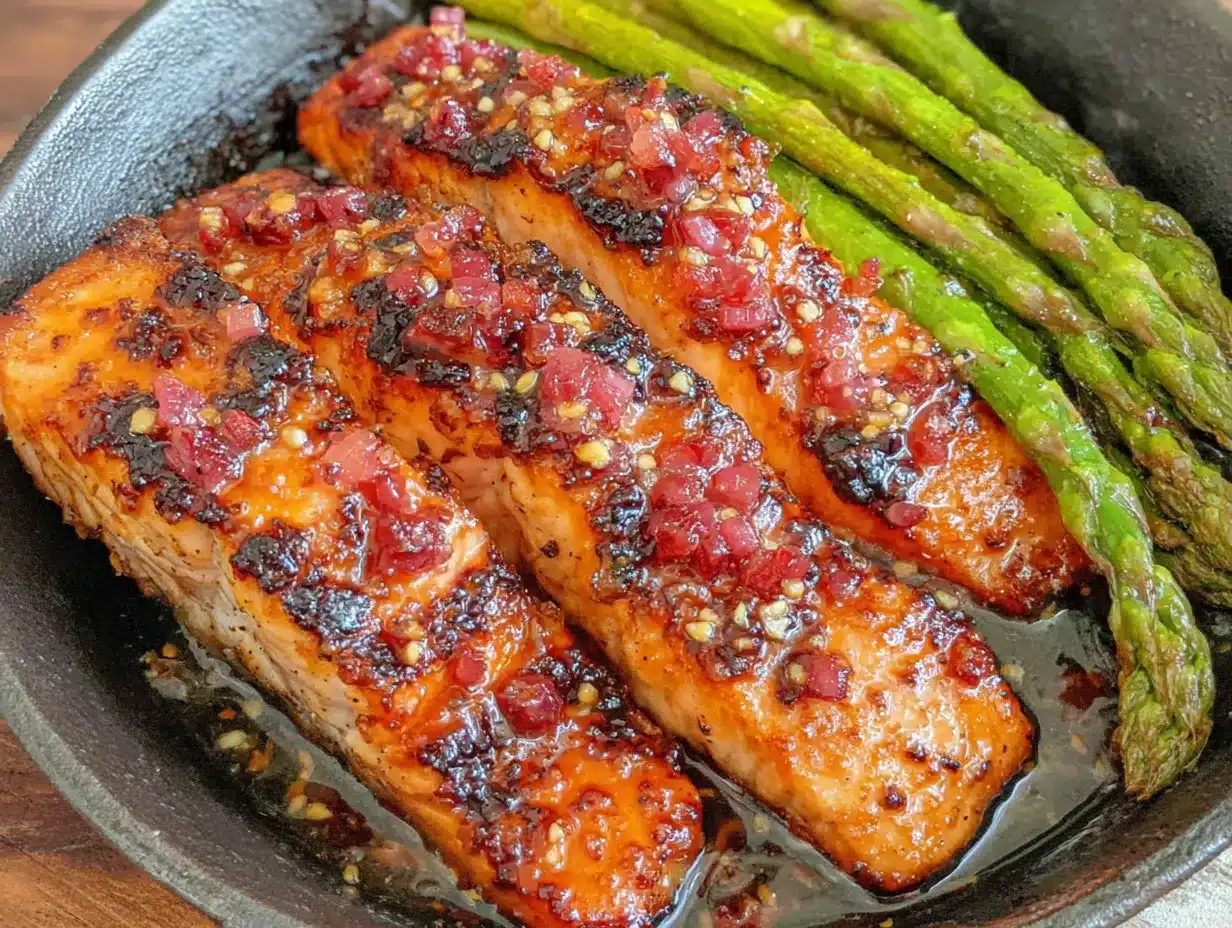
Let’s get cooking. This comes together fast, so have everything prepped before you turn on the heat. Trust me on this one—the glaze thickens quickly and you don’t want to be scrambling to mince garlic while your salmon burns.
- Prep the salmon and asparagus. Pat the salmon fillets dry with paper towels. This is crucial for getting a good sear. Season both sides generously with salt and pepper. Trim the woody ends off the asparagus (about an inch from the bottom) and toss them with 1 tablespoon olive oil, salt, and pepper. Set everything aside.
- Make the glaze. In a small bowl, whisk together the honey, minced garlic, soy sauce, rice vinegar, sesame oil (if using), and red pepper flakes (if using). Set it near the stove so you can grab it quickly.
- Heat the skillet. Place your skillet over medium-high heat and add 1 tablespoon olive oil. Let it heat until the oil shimmers and just starts to smoke—about 2 minutes. You want the pan hot enough that the salmon sizzles the second it hits the surface.
- Sear the salmon. Place the salmon fillets in the skillet, skin-side down (if using skin-on). Press down gently with your spatula for a few seconds to ensure even contact. Cook undisturbed for 4-5 minutes, until the skin is golden brown and crispy. The flesh should look opaque about halfway up the sides. Flip the fillets carefully and cook for another 2-3 minutes on the other side. The salmon should be cooked through but still moist in the center—it’ll flake easily with a fork but shouldn’t look dry.
- Add the glaze. Pour the honey garlic glaze into the skillet around the salmon fillets. Let it bubble and thicken for about 1-2 minutes, spooning the glaze over the salmon as it cooks. The glaze should coat the back of a spoon and cling to the fish. Don’t walk away at this point—it can burn quickly if you’re not watching.
- Cook the asparagus. Push the salmon to one side of the skillet and add the prepared asparagus to the other side. Cook for 2-3 minutes, turning occasionally with tongs, until the asparagus is bright green and tender-crisp. It should still have a little bite to it—nobody likes mushy asparagus. The asparagus will pick up some of the glaze from the pan, which is exactly what you want.
- Finish and serve. Remove the skillet from the heat. Transfer the salmon and asparagus to a serving platter or individual plates. Spoon any remaining glaze from the pan over the top. Garnish with sesame seeds, chopped green onions, or a squeeze of fresh lemon juice if you’re feeling fancy. Serve immediately.
Sensory cues to watch for: When the salmon hits the pan, you should hear a satisfying sizzle. If it’s quiet, your pan isn’t hot enough. The glaze will go from thin and runny to thick and syrupy in about 60 seconds—when you can drag a spatula through it and see the bottom of the pan, it’s ready. The asparagus should be bright green and make a slight snapping sound when you bite into it.
Personal tip: If you’re serving this to guests, I like to sprinkle a few toasted sesame seeds over the top right before serving. It takes two seconds but makes it look like you put in way more effort than you actually did.
Cooking Tips & Techniques
I’ve made this honey garlic salmon and asparagus more times than I can count, and I’ve definitely made my share of mistakes along the way. Here’s what I’ve learned so you don’t have to repeat my errors.
Don’t overcook the salmon. This is the number one mistake people make. Salmon continues to cook for a minute or two after you remove it from the heat, so pull it off when it’s just barely cooked through in the center. The internal temperature should be 125-130°F for medium, 135-140°F for well-done. If you don’t have a thermometer (I usually don’t), look for the flakes to separate easily but still look moist and slightly translucent in the center.
Watch the glaze like a hawk. Honey burns fast. I learned this the hard way when I walked away to answer a text and came back to a smoking pan and a glaze that tasted like burnt sugar. Once you add the glaze to the pan, stay there. Swirl it around, spoon it over the salmon, and pull it off the heat as soon as it thickens. If it starts to darken too quickly, reduce the heat to medium-low.
Pat your salmon dry. I know I said this already, but it’s worth repeating. Wet salmon won’t sear properly. It’ll steam instead, and you’ll end up with pale, soggy fish instead of that beautiful golden crust. Use paper towels and really get in there.
Use a timer for the asparagus. Asparagus goes from perfectly crisp to sad and limp in about 60 seconds. Set a timer for 2 minutes, check it, and add another minute if needed. You want it bright green with a little resistance when you pierce it with a fork.
Multitasking strategy: While the salmon is searing on the first side, prep your garnish. While the glaze is bubbling, set the table. This whole dinner comes together in under 20 minutes, so having everything ready to go makes the process feel effortless instead of chaotic.
If the glaze gets too thick: Add a splash of water or chicken broth to thin it out. It’ll loosen up and coat the salmon more evenly. Don’t add more honey or soy sauce—that’ll throw off the balance.
Variations & Adaptations
One of the best things about this recipe is how easy it is to adapt. Here are some variations I’ve tried and loved:
Make it dairy-free and gluten-free: The recipe is already dairy-free, which is great. For gluten-free, just swap the soy sauce for tamari or coconut aminos. I’ve used both and they work beautifully—coconut aminos are slightly sweeter, so you might want to reduce the honey by a tablespoon.
Swap the protein: This glaze is incredible on chicken thighs too. Just increase the cooking time to about 6-7 minutes per side, depending on thickness. You can also use it on shrimp—cook the shrimp for 2-3 minutes per side, and reduce the glaze cooking time since shrimp cooks so fast. If you’re in the mood for something different, try it on a piece of firm white fish like cod or halibut. If you love sheet pan meals, you might also enjoy my easy 5-ingredient lemon garlic salmon sheet pan dinner for another low-effort option.
Add more vegetables: Broccoli florets, snap peas, or sliced bell peppers all work great. Just add them to the pan along with the asparagus, adjusting the cooking time based on how dense they are. Broccoli needs an extra minute or two; snap peas cook in about the same time as asparagus.
Spice it up: Double the red pepper flakes or add a teaspoon of sriracha to the glaze for a spicy honey garlic version. I do this when I’m craving something with a kick, and it’s fantastic over rice.
Try it in the oven: If you don’t want to stand over the stove, you can bake everything on a sheet pan. Place the salmon and asparagus on a lined baking sheet, brush with the glaze, and bake at 400°F for 12-15 minutes. The glaze won’t caramelize quite the same way, but it’s still delicious and even less hands-on.
Seasonal swap: In the summer, I sometimes swap the asparagus for green beans or zucchini ribbons. In the fall, roasted Brussels sprouts work surprisingly well with the honey garlic flavor. For a heartier meal, serve it over rice or quinoa to soak up all that extra glaze.
Serving & Storage Suggestions
This honey garlic salmon and asparagus is best served immediately, straight from the pan. The glaze is at its peak right when it comes off the heat—warm, glossy, and clinging to every surface. Here’s how to serve it and what to do with leftovers.
Serving temperature and presentation: Serve the salmon hot, with the asparagus alongside. I like to arrange the fillets on a platter and spoon the extra glaze over the top. A sprinkle of sesame seeds and sliced green onions adds color and texture. A wedge of lemon on the side lets everyone add a little brightness if they want.
What to serve with it: Steamed jasmine rice or coconut rice is my go-to—it catches all that extra honey garlic sauce. Quinoa or cauliflower rice works too if you’re keeping it low-carb. For a bigger spread, add a simple side salad with a light vinaigrette to cut through the richness. If you’re meal-prepping for the week, this pairs beautifully with a healthy high-protein Greek chicken bowl with creamy tzatziki for variety.
Storage instructions: Leftover salmon and asparagus can be stored in an airtight container in the refrigerator for up to 3 days. The salmon will lose some of its crispy texture, but the flavor holds up well. I don’t recommend freezing this dish—the texture of both the salmon and asparagus changes too much after thawing.
Reheating methods: The best way to reheat is in a skillet over medium heat with a splash of water or chicken broth. Cover the pan with a lid and heat for 2-3 minutes, until warmed through. The steam helps keep the salmon moist. You can also use the microwave, but go in 30-second bursts and watch it carefully—overcooked reheated salmon gets dry and unappealing fast.
How flavors develop: The glaze actually gets better after a day in the fridge. The flavors meld together and the garlic mellows out. I’ve been known to make extra salmon just so I can eat it cold over a salad the next day for lunch. Don’t judge until you try it.
Nutritional Information & Benefits
This recipe is packed with good-for-you ingredients that make it a smart choice for any night of the week. Here’s a rough breakdown per serving (one salmon fillet plus asparagus):
- Calories: Approximately 380-420
- Protein: 35-40g
- Fat: 18-22g (mostly healthy omega-3s from the salmon)
- Carbohydrates: 25-30g (mostly from the honey and asparagus)
- Fiber: 3-4g
- Sugar: 20-22g (natural sugars from honey)
Health benefits: Salmon is one of the best sources of omega-3 fatty acids, which support heart health, brain function, and reduce inflammation. It’s also packed with high-quality protein and B vitamins. Asparagus is a nutritional powerhouse too—it’s rich in fiber, folate, vitamins A, C, and K, and it acts as a natural diuretic. The garlic in the glaze isn’t just for flavor; it’s known for its immune-boosting and anti-inflammatory properties.
Dietary considerations: This recipe is naturally dairy-free and can be made gluten-free with a simple soy sauce swap. It’s also low-carb friendly if you skip the rice and serve it with extra vegetables. The main allergens are fish and soy, so keep that in mind if you’re cooking for someone with sensitivities.
Personal wellness perspective: I love that this dinner feels indulgent but is actually really good for you. It’s the kind of meal that satisfies a craving for something sweet and savory without leaving you feeling heavy or sluggish afterward. That’s a win in my book.
Conclusion
This honey garlic salmon and asparagus has become one of those recipes I make on autopilot. It’s the dinner I turn to when I’m tired, when I’m busy, when I want to impress someone without actually trying. It works every single time, and that kind of reliability is rare in the kitchen.
The beauty of this recipe is how adaptable it is. You can swap the vegetables, adjust the spice level, use a different protein—it all works. Don’t be afraid to make it your own. That’s what cooking is about, anyway.
I love this recipe because it proves that you don’t need complicated techniques or a long list of ingredients to make something truly delicious. Sometimes the simplest things are the ones we come back to again and again. And honestly, that’s exactly the kind of recipe worth sharing.
I’d love to hear how yours turns out. Did you add extra spice? Serve it over something unexpected? Leave a comment below and let me know—I read every single one. And if you loved it as much as I do, share it with a friend who needs a good dinner in their back pocket. Happy cooking!
Frequently Asked Questions
Can I use frozen salmon for this recipe?
Yes, but thaw it completely in the refrigerator first (overnight is best) and pat it very dry before cooking. Frozen salmon releases more water as it cooks, which can prevent a good sear. If you’re in a hurry, you can thaw it under cold running water for about 30 minutes, but make sure to dry it thoroughly.
What if I don’t have rice vinegar?
Apple cider vinegar or white wine vinegar both work as substitutes. You can also use fresh lemon juice in a pinch—it’ll change the flavor slightly but still tastes great. The vinegar is there to balance the sweetness of the honey, so don’t skip it entirely.
Can I make the glaze ahead of time?
Absolutely. You can whisk the glaze ingredients together up to 3 days in advance and store it in an airtight container in the refrigerator. Give it a good stir before using, as the honey can separate a bit. This is a great time-saver if you’re meal-prepping.
How do I know when the salmon is done?
The easiest way is to use a fork. Gently press into the thickest part of the fillet—if it flakes easily and looks opaque, it’s done. The internal temperature should be 125-130°F for medium (my preference) or 135-140°F for well-done. Remember, it’ll continue cooking for a minute after you remove it from the heat.
Can I use maple syrup instead of honey?
Yes, but the flavor will be different. Maple syrup is less sweet than honey and has a distinct woodsy flavor that changes the profile of the glaze. It’s still delicious, just not the same. If you try it, reduce the amount slightly since maple syrup is thinner than honey and can make the glaze runnier. For another quick and satisfying meal, check out my creamy one-pan Tuscan chicken with sun-dried tomatoes for a different kind of weeknight comfort.
Pin This Recipe!
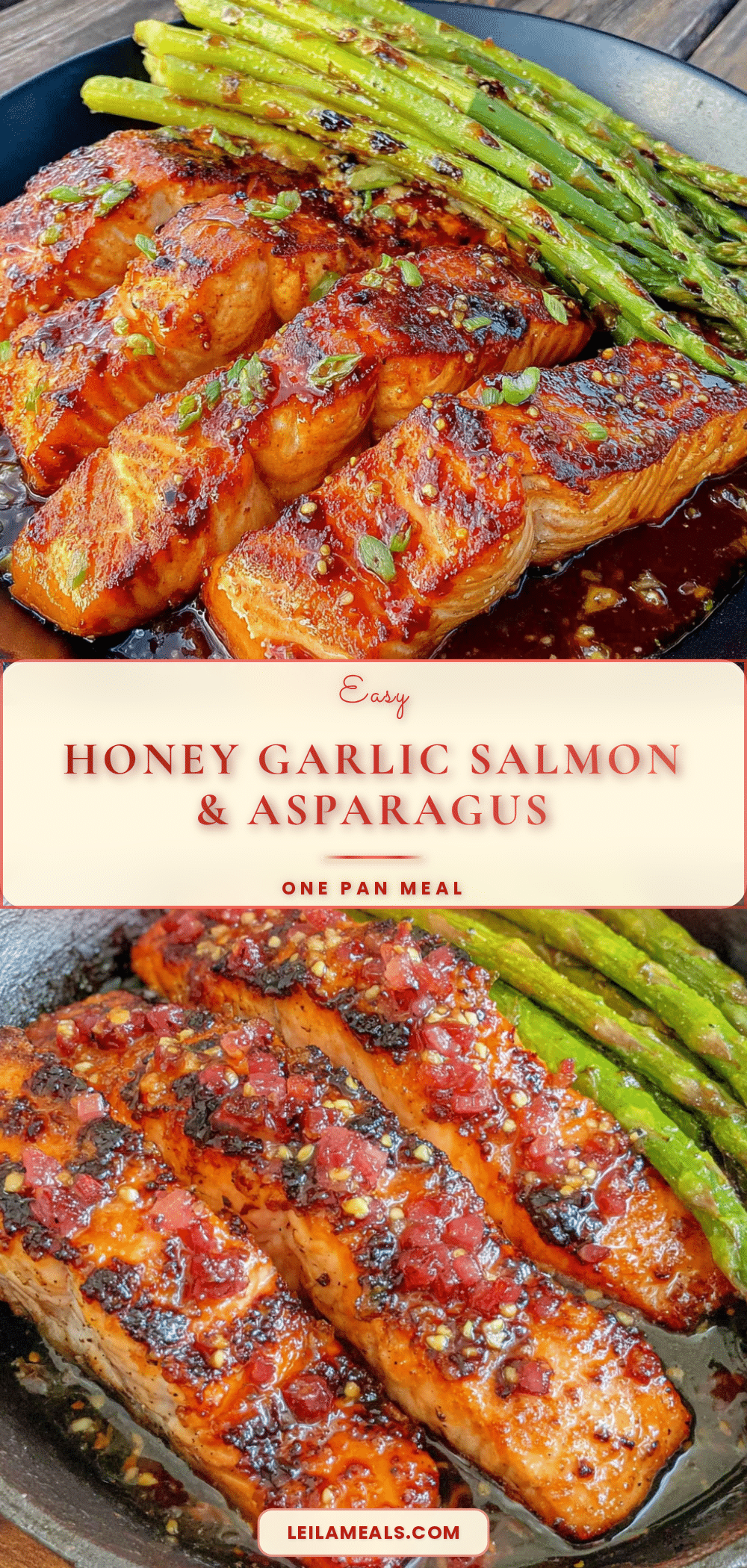
Easy Honey Garlic Salmon and Asparagus: The Best 30-Minute Dinner
This honey garlic salmon and asparagus is a quick, one-skillet dinner that comes together in under 30 minutes. The sweet and savory glaze clings to perfectly seared salmon and tender-crisp asparagus, making it a reliable weeknight meal that feels special without the effort.
- Prep Time: 10 minutes
- Cook Time: 15 minutes
- Total Time: 25 minutes
- Yield: 4 servings 1x
- Category: Main Course
- Cuisine: American
Ingredients
- 4 salmon fillets (about 6 ounces each), skin on or off
- Salt and black pepper, to taste
- 1 tablespoon olive oil, for searing
- 1/3 cup honey
- 4 cloves garlic, minced
- 3 tablespoons soy sauce (or tamari for gluten-free)
- 1 tablespoon rice vinegar
- 1 teaspoon sesame oil (optional)
- 1/2 teaspoon red pepper flakes (optional)
- 1 bunch asparagus (about 1 pound), woody ends trimmed
- 1 tablespoon olive oil, for coating asparagus
- Salt and black pepper, to taste
- Optional garnish: sesame seeds, chopped green onions, or a squeeze of fresh lemon juice
Instructions
- Prep the salmon and asparagus. Pat the salmon fillets dry with paper towels. Season both sides generously with salt and pepper. Trim the woody ends off the asparagus (about an inch from the bottom) and toss them with 1 tablespoon olive oil, salt, and pepper. Set everything aside.
- Make the glaze. In a small bowl, whisk together the honey, minced garlic, soy sauce, rice vinegar, sesame oil (if using), and red pepper flakes (if using). Set it near the stove so you can grab it quickly.
- Heat the skillet. Place your skillet over medium-high heat and add 1 tablespoon olive oil. Let it heat until the oil shimmers and just starts to smoke—about 2 minutes.
- Sear the salmon. Place the salmon fillets in the skillet, skin-side down (if using skin-on). Press down gently with your spatula for a few seconds to ensure even contact. Cook undisturbed for 4-5 minutes, until the skin is golden brown and crispy. Flip the fillets carefully and cook for another 2-3 minutes on the other side.
- Add the glaze. Pour the honey garlic glaze into the skillet around the salmon fillets. Let it bubble and thicken for about 1-2 minutes, spooning the glaze over the salmon as it cooks.
- Cook the asparagus. Push the salmon to one side of the skillet and add the prepared asparagus to the other side. Cook for 2-3 minutes, turning occasionally with tongs, until the asparagus is bright green and tender-crisp.
- Finish and serve. Remove the skillet from the heat. Transfer the salmon and asparagus to a serving platter or individual plates. Spoon any remaining glaze from the pan over the top. Garnish with sesame seeds, chopped green onions, or a squeeze of fresh lemon juice if desired. Serve immediately.
Notes
Pat the salmon dry for a good sear. Watch the glaze carefully as honey burns quickly. Salmon is done when it flakes easily with a fork (internal temp 125-130°F for medium). Asparagus should be bright green and tender-crisp. Leftovers keep in the fridge for up to 3 days; reheat in a skillet with a splash of water.
Nutrition
- Serving Size: 1 salmon fillet plus
- Calories: 400
- Sugar: 21
- Sodium: 800
- Fat: 20
- Saturated Fat: 3
- Carbohydrates: 28
- Fiber: 3.5
- Protein: 37
Keywords: honey garlic salmon, salmon and asparagus, one skillet salmon, quick salmon dinner, healthy salmon recipe, 30 minute dinner, weeknight dinner, gluten free salmon, dairy free salmon