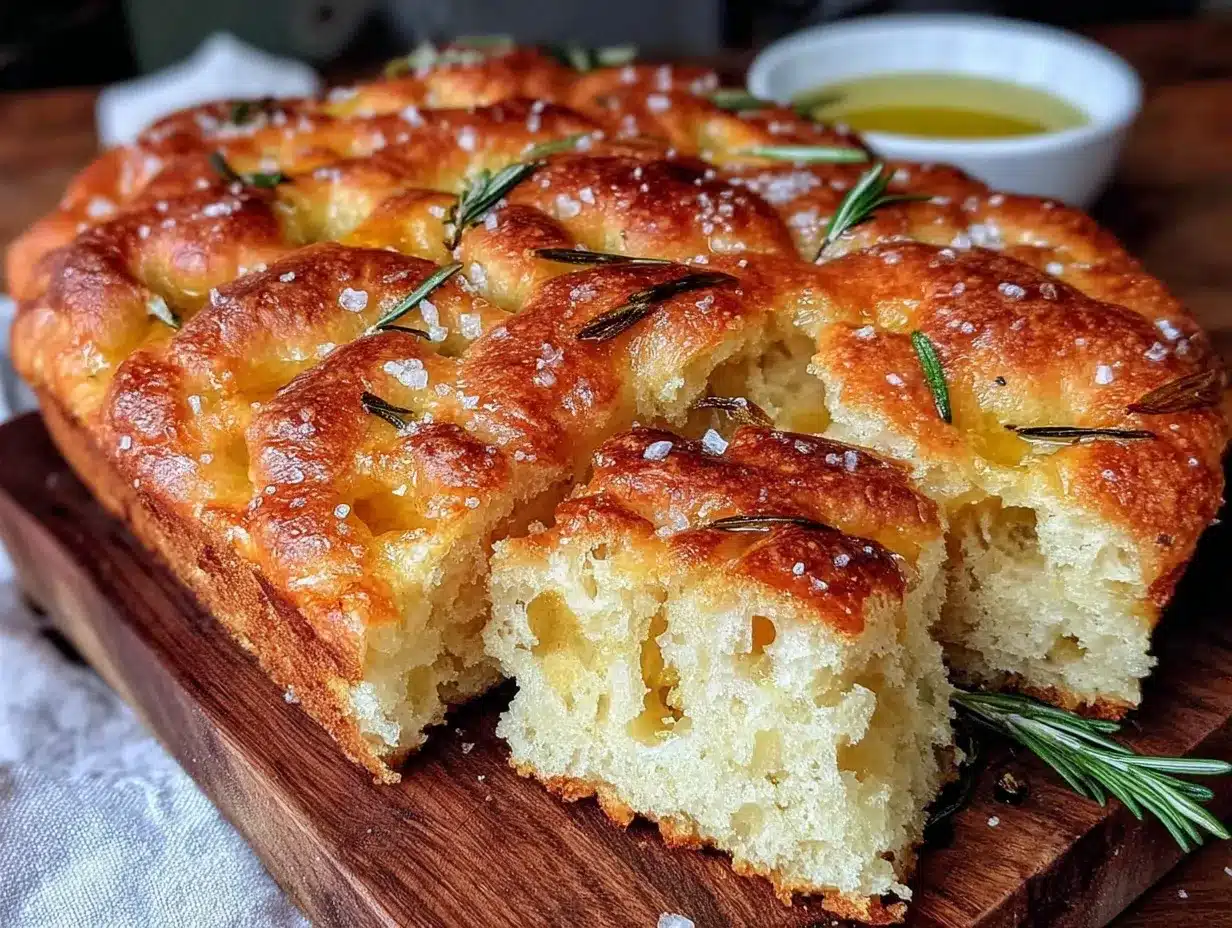
Three-time in a single week and the crust still crackles the same way under my fingertips—that’s what happened the moment I locked in this crispy rosemary sea salt sourdough focaccia recipe. Honestly, I didn’t mean to bake it over and over, but every Friday for the last month, that olive oil dimpled surface called me back. There’s something almost hypnotic about poking those little wells into the dough, letting the oil pool like tiny golden ponds, glistening under the rosemary needles like morning dew on pine needles. It’s a bit ridiculous—stubborn, even—but each batch seemed to teach me something new, like how the dough wants to rise just a little longer or how the salt crystals need to be just coarse enough to crunch without overpowering.
At one point, I found myself staring at the oven window, the aroma of caramelizing crust mingling with piney rosemary, and realized this wasn’t just bread. It’s a texture obsession, a sensory experiment, a crumbly, chewy dance that I couldn’t quite put into words. And the sourdough starter? That tangy backbone just sings with every bite, cutting through the olive oil richness like the perfect partner in a duet. I’m convinced this focaccia holds a secret—maybe it’s the rhythm of the dimples, or the way salt flakes burst, or simply the patience baked into every loaf. Whatever it is, it stuck with me, and I’m quietly confident it will with you too.
Why You’ll Love This Crispy Rosemary Sea Salt Sourdough Focaccia Recipe
After countless trials and a mix of happy accidents, here’s what makes this sourdough focaccia stand apart and why it’s worth your oven time:
- Quick & Easy: While sourdough usually demands patience, this recipe comes together with straightforward steps and minimal fuss, perfect for busy evenings or weekend baking sprees.
- Simple Ingredients: No obscure pantry finds here—flour, olive oil, fresh rosemary, sea salt, and your trusty sourdough starter. If you’ve got these basics, you’re set.
- Perfect for Sharing: Whether it’s a cozy dinner or a casual get-together, this focaccia draws compliments and disappearing acts alike. It pairs beautifully with dips like my creamy whipped feta dip with roasted red peppers for a crowd-pleasing starter.
- Crowd-Pleaser: Kids, adults, carb-lovers, and even the occasional bread skeptic have swooned over this one. That crispy crust and soft crumb balance is just irresistible.
- Unbelievably Delicious: The olive oil dimples aren’t just pretty—they create pockets of rich, golden flavor that burst with every bite, while the rosemary and sea salt add that savory kick you didn’t know you needed.
What sets this recipe apart is how the sourdough starter’s tang plays off the herbal freshness of rosemary and the crunch of flaky sea salt. It’s a little rustic, a little refined, and honestly, the texture is what keeps me obsessed. If you want a bread that’s a bit like a hug and a crunch all at once, this focaccia is your new best friend.
What Ingredients You Will Need
This recipe uses simple, wholesome ingredients to deliver bold flavor and satisfying texture without the fuss. Most are pantry staples, and substitutions are gentle if needed.
- For the Dough:
- All-purpose flour – 3 ½ cups (420g), plus extra for dusting (I like King Arthur for consistent results)
- Water – 1 ½ cups (360ml), lukewarm (about 80°F/27°C) to wake the yeast gently
- Sourdough starter – ½ cup (120g), active and bubbly (if you don’t have one, my easy homemade starter guide is a great place to start)
- Fine sea salt – 1 ½ teaspoons (9g) for balancing flavors
- For Baking & Finishing:
- Extra virgin olive oil – ⅓ cup (80ml), plus more for drizzling (the fruity, peppery kind you love)
- Fresh rosemary – 2 tablespoons, finely chopped (or whole sprigs for rustic appeal)
- Coarse sea salt flakes – 1 teaspoon, for that essential crunch
If you want to switch things up, you can swap all-purpose flour for bread flour to get a chewier crumb or try whole wheat flour for a nuttier flavor. Also, if fresh rosemary isn’t your thing, dried rosemary works too—just crush it lightly to release the oils. For a gluten-free option, almond or oat flour can be experimented with, but expect a different texture. And for olive oil, a good quality brand like Colavita or California Olive Ranch really shines.
Equipment Needed
To make this crispy rosemary sea salt sourdough focaccia, you don’t need fancy gadgets, but a handful of tools will make the process much easier:
- A large mixing bowl – for dough mixing and proofing. Glass or plastic works fine.
- A sturdy baking sheet or rimmed sheet pan – about 9×13 inches (23×33 cm) is ideal for shaping the dough.
- Kitchen scale – highly recommended for accurate flour and water measurements.
- Dough scraper or bench knife – helpful for folding and handling sticky dough.
- Clean kitchen towels or plastic wrap – to cover the dough during resting.
- Oven thermometer – optional, but useful for maintaining exact baking temps.
If you don’t have a kitchen scale, measuring cups will do, but your focaccia might turn out a bit different each time. I’ve used everything from cast iron pans to silicone mats for baking, but a sheet pan gives the best crispy edges. For cleaning, just soak your dough scraper in warm water to keep it from sticking.
Preparation Method
- Mix the Dough (10 minutes): In your large bowl, combine 3 ½ cups (420g) of flour with 1 ½ cups (360ml) lukewarm water. Stir until no dry flour remains. It will look shaggy and sticky, but that’s perfect. Add ½ cup (120g) of active sourdough starter and 1 ½ teaspoons (9g) fine sea salt. Mix gently until everything’s roughly combined.
- First Rest and Fold (2 hours): Cover the bowl with a kitchen towel and let the dough rest at room temperature for 30 minutes. Every 30 minutes, perform a gentle stretch-and-fold right in the bowl—reach under the dough, pull it up, and fold it over itself. Do this 3-4 times during the 2-hour period. This builds strength without kneading.
- Bulk Fermentation (4-6 hours): Leave the dough to ferment until it doubles in size and bubbles appear on the surface. Timing depends on your room temperature—warmer rooms speed this up. You’ll know it’s ready when the dough feels airy and jiggly.
- Prepare the Pan and Shape Dough (10 minutes): Generously oil your 9×13-inch (23×33 cm) baking sheet with 2 tablespoons of olive oil. Gently tip the dough onto the pan, coaxing it to spread evenly without deflating the air pockets. Use your fingers to create deep dimples all over the surface—about 1-inch apart. Don’t be shy here; those dimples trap olive oil and define the focaccia’s character.
- Final Proof (1-2 hours): Cover the dough loosely and let it rise again until puffy and almost doubled—this is where the magic happens. You’ll see bubbles growing inside the dimples, a sign it’s ready for the oven.
- Preheat Oven & Bake (25-30 minutes): Preheat your oven to 450°F (230°C). Before baking, drizzle another 2 tablespoons of olive oil over the dough and sprinkle chopped rosemary and coarse sea salt flakes evenly. Bake for 25-30 minutes until golden brown and the edges are crispy. The surface should crackle slightly when you tap it.
- Cool & Serve: Let the focaccia cool on a wire rack for at least 10 minutes to set the crust. This is when the crumb finishes its transformation—soft, chewy, and full of flavor. Slice generously and enjoy.
Pro tip: If the crust browns too fast, tent loosely with foil halfway through baking. And if you’re wondering about dough stickiness—it’s supposed to be a bit wet. That’s the secret to an open crumb and those perfect olive oil pockets.
Cooking Tips & Techniques for Perfect Focaccia
Making crispy rosemary sea salt sourdough focaccia can feel like a balancing act, but here are some things I learned after my obsessive trials:
- Don’t over-knead: This dough thrives on gentle stretch-and-folds rather than vigorous kneading. It keeps the crumb light and airy.
- Watch your proof times: Under-proofed dough will be dense; over-proofed loses structure. The dough should feel billowy but still hold shape when poked.
- Oil is your friend: Don’t skimp on olive oil—both under the dough and on top. It crisps the bottom and creates those signature dimples that hold flavor.
- Use coarse sea salt for texture: Fine salt just dissolves. The flakes add bursts of saltiness and crunch.
- Temperature matters: Baking at a high temperature (450°F/230°C) is key to that crispy crust. Preheat your oven fully before sliding the focaccia in.
Once, I tried skipping the final proof and the result was a sad, dense brick. Lesson learned! Also, multitasking during the rest periods helps—like prepping a quick meal of sheet pan fajitas, so your kitchen smells amazing all evening.
Variations & Adaptations
This recipe is a great base for experimenting, and I’ve tried quite a few twists to suit different moods and occasions:
- Herb Swap: Instead of rosemary, try thyme or oregano for a different herbal note. A sprinkle of za’atar also adds a Middle Eastern flair.
- Cheese Addition: Press small chunks of fresh mozzarella or crumbled feta into the dough before baking for melty pockets of richness.
- Sweet Version: Swap rosemary for fresh rosemary-glazed figs and drizzle with honey after baking for an unexpected sweet-savory combo.
- Gluten-Free: Use a gluten-free flour blend designed for bread and reduce hydration slightly. It won’t be quite the same, but still tasty.
- Cooking Method: Try baking focaccia in a cast-iron skillet for extra crispy edges and a rustic look.
Personally, I once made a batch with roasted garlic cloves tucked into the dough—it transformed the flavor and made the kitchen smell like heaven for days. Also, using a combination of white and whole wheat flour gives the bread a nutty depth without losing softness.
Serving & Storage Suggestions
Serve your focaccia warm or at room temperature for the best experience. It’s a perfect side to soups, salads, or alongside a cheese platter. Try it with a dollop of whipped feta dip with roasted red peppers to add a creamy tang that contrasts beautifully with the crispy crust.
For storage, wrap leftover focaccia tightly in plastic wrap or place in an airtight container. It keeps well at room temperature for up to 2 days. For longer storage, freeze it wrapped and thaw at room temperature. To refresh, warm slices in a toaster oven or under the broiler for a few minutes to bring back that crispness.
Flavors actually deepen after a day, especially the rosemary and olive oil notes. I often find the next-day focaccia better for sandwiches or paninis.
Nutritional Information & Benefits
This sourdough focaccia is more than just indulgent bread; it packs some nutritional perks thanks to its ingredients:
- Calories: Approximately 180-220 calories per serving (about 2-inch square piece), mostly from quality fats and carbohydrates.
- Healthy Fats: Olive oil contributes heart-healthy monounsaturated fats and antioxidants.
- Digestive Benefits: Sourdough fermentation breaks down gluten and phytic acid, making it easier to digest than regular bread.
- Herbs: Rosemary offers anti-inflammatory and antioxidant properties.
For those watching carbs, this bread is best enjoyed in moderation. It’s naturally gluten-containing, so not suitable for gluten intolerance but perfect for most other diets. Personally, I appreciate how this focaccia feels like a treat without tipping into heaviness.
Conclusion
This crispy rosemary sea salt sourdough focaccia with olive oil dimples has become my go-to for homemade bread that’s both comforting and impressive. It’s the kind of recipe that invites you in—easy enough for a casual bake but complex enough to feel special every time. Whether you’re sharing it alongside a simple salad or pairing it with the smoky notes of savory grilled hot dogs with bacon mac & cheese, it’s a winner.
Feel free to tweak the herbs or baking method to make it truly yours. For me, this focaccia isn’t just bread; it’s a little obsession that reminds me why baking is worth every minute of waiting.
Give it a try, and if it becomes your new staple, I’d love to hear how you make it your own!
Frequently Asked Questions
How do I know if my sourdough starter is active enough for focaccia?
Look for a bubbly, doubled starter that passes the float test (a spoonful floats in water). It should smell tangy but pleasant. Using an inactive starter will slow fermentation or cause dense bread.
Can I use instant yeast instead of sourdough starter?
Yes, you can substitute about 2 teaspoons of instant yeast and adjust proofing times accordingly (usually faster). The flavor will be less tangy but still delicious.
Why does my focaccia turn out dense instead of airy?
Common causes are under-proofing, too much flour, or over-handling the dough. Be gentle when shaping and make sure the dough has doubled before baking.
What’s the best way to store leftover focaccia?
Wrap it tightly in plastic wrap or place in an airtight container at room temperature for up to 2 days. For longer storage, freeze and reheat in the oven or toaster oven to restore crispness.
Can I add toppings like olives or sun-dried tomatoes?
Absolutely! Press them gently into the dough after dimpling and before the final proof. Just be mindful not to overload the dough or it may not rise properly.
Pin This Recipe!

Crispy Rosemary Sea Salt Sourdough Focaccia

A crispy, chewy sourdough focaccia with olive oil dimples, fresh rosemary, and crunchy sea salt flakes. Perfect for easy homemade bread with a flavorful crust and soft crumb.
- Prep Time: 10 minutes
- Cook Time: 25-30 minutes
- Total Time: 7-10 hours
- Yield: 1 focaccia (about 8 servings) 1x
- Category: Bread
- Cuisine: Italian
Ingredients
- 3 ½ cups (420g) all-purpose flour, plus extra for dusting
- 1 ½ cups (360ml) lukewarm water (about 80°F/27°C)
- ½ cup (120g) active sourdough starter
- 1 ½ teaspoons (9g) fine sea salt
- ⅓ cup (80ml) extra virgin olive oil, plus more for drizzling
- 2 tablespoons fresh rosemary, finely chopped (or whole sprigs)
- 1 teaspoon coarse sea salt flakes
Instructions
- Mix the Dough (10 minutes): In a large bowl, combine 3 ½ cups flour with 1 ½ cups lukewarm water. Stir until no dry flour remains. Add ½ cup active sourdough starter and 1 ½ teaspoons fine sea salt. Mix gently until roughly combined.
- First Rest and Fold (2 hours): Cover the bowl with a kitchen towel and let the dough rest at room temperature for 30 minutes. Every 30 minutes, perform a gentle stretch-and-fold 3-4 times during the 2-hour period.
- Bulk Fermentation (4-6 hours): Leave the dough to ferment until it doubles in size and bubbles appear on the surface. The dough should feel airy and jiggly.
- Prepare the Pan and Shape Dough (10 minutes): Generously oil a 9×13-inch baking sheet with 2 tablespoons olive oil. Tip the dough onto the pan and spread evenly without deflating air pockets. Use fingers to create deep dimples about 1-inch apart.
- Final Proof (1-2 hours): Cover the dough loosely and let it rise until puffy and almost doubled, with bubbles growing inside the dimples.
- Preheat Oven & Bake (25-30 minutes): Preheat oven to 450°F (230°C). Drizzle another 2 tablespoons olive oil over the dough and sprinkle chopped rosemary and coarse sea salt flakes evenly. Bake until golden brown and edges are crispy.
- Cool & Serve: Let the focaccia cool on a wire rack for at least 10 minutes before slicing and serving.
Notes
If the crust browns too fast, tent loosely with foil halfway through baking. The dough should be a bit wet for an open crumb and perfect olive oil pockets. Use coarse sea salt flakes for texture and bursts of saltiness. Avoid over-kneading; use gentle stretch-and-folds instead. Preheat oven fully to 450°F for a crispy crust.
Nutrition
- Serving Size: About a 2-inch squar
- Calories: 200
- Sugar: 0.5
- Sodium: 250
- Fat: 9
- Saturated Fat: 1.3
- Carbohydrates: 27
- Fiber: 1.5
- Protein: 5
Keywords: sourdough focaccia, rosemary focaccia, sea salt focaccia, homemade bread, crispy focaccia, easy sourdough bread


