I was staring at a kabocha squash on my counter for three days. It had been sitting there since my last farmers market haul, looking all noble and untouched, while I kept reaching for sweet potatoes instead. Honestly, I was a little intimidated. That thick green skin. The fact that I’d only ever seen it in fancy restaurant side dishes. But then Thursday night hit, and I had a rotisserie chicken, half a block of miso paste, and absolutely no plan. So I grabbed my biggest knife, said a little prayer, and hacked into that thing.
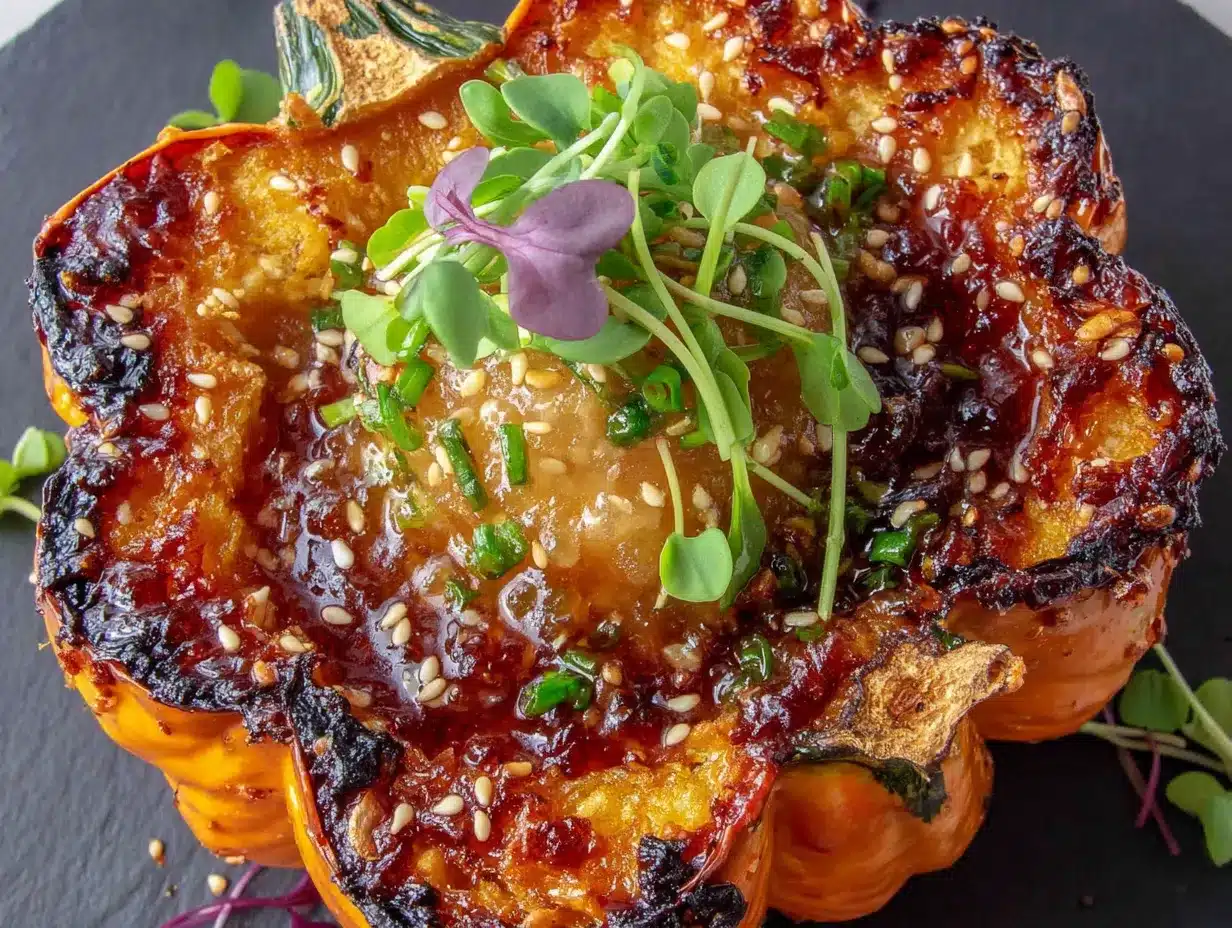
The first thing you notice when you cut into a kabocha squash is the color. It is not orange like a pumpkin — it is this deep, almost neon gold, like someone turned up the saturation. And the smell? Sweet and earthy, like autumn in a single breath. I roasted it hot and fast, letting the edges char just a little, while I melted butter with white miso and a tiny bit of maple syrup. When I pulled the tray out, the kitchen smelled like a restaurant I could never afford to eat at.
This savory roasted kabocha squash with miso butter has become my secret weapon. It is the side dish that makes people close their eyes and go quiet. And it takes about thirty minutes, most of which is just the oven doing the work. I have made it for weeknight dinners, for Thanksgiving, and for nights when I needed to feel like I had my life together even when I clearly did not. It is that good.
This is not just another roasted squash recipe. The miso butter changes everything — it is salty and funky and rich, and it clings to every caramelized edge. Trust me on this one.
Why You’ll Love This Recipe
Let me tell you why this recipe has earned a permanent spot in my rotation. I have tested it at least a dozen times — with different squash sizes, different oven temperatures, different butter-to-miso ratios. This version is the one that works every single time, no matter what kind of week you are having.
- Quick & Easy: From counter to table in about 35 minutes. Most of that is hands-off roasting time, so you can prep the rest of your meal while the squash does its thing in the oven.
- Simple Ingredients: You need a kabocha squash, butter, white miso paste, maple syrup, and a few pantry staples. That is it. No special trips to three different stores.
- Perfect for Fall Gatherings: This dish fits right in alongside a cozy roasted fall vegetable and pear salad with walnuts or a simple roast chicken. It is fancy enough for company but easy enough for a Tuesday.
- Crowd-Pleaser: I have served this to people who swear they hate squash. They always ask for seconds. The miso butter is the great equalizer — it makes everything irresistible.
- Unbelievably Delicious: The contrast between the caramelized, almost nutty squash and the savory, umami-rich miso butter is next-level. You will find yourself eating it straight off the baking sheet. I am not judging.
What makes this recipe different from all the other roasted squash recipes out there? It is the technique. Roasting at high heat gives you those crispy, browned edges that taste like candy. And the miso butter? It is not just brushed on — it is drizzled generously, so every single piece gets coated. I have tested this with yellow miso, red miso, and even chickpea miso. White miso is the sweet spot. It is mild enough to let the squash shine but bold enough to leave an impression.
This is the kind of recipe that makes you feel like a really good cook, even on days when you burned the toast. It is comfort food, but make it sophisticated. It is healthy, but it tastes indulgent. It is the side dish that steals the show.
What Ingredients You Will Need
This recipe uses simple, wholesome ingredients that come together to create something truly special. Most of these are pantry staples or easy to find at any grocery store. Here is what you will need:
For the Squash
- 1 medium kabocha squash (about 2 to 2.5 pounds) — Look for one that feels heavy for its size and has a deep green color with some orange patches. That orange means it is ripe and sweet. You can also use butternut squash or acorn squash if kabocha is unavailable, but the texture will be slightly different.
- 2 tablespoons olive oil — A good-quality extra virgin olive oil works beautifully here. It helps the squash caramelize without burning. Avocado oil is a great substitute if you prefer a neutral flavor.
- 1/2 teaspoon sea salt — I use fine sea salt. If you are using kosher salt, you may need a bit more. Season generously — squash needs salt to bring out its natural sweetness.
- 1/4 teaspoon black pepper — Freshly ground is always better, but pre-ground works in a pinch.
For the Miso Butter
- 3 tablespoons unsalted butter — I recommend using a high-quality European-style butter like Kerrygold for the richest flavor. The butter acts as the carrier for all that savory miso goodness. If you need a dairy-free option, use a high-quality vegan butter or coconut oil.
- 2 tablespoons white miso paste — This is the star of the show. White miso (also called shiro miso) is fermented soybean paste that is mild, slightly sweet, and deeply savory. I prefer the brand Hikari or Miso Master for consistent quality. Do not substitute red miso here — it is too intense and will overpower the squash.
- 1 tablespoon maple syrup — Pure maple syrup, not pancake syrup. The sweetness balances the salty miso and helps with caramelization. Honey or agave nectar can be substituted, but maple really does taste best here.
- 1 teaspoon toasted sesame oil — This adds a subtle nuttiness that complements both the miso and the roasted squash. Do not skip it — it makes a difference. Regular sesame oil is fine if that is what you have.
- 1 small clove garlic, minced — Optional, but highly recommended. It adds a gentle warmth that rounds out the flavors. Use a microplane for the finest mince.
For Garnish (Optional but Recommended)
- 1 tablespoon toasted sesame seeds — Black and white sesame seeds mixed together look beautiful. Toast them in a dry pan for about 2 minutes until fragrant.
- 2 green onions, thinly sliced — The fresh, sharp flavor cuts through the richness of the miso butter perfectly.
- Flaky sea salt — A pinch of Maldon or similar flaky salt right before serving adds a lovely crunch and burst of salinity.
Ingredient Selection Tips: When choosing your kabocha squash, look for one with a firm, unblemished skin. It should feel heavy and solid. The stem should be dry and intact. If you can find a kabocha with orange patches on the green skin, grab it — that is a sign of maximum sweetness. Store uncut kabocha in a cool, dark place for up to a month. Once cut, wrap tightly and refrigerate for up to 5 days.
Substitution Guidance: If you cannot find kabocha squash, butternut squash is the best substitute — it has a similar sweetness and texture when roasted. Acorn squash works too, but it is a bit less sweet and more fibrous. For a completely different but delicious twist, try this miso butter on wedges of delicata squash (no peeling needed!).
Equipment Needed
You do not need a fancy kitchen to make this recipe. Here is what you will need:
- Large baking sheet (half-sheet pan or similar) — A rimmed baking sheet is best to catch any juices. I use my trusty Nordic Ware half-sheet pan. If you do not have a large baking sheet, use two smaller ones — just make sure the squash is in a single layer.
- Parchment paper or silicone baking mat — This makes cleanup so much easier and prevents sticking. Parchment paper is cheap and disposable. Silicone mats are reusable and eco-friendly.
- Sharp chef’s knife — Kabocha squash is dense. A sharp 8-inch or 10-inch chef’s knife will make cutting it much safer and easier. If your knife is dull, you will struggle. Trust me on this — I learned the hard way.
- Vegetable peeler — Optional. Some people prefer to peel kabocha, but I leave the skin on. It is edible and gets tender when roasted. If you want to peel it, a Y-peeler works best.
- Small saucepan or microwave-safe bowl — For melting the butter and mixing the miso butter. A small saucepan gives you more control, but the microwave is faster.
- Whisk or small spoon — To combine the miso butter ingredients until smooth.
- Measuring spoons — For accuracy, especially with the miso paste and maple syrup.
- Cutting board — A sturdy wooden or plastic cutting board. Make sure it is stable before you start cutting.
Budget-Friendly Options: You do not need to spend a lot on equipment. A basic baking sheet from the grocery store works just fine. Use aluminum foil if you do not have parchment paper. And if you do not have a silicone brush for applying the miso butter, just use a spoon — it works perfectly well.
Maintenance Tip: After cutting kabocha, wash your knife immediately. The squash can leave a sticky residue that is harder to clean once it dries. A quick rinse and wipe keeps your knife in good shape.
Preparation Method
Let me walk you through this step by step. I have made this recipe so many times that I could do it in my sleep, but I will share every detail so you get perfect results on your first try.
Step 1: Preheat and Prepare
Preheat your oven to 400°F (200°C). Line a large baking sheet with parchment paper or a silicone mat. This makes cleanup a breeze and prevents the squash from sticking.
Step 2: Cut the Kabocha Squash
This is the most challenging part, so pay attention. Kabocha squash is hard. Like, really hard. Place the squash on a sturdy cutting board. Using a sharp chef’s knife, carefully cut off a thin slice from the top and bottom to create flat surfaces. This stabilizes the squash and makes it safer to cut.
Stand the squash on one of the flat ends. Cut it in half from top to bottom. You will need some muscle here — go slowly and use the full length of the blade. If it feels too difficult, you can microwave the whole squash for 2-3 minutes to soften it slightly. Let it cool before handling.
Scoop out the seeds and stringy fibers with a spoon. You can save the seeds and roast them later if you like — they are delicious with a little salt and olive oil.
Cut each half into wedges, about 1 to 1.5 inches thick at the widest part. I usually get 8 to 10 wedges from one medium squash. Leave the skin on — it is edible and adds a nice texture contrast. If you prefer peeled squash, use a vegetable peeler before cutting into wedges.
Step 3: Season the Squash
Place the squash wedges on the prepared baking sheet in a single layer. Do not overcrowd — give each piece a little space so they roast instead of steam. Drizzle with 2 tablespoons of olive oil, then sprinkle with 1/2 teaspoon sea salt and 1/4 teaspoon black pepper. Use your hands to toss everything together, making sure each wedge is coated. Arrange them cut-side down for maximum caramelization.
Step 4: Roast the Squash
Roast the squash for 25 to 30 minutes, flipping halfway through. You want the wedges to be golden brown and tender when pierced with a fork. The edges should be caramelized and slightly charred in spots — that is where the flavor lives. If your squash is on the smaller side, start checking at 20 minutes. Larger squash may need up to 35 minutes.
While the squash roasts, make the miso butter.
Step 5: Make the Miso Butter
In a small saucepan over low heat, melt 3 tablespoons of unsalted butter. Once melted, remove from heat and whisk in 2 tablespoons of white miso paste, 1 tablespoon of maple syrup, 1 teaspoon of toasted sesame oil, and the minced garlic if using. Whisk until smooth and fully combined. The mixture should be thick but pourable. If it seems too thick, add a teaspoon of warm water and whisk again.
Alternatively, you can microwave the butter in a small bowl for 30 seconds until melted, then whisk in the remaining ingredients. Both methods work equally well.
Taste the miso butter. It should be salty, savory, and slightly sweet. Adjust if needed — add a tiny bit more maple syrup if you prefer it sweeter, or an extra teaspoon of miso if you want more umami punch.
Step 6: Glaze the Squash
When the squash is done roasting, remove it from the oven. Let it cool on the baking sheet for about 2 minutes. Then, using a pastry brush or a spoon, generously brush or drizzle the miso butter over each wedge. Make sure every piece gets some love. The residual heat will melt the butter further and help it seep into all those caramelized crevices.
Reserve a little bit of the miso butter for drizzling right before serving — it makes the dish look glossy and irresistible.
Step 7: Garnish and Serve
Transfer the glazed squash to a serving platter. Sprinkle with toasted sesame seeds and sliced green onions. Finish with a pinch of flaky sea salt if you have it. Serve immediately while the squash is still warm and the miso butter is glossy and luscious.
Pro Tip: If you are making this for a crowd or a holiday meal, you can roast the squash up to an hour ahead and keep it warm in a low oven (200°F). Add the miso butter and garnishes just before serving for the best texture and presentation.
Cooking Tips & Techniques
Over the many times I have made this recipe, I have learned a few things the hard way. Let me save you some trouble.
Cutting Kabocha Safely: I cannot stress this enough — use a sharp knife. A dull knife is dangerous because it requires more force and can slip. If you are nervous about cutting the squash, microwave it whole for 2-3 minutes to soften the skin slightly. Let it cool, then cut. Also, make sure your cutting board is stable. Place a damp paper towel underneath to prevent it from sliding.
Maximizing Caramelization: The key to perfectly caramelized squash is high heat and space. Roast at 400°F and do not overcrowd the pan. If the wedges are touching, they will steam instead of roast, and you will miss out on those gorgeous browned edges. If your baking sheet is small, use two sheets and rotate them halfway through.
Don’t Skip the Flip: Flipping the squash halfway through roasting ensures even cooking and browning on both sides. Set a timer so you do not forget. I have definitely forgotten, and the result was one side golden and the other side pale and sad.
Miso Butter Consistency: If your miso butter seizes up or looks grainy, do not panic. It probably got too hot. Gently reheat it over low heat while whisking constantly, or add a teaspoon of warm water and whisk until smooth. Miso is a fermented paste, so it can sometimes separate if overheated.
Timing and Multitasking: This recipe is perfect for multitasking. While the squash roasts, you can make the miso butter, prepare a main dish, or set the table. The active prep time is only about 10 minutes, so it fits beautifully into a busy evening. I often make this alongside a simple roast chicken or a creamy one-pot sausage and potato soup for a cozy, satisfying meal.
My Biggest Failure: The first time I made this, I used red miso paste because it was all I had. Big mistake. The flavor was overwhelmingly salty and funky, and it completely masked the delicate sweetness of the kabocha. Stick with white miso. It is milder and lets the squash shine.
Variations & Adaptations
This recipe is incredibly versatile. Here are some ways to change it up depending on your mood, diet, or what is in your fridge.
Dietary Variations
- Vegan Version: Substitute the butter with a high-quality vegan butter or coconut oil. Use a vegan butter that has a high fat content for the best texture. Miyoko’s and Earth Balance are both excellent choices.
- Gluten-Free: This recipe is naturally gluten-free. Just make sure your miso paste is certified gluten-free if you are sensitive — some miso is made with barley (mugi miso). White miso is typically made with rice (kome miso) and is gluten-free, but always check the label.
- Low-FODMAP: Omit the garlic and use garlic-infused oil instead. Use a low-FODMAP miso paste if available, or substitute with tamari (gluten-free soy sauce) mixed with a little maple syrup for a similar umami-sweet profile.
Flavor Variations
- Spicy Miso Butter: Add 1/2 teaspoon of red pepper flakes or a drizzle of sriracha to the miso butter. The heat pairs beautifully with the sweet squash. I love this version on cold winter nights.
- Citrus Miso: Add 1 teaspoon of fresh lime juice and 1/2 teaspoon of lime zest to the miso butter. The acidity brightens everything up and makes the dish feel lighter. This is my go-to summer variation.
- Herb-Infused: Stir in 1 tablespoon of finely chopped fresh cilantro or parsley into the miso butter before glazing. Fresh herbs add a pop of color and freshness.
Cooking Method Variations
- Air Fryer: Cut the squash into smaller wedges (about 1/2 inch thick). Toss with olive oil, salt, and pepper. Air fry at 375°F for 12-15 minutes, shaking the basket halfway through. Glaze with miso butter and return to the air fryer for 1-2 minutes. This method is faster and gives you extra crispy edges.
- Grilled: Cut the squash into 1/2-inch thick slices (not wedges). Brush with olive oil and grill over medium-high heat for 4-5 minutes per side, until tender and charred. Brush with miso butter right after grilling. The smoky flavor is incredible.
My Personal Favorite Variation: I once added a sprinkle of furikake (Japanese rice seasoning) on top of the miso-glazed squash, and it was a game-changer. The seaweed and sesame flavors complemented the miso beautifully. If you have furikake in your pantry, try it — you will not be disappointed.
Serving & Storage Suggestions
This savory roasted kabocha squash with miso butter is best served warm, right after glazing. The miso butter is at its most luscious when it is still glossy and warm.
Serving Temperature: Serve immediately while the squash is hot and the butter is melted. It can also be served at room temperature — the flavors are still fantastic, and it is a great option for potlucks or buffets. If serving at room temperature, let it sit for no more than 2 hours for food safety.
Presentation Ideas: Arrange the wedges on a large platter in a fan pattern for a beautiful presentation. Drizzle the reserved miso butter over the top, then sprinkle with sesame seeds and green onions. A pinch of flaky sea salt right before serving adds a professional touch. For a holiday table, serve alongside other fall favorites like simple fall harvest charcuterie board with pears and honey for a stunning spread.
Complementary Dishes: This squash pairs beautifully with roasted chicken, grilled fish, seared pork chops, or a hearty grain bowl. It also works wonderfully as part of a Thanksgiving spread alongside turkey and stuffing. For a vegetarian meal, serve it with a warm lentil salad or a creamy roasted tomato basil soup for dipping.
Storage Instructions: Store any leftovers in an airtight container in the refrigerator for up to 4 days. The squash will soften slightly, and the miso butter will solidify, but the flavor remains delicious. I often make extra on purpose because leftovers are amazing.
Reheating Methods:
- Oven: Reheat on a baking sheet at 350°F for 8-10 minutes. This is the best method for restoring some crispness to the edges.
- Air Fryer: Reheat at 350°F for 3-4 minutes. This is the fastest way to get crispy edges again.
- Microwave: Microwave on high for 45-60 seconds. This is the quickest method, but the squash will be softer and less caramelized. It is still tasty, just not as texturally exciting.
How Flavors Develop: Interestingly, the flavors meld and deepen overnight. The miso butter seeps into the squash, and the sweet-savory balance becomes even more pronounced. Leftovers are fantastic chopped up and tossed into a warm grain bowl with spinach and a fried egg.
Nutritional Information & Benefits
This recipe is not just delicious — it is also packed with nutrients. Here is the estimated nutritional breakdown per serving (based on 4 servings):
- Calories: 220-250
- Total Fat: 14g
- Saturated Fat: 6g
- Carbohydrates: 22g
- Fiber: 5g
- Sugar: 8g (naturally occurring)
- Protein: 4g
- Sodium: 480mg
- Vitamin A: 200% of the Daily Value
- Vitamin C: 30% of the Daily Value
- Potassium: 700mg
Health Benefits: Kabocha squash is a nutritional powerhouse. It is rich in beta-carotene, which your body converts to vitamin A for healthy vision and immune function. It is also high in fiber, which supports digestive health and helps you feel full and satisfied. The miso paste adds probiotics (beneficial bacteria) that support gut health, especially if you use unpasteurized miso. The olive oil provides heart-healthy monounsaturated fats.
Dietary Considerations: This recipe is naturally gluten-free (check your miso label), dairy-free if you use vegan butter, and can be made vegan as noted above. It is also low in added sugar — the only sweetener is 1 tablespoon of maple syrup for the entire dish.
Potential Allergens: This recipe contains soy (from miso paste) and dairy (from butter). For a soy-free version, substitute the miso with a chickpea-based miso or use coconut aminos mixed with a little maple syrup. For a dairy-free version, use vegan butter or coconut oil.
My Personal Wellness Perspective: I love that this recipe feels indulgent but is actually really good for you. It is the kind of dish that makes eating vegetables feel like a treat, not a chore. When I serve this to my family, I feel good knowing they are getting a hefty dose of vitamins and fiber, and they feel good because it tastes amazing. Win-win.
Conclusion
This savory roasted kabocha squash with miso butter has become one of those recipes that I genuinely look forward to making. It is simple enough for a busy weeknight but impressive enough for company. The combination of caramelized squash and umami-rich miso butter is one of those flavor pairings that just works — it is salty, sweet, savory, and completely satisfying.
I love that this recipe is flexible. You can keep it simple or dress it up with garnishes. You can serve it alongside a roast chicken or pile it onto a grain bowl. It works for dinner, for holidays, and for those nights when you need a vegetable side dish that actually excites you.
I would love to hear how this recipe turns out for you. Did you try a variation? Did you serve it with something amazing? Drop a comment below and let me know. And if you share a photo on social media, tag me — I love seeing your creations. Honestly, this recipe has brought me so much joy in the kitchen, and I hope it does the same for you.
Go ahead, grab that kabocha squash you have been eyeing at the market. You have got this.
Frequently Asked Questions
Do I have to peel kabocha squash before roasting?
No, you do not have to peel it. The skin of kabocha squash is completely edible and becomes tender when roasted. It also adds a nice texture contrast to the soft flesh. If you prefer a smoother texture, you can peel it with a vegetable peeler, but I recommend leaving it on for the best results and extra nutrients.
Can I use a different type of miso for this recipe?
White miso (shiro miso) is the best choice for this recipe because it is mild, slightly sweet, and blends beautifully with butter. Red miso is much saltier and more intense, and it can overpower the delicate flavor of the squash. If you only have red miso, use half the amount and taste before adding more. Yellow miso is a decent alternative, but white miso is the ideal choice.
How do I know when the kabocha squash is fully roasted?
The squash is done when it is golden brown on the edges and easily pierced with a fork. The flesh should be tender but not mushy. The edges should be caramelized and slightly charred in spots — that is where the best flavor comes from. Start checking at 20 minutes, but most medium squash will need 25 to 30 minutes at 400°F.
Can I make this recipe ahead of time?
Yes, you can roast the squash up to an hour ahead and keep it warm in a low oven (200°F). However, I recommend adding the miso butter and garnishes just before serving for the best texture and presentation. If you have leftovers, store them in an airtight container in the refrigerator for up to 4 days. Reheat in the oven or air fryer to restore some crispness.
What can I serve with roasted kabocha squash?
This squash pairs beautifully with roasted chicken, grilled fish, seared pork chops, or a hearty grain bowl. It also works wonderfully as part of a Thanksgiving or holiday spread. For a vegetarian meal, serve it with a warm lentil salad or alongside a creamy roasted tomato basil soup. It is also delicious chopped up and added to salads or grain bowls the next day.
Pin This Recipe!
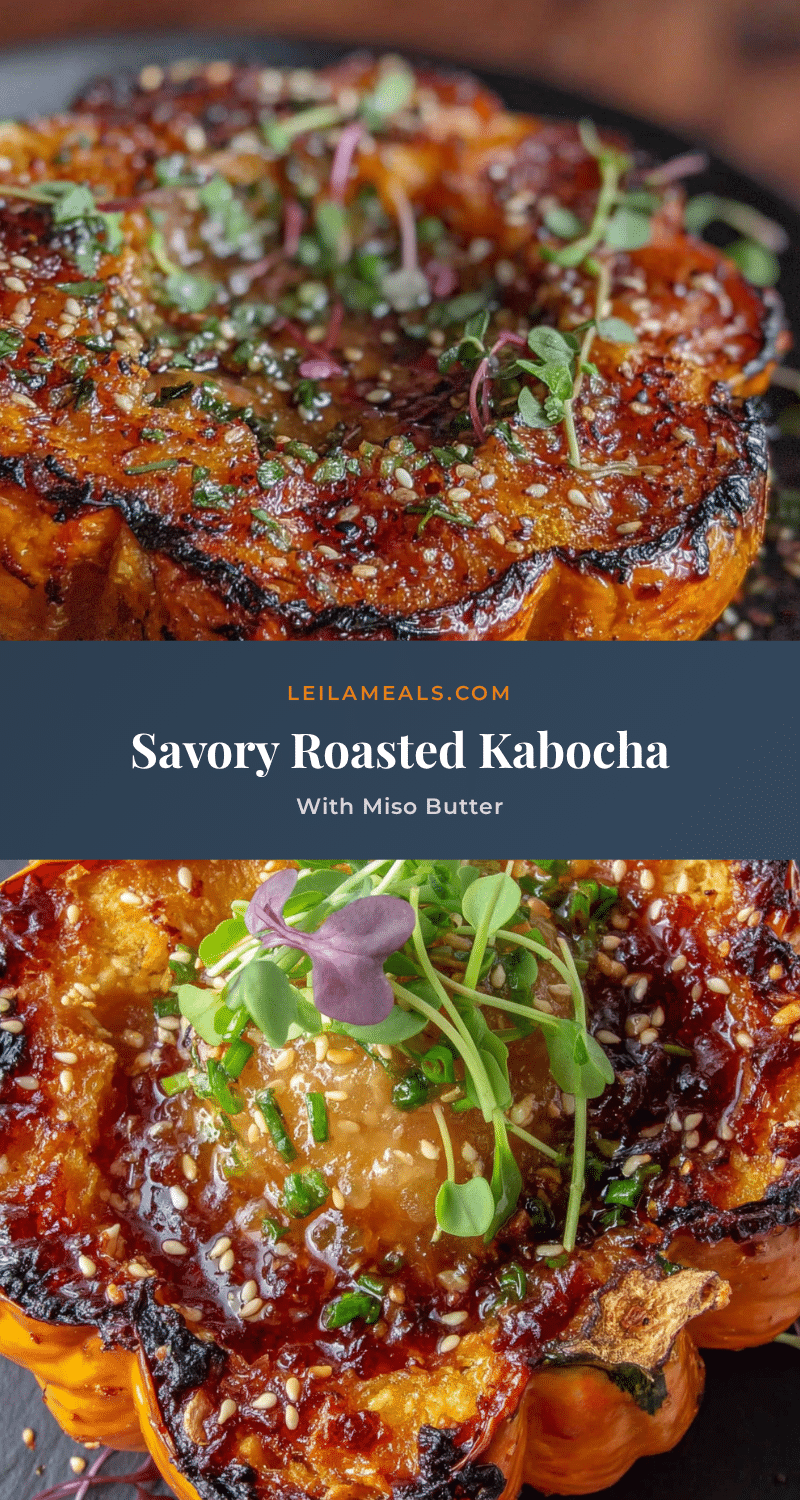
Savory Roasted Kabocha Squash with Miso Butter
This savory roasted kabocha squash with miso butter is the side dish that makes people close their eyes and go quiet. It takes about thirty minutes, most of which is just the oven doing the work, and the miso butter changes everything—it is salty and funky and rich, and it clings to every caramelized edge.
- Prep Time: 10 minutes
- Cook Time: 25-30 minutes
- Total Time: 35-40 minutes
- Yield: 4 servings 1x
- Category: Side Dish
- Cuisine: Japanese-inspired
Ingredients
- 1 medium kabocha squash (about 2 to 2.5 pounds)
- 2 tablespoons olive oil
- 1/2 teaspoon sea salt
- 1/4 teaspoon black pepper
- 3 tablespoons unsalted butter
- 2 tablespoons white miso paste
- 1 tablespoon maple syrup
- 1 teaspoon toasted sesame oil
- 1 small clove garlic, minced (optional)
- 1 tablespoon toasted sesame seeds (for garnish)
- 2 green onions, thinly sliced (for garnish)
- Flaky sea salt (for garnish)
Instructions
- Preheat your oven to 400°F (200°C). Line a large baking sheet with parchment paper or a silicone mat.
- Cut the kabocha squash: Place the squash on a sturdy cutting board. Carefully cut off a thin slice from the top and bottom to create flat surfaces. Stand the squash on one flat end and cut it in half from top to bottom. Scoop out the seeds and stringy fibers with a spoon. Cut each half into wedges, about 1 to 1.5 inches thick at the widest part. Leave the skin on.
- Place the squash wedges on the prepared baking sheet in a single layer. Drizzle with 2 tablespoons of olive oil, then sprinkle with 1/2 teaspoon sea salt and 1/4 teaspoon black pepper. Toss to coat evenly, then arrange cut-side down.
- Roast the squash for 25 to 30 minutes, flipping halfway through, until golden brown and tender when pierced with a fork. The edges should be caramelized and slightly charred.
- While the squash roasts, make the miso butter: In a small saucepan over low heat, melt 3 tablespoons of unsalted butter. Remove from heat and whisk in 2 tablespoons of white miso paste, 1 tablespoon of maple syrup, 1 teaspoon of toasted sesame oil, and the minced garlic (if using) until smooth.
- When the squash is done, remove from the oven and let cool for 2 minutes. Brush or drizzle the miso butter generously over each wedge. Reserve a little for serving.
- Transfer the glazed squash to a serving platter. Sprinkle with toasted sesame seeds and sliced green onions. Finish with a pinch of flaky sea salt. Serve immediately.
Notes
For easier cutting, microwave the whole squash for 2-3 minutes to soften slightly. Do not overcrowd the baking sheet to ensure caramelization. White miso is essential; red miso is too intense. Leftovers can be stored in an airtight container in the refrigerator for up to 4 days. Reheat in the oven or air fryer for best texture.
Nutrition
- Serving Size: 1 serving (about 1/4
- Calories: 235
- Sugar: 8
- Sodium: 480
- Fat: 14
- Saturated Fat: 6
- Carbohydrates: 22
- Fiber: 5
- Protein: 4
Keywords: roasted kabocha squash, miso butter, easy side dish, fall recipe, vegetarian, gluten-free, savory squash, umami


