There was this one evening when I was juggling work emails and dinner prep, and honestly, my motivation was somewhere deep under the couch cushions. I stared at the fridge, hoping for a miracle, but all I found was a lonely head of cauliflower and some forgotten veggies. I figured, why not try making cauliflower fried rice? Skeptical at first—because, let’s face it, can cauliflower really mimic rice?—I gave it a shot. The results surprised me. The texture was just right, the flavors hit the spot, and best of all, it was easy enough for a chaotic weeknight. Since then, Easy Low-Carb Cauliflower Fried Rice has been my go-to healthy meal that feels anything but boring.
What makes this recipe stick isn’t just the guilt-free aspect but the comfort it brings after a long day. It’s quick, satisfying, and packed with veggies, which means you actually feel good about eating it. I still remember the first time I served it to a friend who swore she couldn’t tell it wasn’t traditional fried rice. That quiet moment of “Hey, this works” is why I keep coming back to it.
Why You’ll Love This Recipe
- Quick & Easy: Ready in about 20 minutes, perfect for those busy nights when you need dinner fast.
- Simple Ingredients: Uses common pantry staples and fresh veggies—no specialty store runs required.
- Perfect for Healthy Meals: Low-carb and nutrient-rich, making it ideal for anyone watching their carb intake.
- Crowd-Pleaser: Even picky eaters appreciate the familiar fried rice flavor without the heaviness.
- Unbelievably Delicious: The combination of soy sauce, garlic, and fresh veggies gives it that satisfying umami punch.
This recipe isn’t just another cauliflower dish tossed with soy sauce. It’s about getting the right texture—fluffy yet firm—and balancing flavors so it doesn’t feel like a diet meal. I like to lightly toast the cauliflower rice before adding the sauce, which gives it a subtle nutty note. Plus, mixing in scrambled eggs and some crunchy veggies creates a harmony that’s both comforting and fresh.
Honestly, this recipe sticks around because it fits so well into real life. It’s the kind of healthy meal that doesn’t demand extra time or crazy ingredients but still manages to make you pause and enjoy. Whether you’re cooking for yourself or feeding a hungry family, it’s a reliable choice that never disappoints.
What Ingredients You Will Need
This recipe relies on fresh, wholesome ingredients that come together to create bold flavors without fuss. Most are pantry staples, making it incredibly accessible.
- Cauliflower Rice: About 4 cups (roughly 1 medium head processed into rice-sized pieces). You can buy pre-riced cauliflower, but I prefer grating it myself for better texture.
- Vegetable Oil or Sesame Oil: 2 tablespoons (sesame oil adds a lovely aroma, but vegetable oil works for a neutral base).
- Garlic: 3 cloves, minced (fresh garlic is key for that punch).
- Green Onions: 3 stalks, sliced thin (adds freshness and color).
- Frozen Peas & Carrots: 1 cup (thawed; a classic fried rice combo. You can swap with fresh diced carrots and peas in season).
- Eggs: 2 large, beaten (for protein and that traditional fried rice feel).
- Soy Sauce or Tamari: 3 tablespoons (tamari for gluten-free option; watch sodium levels if preferred).
- Ginger: 1 teaspoon, freshly grated (optional but adds a subtle zing).
- Salt & Pepper: To taste (go easy on salt since soy sauce adds saltiness).
- Optional Add-ins: Cooked chicken, shrimp, or tofu – about 1 cup diced (for extra protein).
I personally love using Kikkoman soy sauce for its balanced flavor and consistency. For the cauliflower, if you pick a fresh head, look for one with tight, white curds and minimal brown spots. When in season, fresh peas and carrots really brighten the dish, but frozen works just fine and saves time.
Equipment Needed
- Large Non-Stick Skillet or Wok: Essential for quick, even cooking. A wok is ideal if you have one because it allows high heat and fast stirring.
- Spatula or Wooden Spoon: For stirring without scratching your pan.
- Grater or Food Processor: To rice the cauliflower. I use a box grater because it’s simple and easy to clean, but a food processor speeds things up if you’re making big batches.
- Mixing Bowls: For beating eggs and prepping ingredients.
- Measuring Spoons: To keep the soy sauce and oil amounts precise.
If you’re on a budget, a sturdy skillet and box grater will do just fine. I’ve found that a well-seasoned cast iron skillet can also work wonders here, but non-stick is easier for cleanup. Keeping your spatula handy and scraping the bottom of the pan regularly keeps the cauliflower from sticking or burning.
Preparation Method
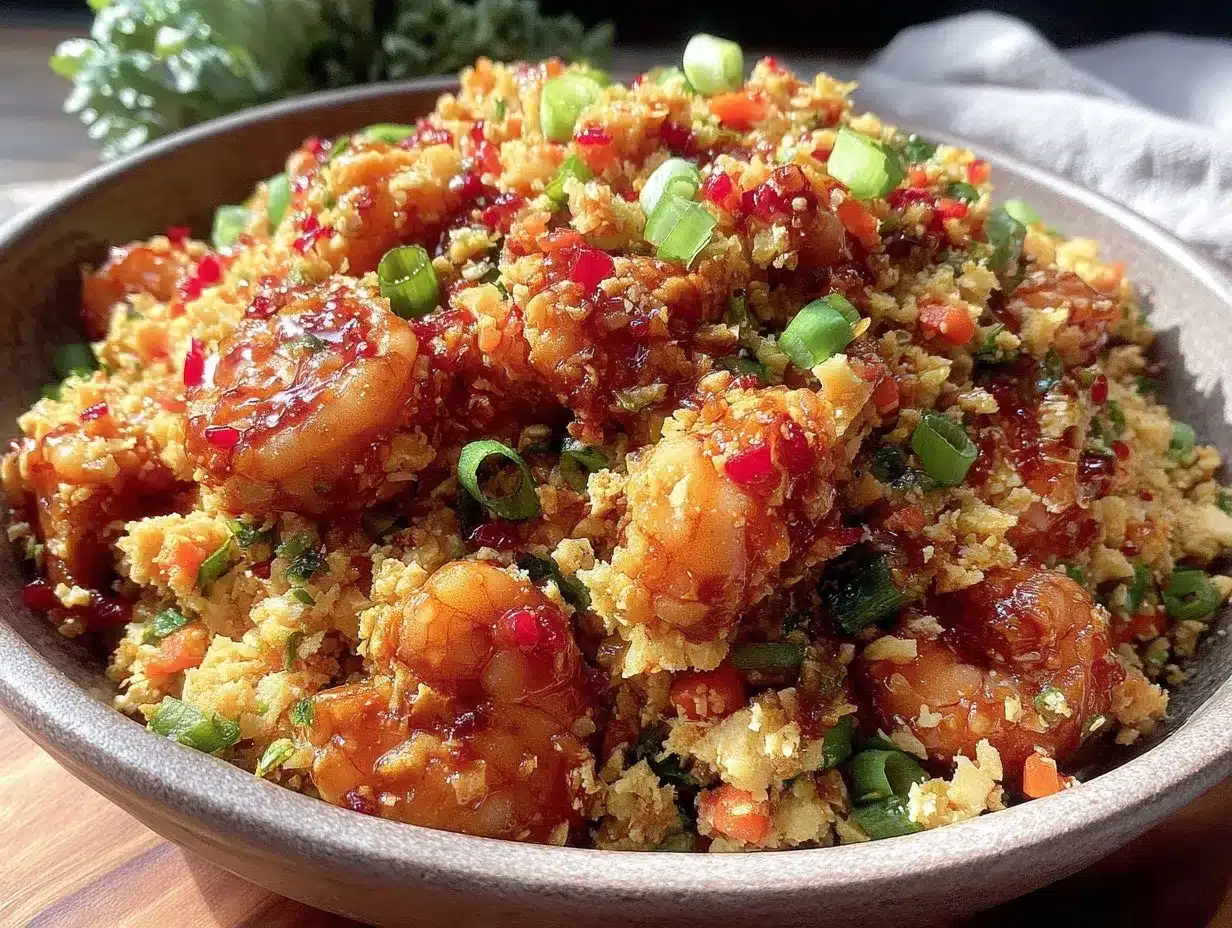
- Rice the Cauliflower: Remove the leaves and core from a medium cauliflower head. Using a box grater or pulse in a food processor, break the cauliflower into rice-sized pieces. This should yield about 4 cups of cauliflower rice. (Takes about 5 minutes.)
- Prep the Veggies and Eggs: Mince the garlic, slice green onions, thaw peas and carrots if frozen, and beat the eggs in a small bowl. (Set aside for easy access.)
- Cook the Eggs: Heat 1 tablespoon of oil in your skillet or wok over medium heat. Pour in the beaten eggs and scramble gently until just set but still moist. Remove eggs from the pan and set aside. (About 2-3 minutes.)
- Sauté Aromatics: Add the remaining oil to the pan. Toss in the garlic and ginger (if using), stirring constantly for about 30 seconds until fragrant. Be careful not to burn the garlic.
- Cook Cauliflower Rice: Add the riced cauliflower, stirring frequently. Cook for 5-7 minutes, letting it soften and toast slightly. The cauliflower should look tender but not mushy, with a little golden color on some pieces.
- Add Veggies: Stir in the peas and carrots, cooking another 2-3 minutes until heated through. Season lightly with salt and pepper.
- Combine Ingredients: Return the scrambled eggs to the pan along with the green onions. Pour in the soy sauce or tamari and toss everything together to coat evenly. Taste and adjust seasoning if needed. (The dish should smell savory and inviting.)
- Serve: Remove from heat and serve immediately. Garnish with extra green onions or a drizzle of sesame oil if you like.
Quick tip: If the cauliflower releases too much water, increase the heat slightly and cook longer to evaporate it. Also, stirring constantly keeps the texture perfect—avoid letting it sit too long or it gets soggy.
Cooking Tips & Techniques
Cooking cauliflower fried rice isn’t rocket science, but a few pointers make a big difference. First, don’t overcrowd the pan. If your skillet feels packed, cook in batches to get that nice stir-fry effect instead of steaming.
Use high heat and keep moving the ingredients around. This prevents mushiness and gives you that slightly toasted flavor. When cooking the eggs, pull them off the heat just before they look fully cooked since they’ll finish cooking in the pan later.
Fresh garlic and ginger really lift the flavor here. Adding ginger is optional but worth trying if you want a little extra warmth. Use low-sodium soy sauce to control saltiness, especially if adding other salty ingredients.
One time, I accidentally added frozen peas straight from the freezer, and the cauliflower got watery fast. Lesson learned: thaw them first or use fresh to keep the texture right. Also, if you want to add proteins like shrimp or chicken, cook them separately and fold in at the end to avoid overcooking.
Timing is key—prep everything before you start cooking because stir-frying goes fast. Multitasking is easier when your mise en place is ready!
Variations & Adaptations
This recipe is pretty flexible, so feel free to mix it up based on what you enjoy or have on hand.
- Protein Options: Add diced chicken, shrimp, or tofu for a heartier meal. Cook these separately and fold in at the end.
- Vegetarian/Vegan: Skip the eggs and use firm tofu or tempeh for protein. Swap soy sauce with tamari or coconut aminos for gluten-free and soy-free options.
- Spice it Up: Add crushed red pepper flakes or a dash of chili garlic sauce for a kick.
- Seasonal Veggies: Swap peas and carrots for diced bell peppers, snap peas, or mushrooms depending on what’s fresh.
- Low-Sodium Version: Use reduced-sodium soy sauce and add extra herbs like cilantro or basil for flavor without salt.
Personally, I once tried adding roasted cashews and a splash of lime juice at the end—it was a surprising but delightful twist that added crunch and brightness. Don’t be afraid to experiment!
Serving & Storage Suggestions
Serve this cauliflower fried rice hot and fresh for the best texture. It pairs wonderfully with grilled or steamed proteins and a simple green salad. A light drizzle of extra sesame oil or a sprinkle of fresh chopped cilantro can add an extra layer of flavor.
If you have leftovers, store them in an airtight container in the refrigerator for up to 3 days. Reheat gently in a skillet over medium heat, adding a splash of water or oil to prevent drying out. Microwaving is fine but can make the rice a bit soggy.
Flavors tend to meld after a day, often becoming even more delicious. Just avoid overcooking on reheating to keep the cauliflower from getting mushy.
Nutritional Information & Benefits
This Easy Low-Carb Cauliflower Fried Rice recipe is a nutrient-dense, low-carb alternative to traditional fried rice. One serving (about 1.5 cups) contains approximately:
| Calories | Carbohydrates | Protein | Fat | Fiber |
|---|---|---|---|---|
| 180 kcal | 12 g | 8 g | 10 g | 4 g |
Cauliflower is rich in vitamin C and fiber, supporting digestion and immune health. Using eggs adds protein, making it a balanced meal that keeps you full without the carb overload of rice. This dish is naturally gluten-free and can be adapted for dairy-free diets.
Conclusion
Easy Low-Carb Cauliflower Fried Rice is the kind of recipe that fits right into everyday life—quick, tasty, and satisfying without fuss. It’s a healthy meal that doesn’t feel like a compromise, whether you’re cutting carbs or just craving something fresh. I love how it comes together fast and can be tailored to whatever you have on hand, making it a reliable staple in my kitchen.
Give it a try, tweak it your way, and see how it becomes your own favorite. Cooking doesn’t have to be complicated, and sometimes the simplest ideas turn into the best meals. I’m always curious to hear how you make it yours!
FAQs
Can I use frozen cauliflower rice for this recipe?
Yes, frozen cauliflower rice works well. Just make sure to thaw and drain it well to avoid extra moisture in the pan.
How do I prevent the cauliflower rice from becoming mushy?
Cook on high heat with frequent stirring and avoid overcrowding the pan. If it releases water, increase heat to evaporate it quickly.
Is this recipe suitable for a keto diet?
Absolutely! Cauliflower rice is low in carbs, making this recipe a great keto-friendly option.
Can I make this recipe ahead of time?
You can prep ingredients ahead, but it’s best cooked fresh. Leftovers store well in the fridge for up to 3 days and reheat nicely.
What can I substitute for soy sauce if I have a soy allergy?
Try coconut aminos or tamari (gluten-free soy sauce) as alternatives. Both provide a similar umami flavor.
Pin This Recipe!
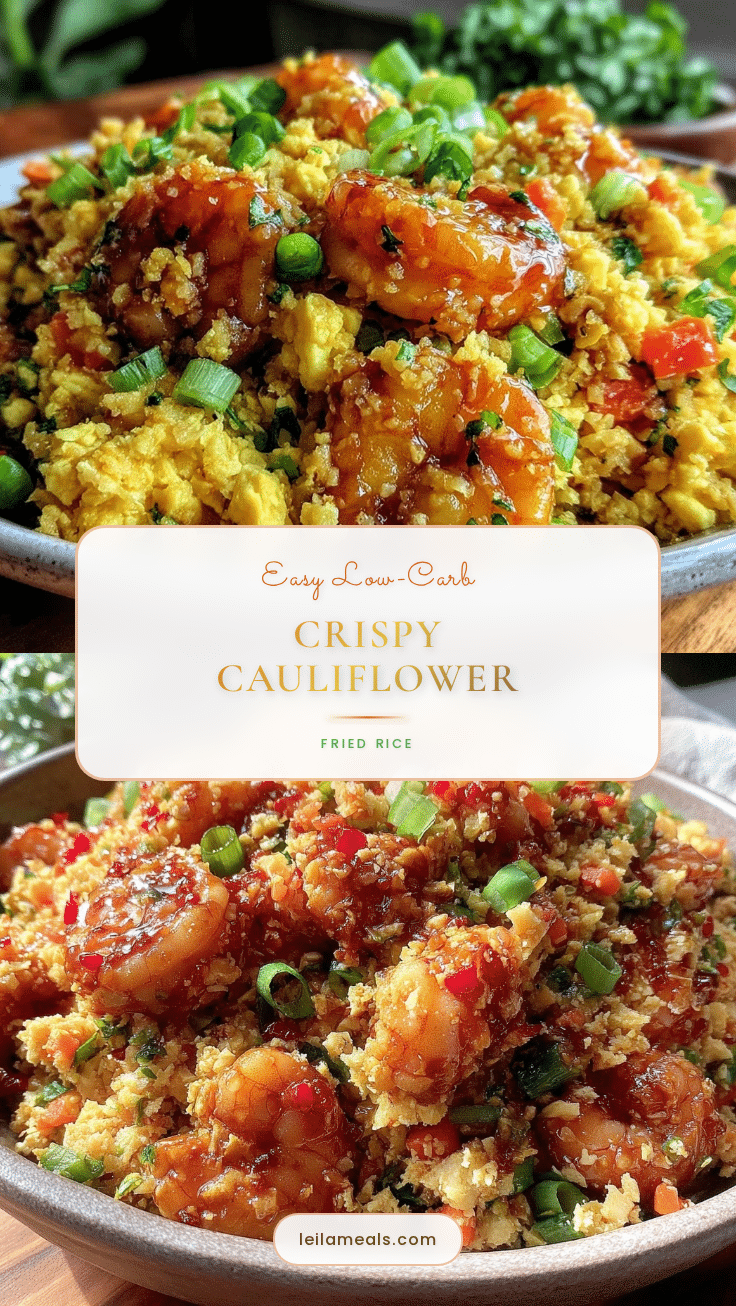
Easy Low-Carb Cauliflower Fried Rice Recipe Perfect for Healthy Meals
A quick, satisfying, and low-carb cauliflower fried rice recipe that mimics traditional fried rice with fresh veggies, eggs, and savory soy sauce. Perfect for busy weeknights and healthy meals.
- Prep Time: 10 minutes
- Cook Time: 10 minutes
- Total Time: 20 minutes
- Yield: 4 servings 1x
- Category: Main Course
- Cuisine: Asian
Ingredients
- 4 cups cauliflower rice (from about 1 medium head cauliflower)
- 2 tablespoons vegetable oil or sesame oil
- 3 cloves garlic, minced
- 3 stalks green onions, sliced thin
- 1 cup frozen peas and carrots, thawed
- 2 large eggs, beaten
- 3 tablespoons soy sauce or tamari
- 1 teaspoon freshly grated ginger (optional)
- Salt and pepper to taste
- Optional add-ins: 1 cup cooked chicken, shrimp, or tofu, diced
Instructions
- Rice the cauliflower by removing leaves and core from a medium cauliflower head. Use a box grater or food processor to break into rice-sized pieces, yielding about 4 cups. (About 5 minutes)
- Prep the veggies and eggs: mince garlic, slice green onions, thaw peas and carrots if frozen, and beat the eggs in a small bowl.
- Heat 1 tablespoon oil in a large non-stick skillet or wok over medium heat. Pour in beaten eggs and scramble gently until just set but still moist. Remove eggs and set aside. (2-3 minutes)
- Add remaining oil to the pan. Toss in garlic and ginger (if using), stirring constantly for about 30 seconds until fragrant. Avoid burning garlic.
- Add cauliflower rice, stirring frequently. Cook for 5-7 minutes until tender and slightly toasted with some golden color.
- Stir in peas and carrots, cooking another 2-3 minutes until heated through. Season lightly with salt and pepper.
- Return scrambled eggs to the pan along with green onions. Pour in soy sauce or tamari and toss everything together to coat evenly. Adjust seasoning if needed.
- Remove from heat and serve immediately. Garnish with extra green onions or a drizzle of sesame oil if desired.
Notes
If cauliflower releases too much water, increase heat to evaporate it quickly. Stir constantly to avoid sogginess. Cook proteins separately and fold in at the end to avoid overcooking. Use low-sodium soy sauce to control saltiness. Thaw frozen peas and carrots before cooking to maintain texture.
Nutrition
- Serving Size: About 1.5 cups
- Calories: 180
- Fat: 10
- Carbohydrates: 12
- Fiber: 4
- Protein: 8
Keywords: cauliflower fried rice, low-carb, healthy meals, quick dinner, keto-friendly, gluten-free, easy recipe