“You really should try my mom’s soda bread,” my friend said over a crackling video call one chilly afternoon. Honestly, I wasn’t convinced—how special could soda bread be? But she insisted, describing how the crust crackled just right and the crumb was tender yet hearty, especially when slathered with her homemade melted herb butter. Skeptical yet curious, I gave it a shot that weekend, figuring it was a quick fix for a lazy day. What I didn’t expect was how that simple loaf, made from just a few pantry staples, became a quiet kind of comfort in my otherwise busy week.
That first bite, still warm from the oven, with the herb butter melting into every nook and cranny, was surprisingly soul-soothing. It wasn’t fancy, but it felt like a reset—a small moment of calm and satisfaction. Since then, the recipe has quietly sneaked into my rotation, sometimes showing up for a lazy brunch or alongside a bowl of soup on a gloomy evening. The magic? It’s the perfect balance of rustic simplicity and rich flavor, and that herb butter just takes it over the edge.
There’s something about Irish soda bread that feels honest and homey, and this particular recipe captures that feeling without fuss. It’s the kind of bread that doesn’t require kneading or rising, which means you can whip it up on a whim—kind of like the ease of grilled watermelon with balsamic glaze I made last summer, simple yet packed with personality. So if you’re looking for a bread that’s both approachable and deeply satisfying, this Perfect Irish Soda Bread with Melted Herb Butter just might be your new go-to.
Why You’ll Love This Perfect Irish Soda Bread Recipe
After making this Irish soda bread several times, I can say it’s honestly one of those recipes that feels like it was tailor-made for busy home cooks who still crave homemade goodness. Here’s why it stands out:
- Quick & Easy: This bread comes together in just about 30 minutes, no yeast or long waits involved—ideal if you want fresh bread without the marathon baking session.
- Simple Ingredients: You probably already have everything on hand—flour, baking soda, buttermilk, and salt—no last-minute grocery runs.
- Perfect for Cozy Meals: Whether it’s a comforting weekend breakfast or paired with a bowl of stew on a cold day, this bread fits the bill perfectly.
- Crowd-Pleaser: I’ve brought this to casual gatherings, and it always disappears fast. Kids love it with jam, and adults rave about the herb butter spread.
- Unbelievably Delicious: The crumb is tender with just enough density, while the crust has a satisfying crunch. That melted herb butter adds a fragrant, buttery richness that’s hard to resist.
What sets this recipe apart is the way the herb butter is made: fresh parsley, thyme, and garlic melted gently into butter, creating a savory spread that seeps into the warm bread perfectly. It’s that little extra step that transforms simple soda bread into something special, kind of like how a touch of garlic butter can make a quick garlic bread feel gourmet without fuss.
Honestly, this isn’t just bread—it’s a comforting ritual, a way to pause and enjoy something wholesome and satisfying. That’s why it’s stuck around my kitchen, and I think you’ll appreciate it just as much.
What Ingredients You Will Need
This recipe relies on simple, wholesome ingredients that come together to give you that authentic Irish soda bread flavor—no complicated or hard-to-find items here. Most are pantry staples, with a few fresh touches for the herb butter that really make the difference.
- For the Irish Soda Bread:
- 2 ½ cups (320g) all-purpose flour (I like King Arthur for reliable texture)
- 1 teaspoon baking soda (the key leavening agent in soda bread)
- 1 teaspoon salt (balances flavor and enhances crust)
- 1 ¾ cups (420ml) buttermilk, well shaken (the acid reacts with baking soda for rise; if you don’t have buttermilk, mix 1 ¾ cups milk with 1 tablespoon lemon juice and let sit 5 minutes)
- For the Melted Herb Butter:
- 6 tablespoons (85g) unsalted butter
- 1 tablespoon fresh parsley, finely chopped (adds freshness)
- 1 teaspoon fresh thyme leaves (earthy aroma)
- 1 small garlic clove, minced (for savory depth)
- Salt and pepper to taste
- Mixing bowl – a large one to mix the dough comfortably.
- Wooden spoon or sturdy spatula – for combining ingredients without overworking.
- Baking sheet or ovenproof skillet – I often use a cast iron skillet for a crispier crust, but a rimmed baking sheet works just fine.
- Measuring cups and spoons – precise measurements help with soda bread’s texture.
- Sharp knife or bread lame – to score the top of the dough, allowing steam to escape and helping the bread rise evenly.
- Small saucepan or microwave-safe bowl – to melt the herb butter.
- Preheat your oven to 425°F (220°C). Position your rack in the middle. This high heat jump-starts the crust formation.
- Mix the dry ingredients. In a large bowl, whisk together 2 ½ cups (320g) all-purpose flour, 1 teaspoon baking soda, and 1 teaspoon salt until evenly combined.
- Add the buttermilk. Pour in 1 ¾ cups (420ml) buttermilk gradually, stirring with a wooden spoon until a rough dough forms. It will be sticky but should hold together. If too dry, add a splash more buttermilk.
- Shape the dough. Turn the dough onto a lightly floured surface. Pat it gently into a round about 8 inches (20cm) across and 2 inches (5cm) thick. Don’t knead too much—you want to keep it tender.
- Score the top. Using a sharp knife, cut a deep “X” across the top of the dough. This helps the bread bake evenly and gives that classic soda bread look.
- Transfer to baking surface. Place the dough on a lightly greased baking sheet or a preheated cast iron skillet.
- Bake for 30–35 minutes. The crust should be golden brown and firm to the touch. You can tap the bottom of the bread—if it sounds hollow, it’s done.
- Prepare the melted herb butter. While the bread bakes, melt 6 tablespoons (85g) unsalted butter in a small saucepan over low heat. Stir in 1 tablespoon chopped fresh parsley, 1 teaspoon thyme leaves, and 1 minced garlic clove. Season with a pinch of salt and pepper. Keep warm.
- Cool slightly. Remove the bread from the oven and let it cool for 10 minutes on a wire rack.
- Serve warm. Slice the bread and generously brush or drizzle with the melted herb butter. The butter seeps into the warm crumb, making every bite rich and flavorful.
- Gluten-Free Option: Swap the all-purpose flour for a gluten-free baking blend. The texture will be a little different—more crumbly—but still delicious.
- Cheese & Herb Twist: Add ½ cup (50g) shredded sharp cheddar and 1 tablespoon chopped rosemary into the dough for a savory upgrade. This version pairs beautifully with a simple salad or a bowl of soup.
- Sweet Soda Bread: Stir in 2 tablespoons of sugar, ½ cup (75g) raisins or dried currants, and a pinch of cinnamon. Skip the herb butter and spread with honey butter or jam for a sweet treat.
- Vegan Butter Substitute: Use a plant-based butter or olive oil herb spread for the melted topping. The bread itself can be made vegan by swapping buttermilk for a mix of plant milk and vinegar.
- Seasonal Herb Swaps: Try fresh chives, dill, or basil in the melted butter depending on the season. I made a thyme-lemon version last spring that was a bright, fresh twist.
You could swap all-purpose flour with a gluten-free blend if needed, though the texture changes a bit. For the herb butter, swapping thyme with rosemary or chives works well too.
Look for fresh, vibrant herbs for the butter—dried won’t have the same lively flavor. And while I prefer homemade herb butter, you could melt plain butter and sprinkle herbs on top if pressed for time.
Equipment Needed
For budget-friendly options, a regular baking sheet and a rubber spatula will work just as well. I’ve tried making the bread without a cast iron skillet, and while the crust isn’t quite as rustic, it still comes out tasty.
Keep your knife sharp for scoring—the cut should be clean and not ragged, which helps with that signature soda bread look.
Preparation Method
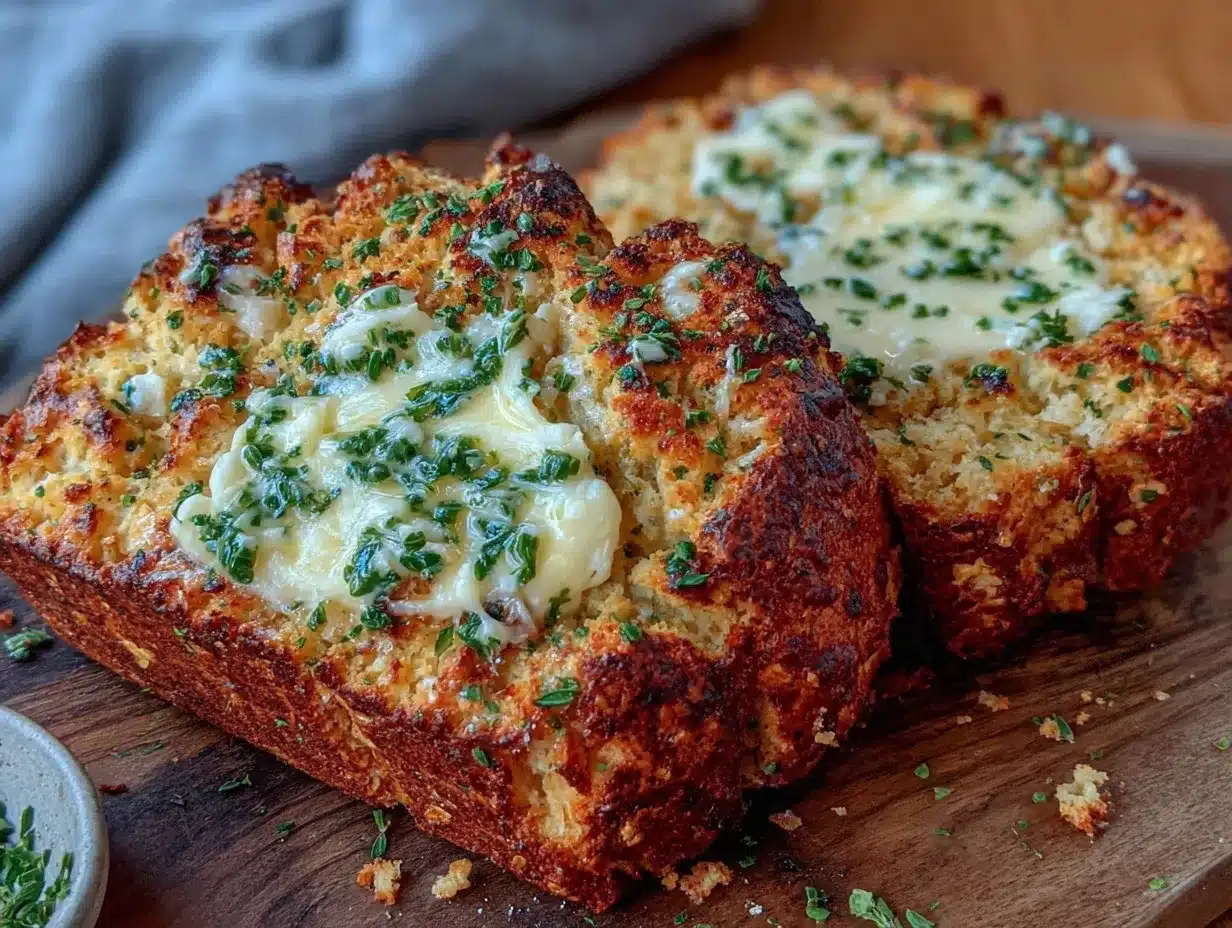
A quick note: avoid overmixing the dough to keep the bread tender and crumbly. Also, if your oven runs hot, check the bread at 25 minutes to prevent excessive browning.
Cooking Tips & Techniques for Perfect Soda Bread
Getting the crust just right is honestly the trickiest part of soda bread. I learned the hard way that baking it at a high temperature from the start creates that crackly, golden crust without drying out the crumb. A cast iron skillet absorbs and distributes heat evenly, yielding a more rustic crust, but a baking sheet is a good stand-in.
Don’t skip scoring the top. That “X” isn’t just decorative—it allows steam to escape, preventing cracks and helping the bread rise properly. Use a sharp knife for a clean cut, which means the dough expands nicely without tearing.
Buttermilk’s acidity is essential—it reacts with baking soda to leaven the bread. If you’re out of buttermilk, adding lemon juice or vinegar to milk works in a pinch, but the flavor won’t be quite as tangy.
On the herb butter front, melting the butter gently prevents it from burning and keeps the garlic from turning bitter. Fresh herbs are a must; dried won’t give that fresh, vibrant pop of flavor that makes the butter irresistible.
Finally, timing your butter prep while the bread bakes saves time and keeps the butter warm for immediate spreading. Trust me, that warm butter melting into fresh bread is the moment you’ll want to savor.
Variations & Adaptations
Serving & Storage Suggestions
This Irish soda bread is best served warm, straight from the oven, with plenty of that melted herb butter brushed on top. It pairs wonderfully with hearty soups or stews, like a classic Irish lamb stew or even alongside a refreshing summer salad—think something light and crisp like the fresh spring greens salad with strawberries and goat cheese.
To store, wrap the cooled bread tightly in plastic wrap or foil and keep it at room temperature for up to 2 days. For longer storage, slice and freeze in an airtight bag for up to 3 months. Thaw slices at room temperature and toast lightly before serving.
Reheating in a 350°F (175°C) oven for 10 minutes restores the crust’s crunch. If you have leftovers, spreading a little extra melted herb butter before warming revives that fresh-baked magic.
Over time, the flavors meld and deepen, especially if you make the herb butter a day ahead. It’s a simple pleasure that keeps rewarding you bite after bite.
Nutritional Information & Benefits
Each serving of this soda bread provides approximately 180 calories, 4 grams of fat, 30 grams of carbohydrates, and 5 grams of protein. The butter adds richness but also healthy fats from unsalted butter and herbs.
Buttermilk contributes calcium and probiotics, supporting digestion, while fresh herbs add antioxidants and vitamins. This recipe is naturally vegetarian and can be adapted for gluten-free or vegan diets with simple swaps.
It’s a satisfying bread that offers comfort without heaviness, and the fresh herbs contribute a subtle nutritional boost that complements the whole package.
Conclusion
This Perfect Irish Soda Bread with Melted Herb Butter is more than just a recipe—it’s a quick, comforting way to bring warmth and flavor to any meal. It’s approachable for bakers at every level, and the simple ingredients mean you can whip it up anytime without fuss.
Feel free to tweak the herbs or add your own twists to make it your own. I love how flexible it is, whether served with a casual breakfast or alongside a cozy dinner. Honestly, it’s become my quiet go-to for those moments when I want something homemade but easy.
If you try it, I’d love to hear how you customize it or what you pair it with—sharing those little details is what makes cooking fun. Here’s to many warm, buttery slices ahead!
Frequently Asked Questions
What makes Irish soda bread different from regular bread?
Irish soda bread uses baking soda as a leavening agent instead of yeast, which means it doesn’t need time to rise and is quicker to make. The buttermilk reacts with the baking soda to create a tender crumb and a slightly tangy flavor.
Can I use regular milk instead of buttermilk?
You can substitute buttermilk by adding 1 tablespoon of lemon juice or white vinegar to 1 ¾ cups (420ml) of milk and letting it sit for 5 minutes. This mimics the acidity needed for the bread to rise properly.
How do I know when the soda bread is fully baked?
Look for a golden-brown crust and a hollow sound when you tap the bottom of the loaf. You can also insert a toothpick into the center—if it comes out clean, the bread is done.
Can I make the melted herb butter ahead of time?
Yes! You can prepare the herb butter up to a day in advance and keep it refrigerated. Warm it gently before serving to bring out the flavors and make it easy to spread.
Is soda bread suitable for freezing?
Absolutely. Once cooled, slice the bread and freeze it in an airtight bag. Thaw slices at room temperature or toast them directly from frozen for a quick snack.
Pin This Recipe!
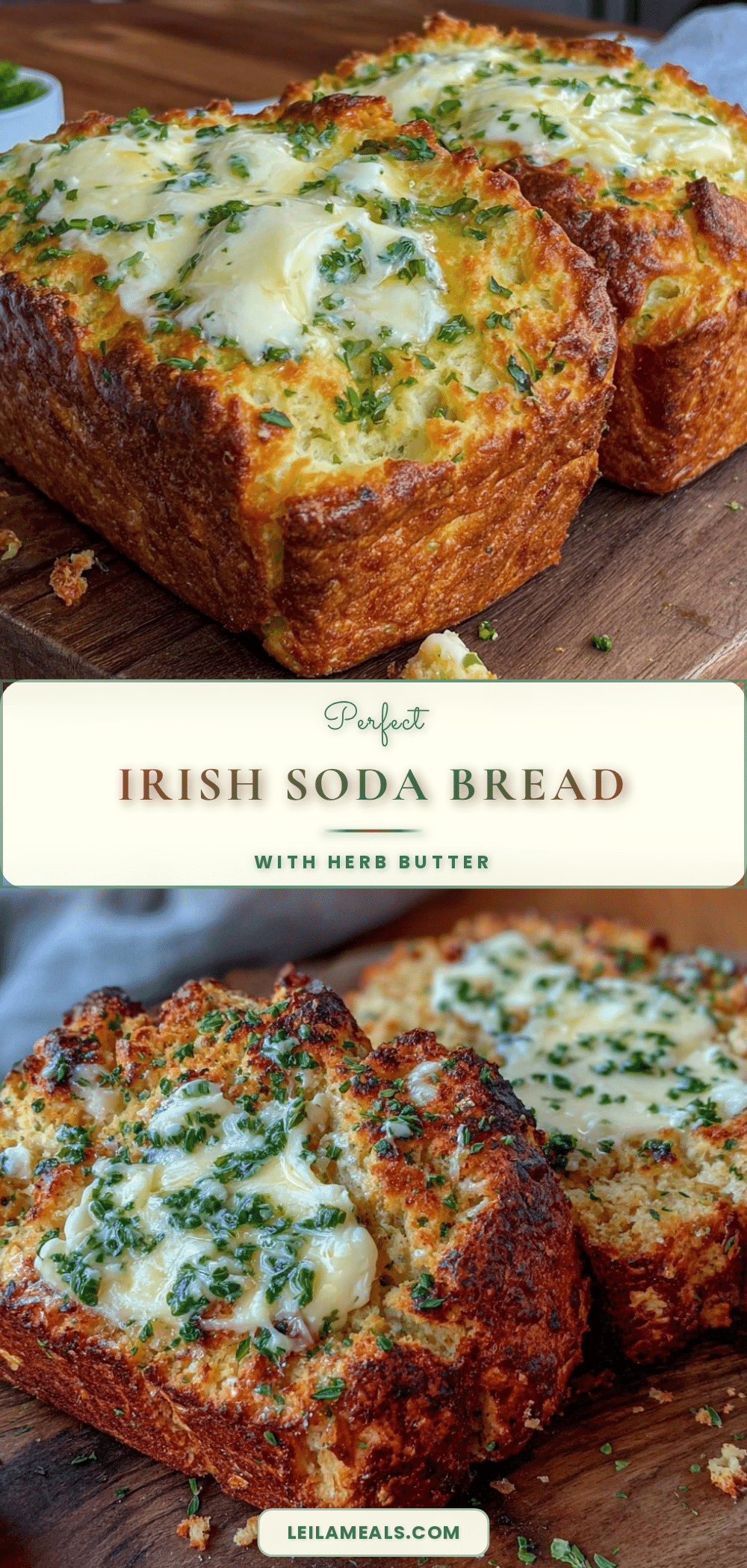
Perfect Irish Soda Bread Recipe with Easy Melted Herb Butter Spread

A quick and easy Irish soda bread recipe with a tender crumb and crackly crust, served warm with a flavorful melted herb butter spread made from fresh parsley, thyme, and garlic.
- Prep Time: 10 minutes
- Cook Time: 30-35 minutes
- Total Time: 40-45 minutes
- Yield: 8 servings 1x
- Category: Bread
- Cuisine: Irish
Ingredients
- 2 ½ cups (320g) all-purpose flour
- 1 teaspoon baking soda
- 1 teaspoon salt
- 1 ¾ cups (420ml) buttermilk, well shaken (or 1 ¾ cups milk + 1 tablespoon lemon juice, let sit 5 minutes)
- 6 tablespoons (85g) unsalted butter
- 1 tablespoon fresh parsley, finely chopped
- 1 teaspoon fresh thyme leaves
- 1 small garlic clove, minced
- Salt and pepper to taste
Instructions
- Preheat your oven to 425°F (220°C). Position your rack in the middle.
- In a large bowl, whisk together 2 ½ cups (320g) all-purpose flour, 1 teaspoon baking soda, and 1 teaspoon salt until evenly combined.
- Pour in 1 ¾ cups (420ml) buttermilk gradually, stirring with a wooden spoon until a rough dough forms. It will be sticky but should hold together. If too dry, add a splash more buttermilk.
- Turn the dough onto a lightly floured surface. Pat it gently into a round about 8 inches (20cm) across and 2 inches (5cm) thick. Don’t knead too much.
- Using a sharp knife, cut a deep “X” across the top of the dough.
- Place the dough on a lightly greased baking sheet or a preheated cast iron skillet.
- Bake for 30–35 minutes until the crust is golden brown and firm to the touch. Tap the bottom of the bread; if it sounds hollow, it’s done.
- While the bread bakes, melt 6 tablespoons (85g) unsalted butter in a small saucepan over low heat. Stir in 1 tablespoon chopped fresh parsley, 1 teaspoon thyme leaves, and 1 minced garlic clove. Season with salt and pepper. Keep warm.
- Remove the bread from the oven and let it cool for 10 minutes on a wire rack.
- Slice the bread and generously brush or drizzle with the melted herb butter. Serve warm.
Notes
Avoid overmixing the dough to keep the bread tender and crumbly. Check the bread at 25 minutes if your oven runs hot to prevent excessive browning. Use fresh herbs for the butter for best flavor. The herb butter can be made a day ahead and warmed before serving.
Nutrition
- Serving Size: 1 slice (about 1/8 o
- Calories: 180
- Fat: 4
- Carbohydrates: 30
- Protein: 5
Keywords: Irish soda bread, soda bread recipe, quick bread, herb butter, easy bread, homemade bread, no yeast bread


