The first time I saw a honeynut squash, I honestly had no idea what to do with it. I was at the farmers’ market last October, and the woman at the stand—her name is Margaret, I learned later—watched me pick one up, turn it over, and put it back down with this confused look on my face. She didn’t say anything at first. Then she reached under her table, pulled out a paper bag with two more, and handed them to me. “Roast ’em until they’re soft,” she said. “Then you’ll figure it out.”
I took them home feeling a little silly, honestly. I mean, I write about food for a living, and here I was stumped by a tiny winter squash. But that’s the thing about cooking, right? You can know a lot about technique and still get thrown by something as simple as a new ingredient. I roasted those two honeynut squashes that same afternoon, and the smell that filled my kitchen was so warm and sweet that I knew I was onto something good. I mashed one up with a little butter and salt, ate it straight from the bowl, and saved the other for soup.
That first batch of soup was a little rough, if I’m being honest. I added too much nutmeg and not enough salt, and I didn’t bother to toast the walnuts because I was too hungry to wait. But the potential was there. You know that feeling when a recipe isn’t quite right yet, but you can already taste what it’s supposed to be? That was this soup. Over the next few weeks, I made it again and again, tweaking the ratios, swapping in different herbs, and finally landing on this version that feels like fall in a bowl. Margaret would probably laugh if she knew how many squashes I went through before I got it right. But honestly, I think she’d be happy I kept at it.
This cozy honeynut squash soup with toasted walnuts is the recipe that came out of all that trial and error. It’s the one I make when the air gets crisp and the leaves start turning, and it’s the one I keep coming back to year after year. Maybe you’ve had a moment like that with a new ingredient—where you weren’t sure what to do, so you just kept cooking until you figured it out. That’s what this soup is for me. And now it’s for you, too.
Why You’ll Love This Recipe
There are a lot of squash soup recipes out there, I know. But this one is different. It’s not just another version—it’s the one I’ve tested and retested until every spoonful felt right. Here’s why I think you’ll love it as much as I do:
- Quick & Easy: This soup comes together in about 45 minutes, and most of that time is hands-off while the squash roasts. Perfect for a busy weeknight when you want something cozy but don’t have hours to spend in the kitchen.
- Simple Ingredients: No fancy grocery trips needed. You’ll find everything at your regular store—honeynut squash, onions, garlic, broth, and walnuts. That’s it.
- Perfect for Fall: This is the soup you want on a chilly October evening, served with crusty bread and a good book. It’s also great for Thanksgiving if you want something lighter than the usual heavy starters.
- Crowd-Pleaser: I’ve served this to friends who claimed they didn’t like squash soup, and they went back for seconds. The toasted walnuts add a crunch that makes it feel more like a meal than just a bowl of pureed vegetables.
- Unbelievably Delicious: The honeynut squash is naturally sweeter than butternut, so you don’t need to add much sugar or honey. The flavor is concentrated and rich, with a silky texture that feels luxurious without any cream.
What makes this recipe different from the rest is the technique of roasting the squash with the skin on. Most recipes have you peel the squash first, but I’ve found that roasting it whole (or halved) keeps all that sweet flavor locked in. Plus, the skin gets tender enough to blend right into the soup, which means less prep work for you. It’s a small trick, but it makes a big difference. This isn’t just good soup—it’s the kind that makes you close your eyes after the first bite. It’s comfort food reimagined: healthier, faster, but with the same soul-soothing satisfaction.
What Ingredients You Will Need
This recipe uses simple, wholesome ingredients to deliver bold flavor and satisfying texture without the fuss. Most of these are pantry staples, especially during fall, and the few that aren’t are easy to find at any grocery store.
- Honeynut squash (2 medium, about 1 pound each) — These little squashes are smaller and sweeter than butternut, with a deep orange flesh that’s perfect for soup. Look for ones that feel heavy for their size with no soft spots. I’ve found that the ones from Trader Joe’s are consistently good, but any market that carries winter squash should have them in season.
- Yellow onion (1 large, diced) — Adds a savory base that balances the sweetness of the squash. You could use a white or sweet onion here, but yellow gives the best depth.
- Garlic cloves (4, smashed) — I like to leave them whole and smash them with the side of my knife. They’ll soften as they cook and blend into the soup without leaving any harsh raw garlic flavor.
- Olive oil (3 tablespoons, divided) — Use a good-quality extra virgin olive oil for roasting and sautéing. It adds richness and helps the squash caramelize in the oven.
- Vegetable broth (4 cups, low-sodium) — I prefer low-sodium so I can control the salt level. If you use regular broth, you might want to cut back on added salt. Homemade is great, but store-bought works fine—I like the Imagine brand or Pacific Foods.
- Fresh thyme (4 sprigs) — Adds an earthy, slightly floral note that pairs beautifully with the squash. If you don’t have fresh, use 1 teaspoon of dried thyme, but add it earlier so it has time to rehydrate.
- Bay leaf (1) — A subtle background flavor that rounds everything out. Don’t skip it—it makes a difference even if you can’t taste it directly.
- Maple syrup (1 tablespoon) — Just a touch to enhance the natural sweetness of the squash. Use real maple syrup, not pancake syrup. You can leave it out if you prefer a less sweet soup.
- Salt and black pepper (to taste) — I use kosher salt for cooking and fine sea salt for finishing. Start with 1 teaspoon of salt and adjust from there.
- Walnuts (1/2 cup, roughly chopped) — These get toasted in a dry pan until fragrant and golden. They add a wonderful crunch and a nutty flavor that contrasts with the creamy soup. I’ve tried pecans and almonds here too, but walnuts are my favorite.
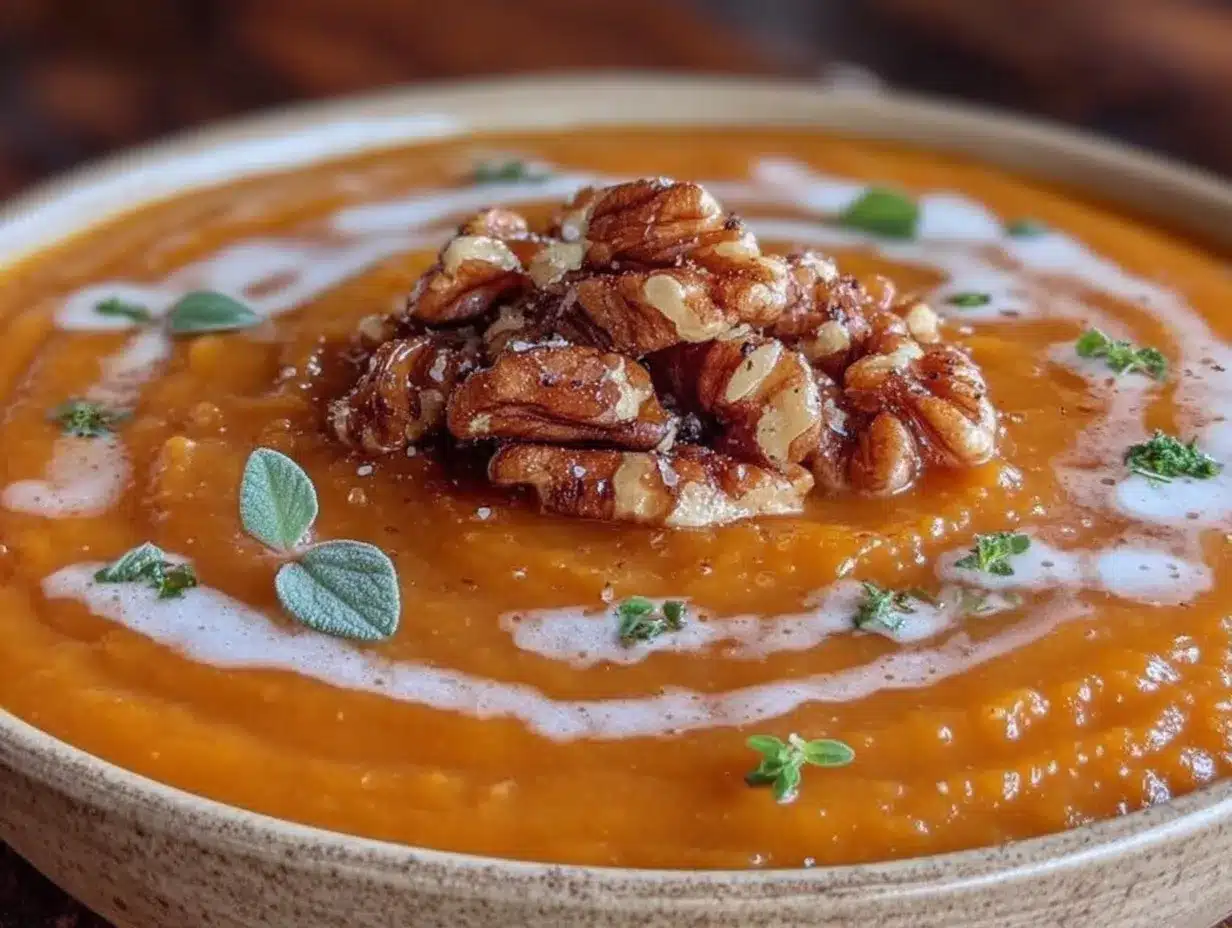
- Optional garnish — A drizzle of heavy cream or coconut milk, a few fresh thyme leaves, and a sprinkle of flaky sea salt. These aren’t necessary, but they make the soup look beautiful for guests.
Equipment Needed
You don’t need a lot of fancy equipment for this soup, which is one of the things I love about it. Here’s what you’ll need:
- Baking sheet (rimmed) — For roasting the squash. A half-sheet pan works perfectly. Line it with parchment paper for easy cleanup if you want.
- Large pot or Dutch oven (5-6 quart) — For sautéing the aromatics and simmering the soup. I use my Le Creuset Dutch oven, but any heavy-bottomed pot will work. A regular stockpot is fine too, though you might need to stir more often to prevent sticking.
- Immersion blender — This is my preferred tool for pureeing the soup right in the pot. It’s easier and creates less mess than a countertop blender. If you don’t have one, you can use a regular blender, just work in batches and be careful with the hot liquid.
- Chef’s knife and cutting board — For prepping the squash and onions. A sharp chef’s knife makes cutting through the squash much easier and safer.
- Small skillet — For toasting the walnuts. A dry pan over medium heat is all you need. Watch them closely—they burn fast.
- Measuring cups and spoons — For accurate measurements. I know some cooks eyeball everything, but for soup, getting the broth-to-squash ratio right matters.
If you don’t have an immersion blender, don’t worry. A regular blender works just as well—just let the soup cool for a few minutes before blending, and only fill the blender halfway to avoid splashing hot liquid everywhere. I learned that lesson the hard way, let me tell you.
Preparation Method
Let me walk you through this step by step. I’ve included time estimates and sensory cues so you know exactly what to look for at each stage.
Step 1: Roast the Squash (30-35 minutes)
Preheat your oven to 400°F (200°C). While it’s heating up, wash the honeynut squashes well—you’re not peeling them, so you want the skin clean. Cut each squash in half lengthwise, from stem to tip. Use a sturdy chef’s knife and be careful; honeynut squashes are dense but not as hard as butternut, so they should cut through fairly easily. Scoop out the seeds and stringy pulp with a spoon. A grapefruit spoon with a serrated edge works great for this, but a regular spoon is fine too.
Place the squash halves cut-side up on your baking sheet. Drizzle with 1 tablespoon of olive oil and rub it all over the cut surfaces. Sprinkle with a pinch of salt and pepper. Flip them over so they’re cut-side down—this helps them steam as they roast, keeping the flesh moist. Roast for 25-30 minutes, until the skin is wrinkled and a fork slides easily into the flesh. The squash should feel tender when you press on the skin. Let them cool for about 5 minutes—long enough to handle, but not so long that they cool completely.
Step 2: Toast the Walnuts (3-4 minutes)
While the squash roasts, toast your walnuts. Place the chopped walnuts in a small dry skillet over medium heat. Stir or shake the pan frequently—walnuts go from perfectly toasted to burnt in about 30 seconds. You’re looking for a deep golden color and a nutty, fragrant smell. This usually takes 3-4 minutes. Transfer them immediately to a small bowl to stop the cooking. Set aside.
Step 3: Sauté the Aromatics (5-7 minutes)
Heat the remaining 2 tablespoons of olive oil in your large pot or Dutch oven over medium heat. Add the diced onion and a pinch of salt. Cook, stirring occasionally, until the onion is soft and translucent, about 5 minutes. You want it to look golden around the edges but not browned. Add the smashed garlic cloves and cook for another minute, until fragrant. If the garlic starts to brown too quickly, turn the heat down a bit.
Step 4: Simmer the Soup (15 minutes)
Once the squash is cool enough to handle, scoop the flesh out of the skins. It should come away easily with a spoon. Add the squash flesh to the pot with the onions and garlic. Pour in the vegetable broth, add the fresh thyme sprigs and bay leaf, and stir in the maple syrup. Bring everything to a gentle boil, then reduce the heat to low and let it simmer for 15 minutes. This gives the flavors time to meld together. The broth will look a little thin at this point, but don’t worry—it’ll thicken up once you blend it.
Step 5: Blend Until Smooth (2-3 minutes)
Remove the thyme sprigs and bay leaf from the pot—I always fish them out with tongs, but a slotted spoon works too. If you’re using an immersion blender, blend the soup right in the pot until it’s completely smooth. Work in a gentle up-and-down motion to incorporate all the liquid. If you’re using a regular blender, let the soup cool for 5 minutes first, then blend in batches. Fill the blender no more than halfway, hold the lid down with a folded kitchen towel, and start on low speed before gradually increasing. This prevents hot soup from splashing out.
Step 6: Season and Serve (2 minutes)
Taste the soup and adjust the seasoning. You’ll likely need another 1/2 to 1 teaspoon of salt, depending on your broth. Add black pepper to taste—I like a generous amount. If the soup seems too thick, stir in a little more broth or water until it reaches your preferred consistency. Ladle into bowls, top with toasted walnuts, and add any optional garnishes you like. Serve hot.
Cooking Tips & Techniques
I’ve made this soup more times than I can count, and I’ve learned a few things along the way. Here are my best tips for getting it right every time.
Don’t skip roasting the squash. I know it’s tempting to just boil the squash to save time, but roasting concentrates the sugars and gives the soup a deeper, more complex flavor. Boiling will make it watery and bland. Trust me on this—I tried it once when I was in a hurry, and the soup was noticeably less good.
Toast your walnuts fresh. Pre-toasted walnuts from a bag are never as good as ones you toast yourself. They go stale faster and lose that nutty aroma. Toast them while the squash roasts, and you’ll have fresh walnuts ready to go without any extra time. If you’re making this for a crowd, toast extra—they’re great on salads and oatmeal too.
Watch your salt levels. Different broths have different amounts of salt, so always taste before you add more. I’ve ruined a batch by salting it early, only to have the broth reduce and concentrate the salt. Add salt gradually and taste as you go.
Blend carefully. Hot soup expands when blended, and it can be dangerous if you’re not careful. Always let the soup cool for a few minutes before blending, and never fill your blender more than halfway. Hold the lid down with a towel, not your bare hand—I’ve had a lid pop off before, and it was not fun to clean up.
Make it ahead. This soup actually tastes better the next day. The flavors have time to meld and deepen. Make it a day ahead, refrigerate it, and reheat gently on the stove. Add a splash of broth or water if it’s too thick after sitting overnight.
Double the batch. This recipe freezes beautifully, so I always make a double batch. Freeze it in quart-sized containers or freezer bags, and you’ll have a cozy meal ready whenever you need it. Thaw overnight in the fridge and reheat on the stove.
Variations & Adaptations
One of the best things about this soup is how easy it is to adapt. Here are some variations I’ve tried and loved.
Dairy-Free Version: This soup is naturally dairy-free as written, but if you want to add creaminess without dairy, stir in a splash of full-fat coconut milk at the end. It adds a subtle coconut flavor that pairs surprisingly well with the squash. I’ve also used cashew cream with great results.
Spicy Version: Add a pinch of cayenne pepper or red pepper flakes when you sauté the onions. Start with 1/4 teaspoon and taste before adding more. The heat cuts through the sweetness of the squash beautifully. I made this version for a friend who loves spicy food, and she said it was the best squash soup she’d ever had.
Herb Variations: Swap the thyme for fresh sage or rosemary. Sage is especially good with squash—just add it with the garlic and cook for a minute until fragrant. Rosemary is stronger, so use less: one small sprig instead of four. Both give the soup a more earthy, savory profile.
Different Nuts: If you don’t have walnuts, try toasted pecans, almonds, or even pumpkin seeds. Each gives a different texture and flavor. Pecans are sweeter and more delicate, while almonds are crunchier. Pumpkin seeds add a slightly grassy note that’s really nice.
Butternut Squash Substitute: If you can’t find honeynut squash, butternut squash works perfectly. Use one medium butternut squash (about 2 pounds) and increase the roasting time to 35-40 minutes. You’ll want to peel the butternut before roasting, since its skin is thicker and doesn’t soften as much. The soup will be slightly less sweet, so you might want to add an extra teaspoon of maple syrup.
Roasted Garlic Version: For an even deeper flavor, roast a whole head of garlic alongside the squash. Cut the top off a garlic head, drizzle with olive oil, wrap in foil, and roast for 30-35 minutes. Squeeze the soft cloves into the pot before blending. It’s a small extra step that makes a big difference.
Serving & Storage Suggestions
This soup is versatile enough for a casual weeknight dinner or a fancy dinner party. Here’s how to serve and store it.
Serving Temperature: Serve this soup hot, but not boiling. I like to let it cool for a few minutes after blending so it’s warm enough to be comforting but not so hot that it burns your mouth. The toasted walnuts should be added just before serving so they stay crunchy.
Presentation: Ladle the soup into shallow bowls and arrange the walnuts in a small pile in the center. A drizzle of heavy cream or coconut milk in a swirl pattern looks beautiful. Top with a few fresh thyme leaves or a sprinkle of flaky sea salt for a finishing touch. If you’re serving guests, this is one of those soups that looks impressive with very little effort.
What to Serve With It: A piece of crusty bread or a grilled cheese sandwich is the perfect companion. I love dipping sourdough into this soup. A simple green salad with a tangy vinaigrette balances the richness. For a heartier meal, serve it alongside a roasted chicken or a fall salad with apples and pecans.
Storage: Store leftover soup in an airtight container in the refrigerator for up to 5 days. The flavors actually improve after a day or two. Keep the walnuts separate and add them fresh when reheating—they’ll get soggy if stored in the soup.
Freezing: This soup freezes beautifully for up to 3 months. Let it cool completely, then transfer to freezer-safe containers or bags. Leave a little room for expansion. Thaw overnight in the refrigerator and reheat gently on the stove. You might need to add a splash of broth or water to thin it out after thawing.
Reheating: Reheat the soup on the stove over medium-low heat, stirring occasionally. If it’s too thick, add a little broth or water until it reaches your desired consistency. You can also reheat individual portions in the microwave, but the stove gives better results.
Nutritional Information & Benefits
This soup is as nutritious as it is delicious. Here’s what you’re getting in each serving.
Estimated Nutritional Values (per serving, based on 4 servings):
- Calories: 245
- Total Fat: 14g
- Saturated Fat: 2g
- Cholesterol: 0mg
- Sodium: 480mg (varies based on broth)
- Total Carbohydrates: 28g
- Dietary Fiber: 5g
- Sugars: 10g
- Protein: 5g
Health Benefits: Honeynut squash is packed with vitamin A (beta-carotene), which supports eye health and immune function. It’s also a good source of vitamin C, potassium, and fiber. Walnuts add omega-3 fatty acids, which are great for brain health. The olive oil provides healthy monounsaturated fats. This soup is naturally gluten-free, dairy-free, and vegan, making it suitable for a wide range of dietary needs.
Dietary Considerations: This recipe is vegetarian, vegan, and gluten-free as written. It’s also nut-free if you omit the walnuts (or use seeds instead). If you’re watching your sodium, use low-sodium broth and go easy on the added salt. The soup is relatively low in calories for a main dish, but it’s satisfying enough to keep you full.
I love that this soup feels indulgent but is actually really good for you. It’s the kind of meal that makes you feel nourished from the inside out—perfect for those chilly days when you need a little extra warmth.
Conclusion
This cozy honeynut squash soup with toasted walnuts is the recipe I keep coming back to every fall. It started with a farmers’ market encounter and a squash I didn’t know what to do with, and it turned into something I genuinely look forward to making year after year. The sweetness of the roasted squash, the savory depth of the onions and garlic, the crunch of the walnuts—it all comes together in a way that feels simple and special at the same time.
I hope you’ll give it a try, and I hope you’ll make it your own. Maybe you’ll add a little more spice, or swap in pecans, or serve it with a different kind of bread. That’s the beauty of a good recipe—it gives you a foundation, and then you can build on it however you like. I’d love to hear how it turns out for you. Leave a comment below and let me know what variations you tried, or share a photo of your soup on Pinterest. Tag me so I can see your creation!
And if you’re looking for more cozy fall recipes, you might enjoy my roasted butternut squash salad with maple vinaigrette or this easy homemade crusty bread that’s perfect for dipping. Happy cooking, friends. Here’s to warm bowls and good company.
Frequently Asked Questions
Can I use butternut squash instead of honeynut?
Yes, absolutely. Use one medium butternut squash (about 2 pounds) and roast it for 35-40 minutes. You’ll want to peel the butternut before roasting since its skin is thicker. The soup will be slightly less sweet, so you might want to add an extra teaspoon of maple syrup.
Can I make this soup in a slow cooker?
You can, but I recommend roasting the squash first for the best flavor. After roasting, add the squash flesh, sautéed onions and garlic, broth, and seasonings to the slow cooker. Cook on low for 4-6 hours or high for 2-3 hours, then blend. The slow cooker version won’t have quite the same depth, but it’s still delicious.
How do I make this soup creamier without adding dairy?
Stir in a splash of full-fat coconut milk or cashew cream after blending. Both add richness without dairy. You can also blend in a peeled, cooked potato or a handful of raw cashews (soaked for 2 hours first) for extra creaminess.
Can I freeze this soup?
Yes, this soup freezes beautifully. Let it cool completely, then transfer to freezer-safe containers or bags. Leave a little room for expansion. Freeze for up to 3 months. Thaw overnight in the refrigerator and reheat gently on the stove. Add a splash of broth or water if it’s too thick after thawing.
How long does this soup last in the refrigerator?
Store leftover soup in an airtight container in the refrigerator for up to 5 days. The flavors actually improve after a day or two. Keep the toasted walnuts separate and add them fresh when serving to maintain their crunch.
Pin This Recipe!

Cozy Honeynut Squash Soup with Toasted Walnuts

A creamy, naturally sweet honeynut squash soup with crunchy toasted walnuts. This easy fall recipe comes together in about 45 minutes with simple ingredients and is perfect for chilly evenings.
- Prep Time: 15 minutes
- Cook Time: 30 minutes
- Total Time: 45 minutes
- Yield: 4 servings 1x
- Category: Soup
- Cuisine: American
Ingredients
- 2 medium honeynut squashes (about 1 pound each)
- 1 large yellow onion, diced
- 4 garlic cloves, smashed
- 3 tablespoons olive oil, divided
- 4 cups low-sodium vegetable broth
- 4 sprigs fresh thyme
- 1 bay leaf
- 1 tablespoon maple syrup
- Salt and black pepper to taste
- 1/2 cup walnuts, roughly chopped
- Optional garnish: heavy cream or coconut milk, fresh thyme leaves, flaky sea salt
Instructions
- Preheat oven to 400°F (200°C). Wash honeynut squashes, cut in half lengthwise, and scoop out seeds. Place cut-side up on a baking sheet, drizzle with 1 tablespoon olive oil, and season with salt and pepper. Flip cut-side down and roast for 25-30 minutes until fork-tender. Let cool 5 minutes.
- While squash roasts, toast walnuts in a dry skillet over medium heat for 3-4 minutes, stirring frequently, until golden and fragrant. Transfer to a bowl and set aside.
- Heat remaining 2 tablespoons olive oil in a large pot or Dutch oven over medium heat. Add diced onion and a pinch of salt; cook 5 minutes until soft and translucent. Add smashed garlic and cook 1 minute more until fragrant.
- Scoop roasted squash flesh into the pot. Add vegetable broth, thyme sprigs, bay leaf, and maple syrup. Bring to a gentle boil, then reduce heat to low and simmer 15 minutes.
- Remove thyme sprigs and bay leaf. Use an immersion blender to puree soup until smooth. Alternatively, let cool 5 minutes and blend in batches in a regular blender, filling no more than halfway.
- Taste and adjust seasoning with salt and pepper. If too thick, add more broth or water. Ladle into bowls, top with toasted walnuts and optional garnishes. Serve hot.
Notes
Roast squash with skin on to lock in sweetness. Toast walnuts fresh for best flavor. Soup tastes even better the next day. Freezes well for up to 3 months. For butternut substitute, peel and roast 35-40 minutes. Add extra maple syrup if needed.
Nutrition
- Serving Size: 1 serving (about 2 c
- Calories: 245
- Sugar: 10
- Sodium: 480
- Fat: 14
- Saturated Fat: 2
- Carbohydrates: 28
- Fiber: 5
- Protein: 5
Keywords: honeynut squash soup, fall soup, easy squash soup, vegan soup, gluten-free soup, roasted squash soup, walnut soup