That faintly sweet, earthy smell of pumpkin mingling with the unmistakable tang of sourdough — the kind that hits you before you even walk into the kitchen — still takes me straight to my friend Clara’s tiny apartment that first October we both decided to get serious about our starter. Honestly, it was a disaster at first. My starter was named “Gus,” and Gus was either bubbling over like a science experiment or completely flat and unresponsive. Clara, ever the patient one, kept feeding hers religiously while I’d forget for three days and then panic-feed Gus a pound of flour. But that morning, the air was cool and crisp, and she had this loaf cooling on the rack that looked… wrong. It wasn’t the tall, crusty boule you see on Instagram. It was squat, a little dense, and the color of a perfect sunset. She sliced into it, steam curling up, and handed me a piece slathered with salted butter. It was the best thing I’d ever tasted. It wasn’t trying to be fancy sourdough. It was just bread that tasted like fall. And it used up that half-cup of discard she’d been meaning to toss.
That moment stuck with me. Not the perfect loaf, but the perfect *feeling* of that loaf. It got me thinking about how we treat sourdough discard like a problem to solve, when really, it’s an opportunity. This Easy Pumpkin Sourdough Discard Bread is my love letter to that morning. It’s not a finicky, high-hydration project. It’s the bread you make when you want the satisfaction of baking without the stress. It’s forgiving, it’s flavorful, and it makes your house smell like a bakery in a way that no candle ever could. You don’t need a perfect starter or a fancy proofing basket. You just need a bowl, a spoon, and maybe a little bit of leftover pumpkin puree you were going to use for something else anyway.
This recipe has become my go-to for using up that discard, and I think it might just become yours, too.
Why You’ll Love This Recipe
Let’s be real for a second. A lot of sourdough recipes feel like a science experiment you can’t pass. They require precise timing, specific temperatures, and a level of patience I frankly don’t have on a Tuesday night. This Easy Pumpkin Sourdough Discard Bread? It’s the exact opposite of that. It’s the cool, laid-back cousin who shows up to the party with snacks and doesn’t care if you spill something on the rug.
- Uses Up Your Discard: The whole point, right? No more feeling guilty about tossing that unfed starter. This recipe turns your “waste” into the star of the show.
- No Long Ferment Needed: Because we’re using discard (unfed starter), we skip the long bulk fermentation. This bread comes together in a couple of hours, not overnight.
- Incredibly Moist & Tender: The pumpkin puree adds so much moisture that this bread stays soft for days. It’s not a crusty artisan loaf — it’s a tender, almost cake-like quick bread texture with that signature sourdough tang.
- Simple Pantry Ingredients: You probably have everything you need already. Flour, sugar, oil, eggs, pumpkin, and that jar of discard in the back of your fridge.
- Perfect for Fall (and Beyond): It’s great for breakfast, an afternoon snack, or even as a simple dessert with a dollop of whipped cream. It’s the kind of bread that makes a regular Tuesday feel a little special.
I’ve tested this recipe more times than I can count, tweaking the ratio of discard to pumpkin, adjusting the sugar, and even trying different flours. This version is the one that finally made me close my eyes after the first bite. It’s not just another pumpkin bread recipe. It’s the one that finally makes your sourdough discard feel like a gift, not a chore.
What Ingredients You Will Need
This recipe uses simple, wholesome ingredients to deliver that perfect balance of tangy and sweet without any fuss. Most of these are pantry staples, which is exactly how I like my baking to be.
- All-Purpose Flour: The backbone of the bread. It gives the perfect structure without being too heavy. I’ve tested this with bread flour, and it works, but it makes the bread a touch tougher. Stick with AP for the best texture.
- Pumpkin Puree: Make sure you grab 100% pure pumpkin puree, not pumpkin pie filling. The pie filling has added sugar and spices that will throw off the balance. I personally love Libby’s for its consistent thickness, but any brand works. If your puree seems watery, blot it with a paper towel before adding it to the batter.
- Sourdough Discard: This is the star. Use it straight from the fridge, unfed. The beauty of this recipe is that it doesn’t need the discard to be active. The tang it provides is what makes this bread special. If your discard has a dark liquid layer (hooch) on top, just stir it back in or pour it off — either way is fine.
- Granulated Sugar & Brown Sugar: The dynamic duo. Granulated sugar gives sweetness, while brown sugar adds moisture and a hint of molasses that complements the pumpkin beautifully. I use a 50/50 mix, but you can adjust it to your taste.
- Vegetable Oil: Keeps the bread incredibly moist. You can substitute melted coconut oil or a neutral avocado oil, but vegetable oil is the most reliable for a tender crumb.
- Large Eggs: They bind everything together and add richness. Make sure they’re at room temperature so they incorporate smoothly into the batter. If you forget to take them out, place them in a bowl of warm water for 5 minutes.
- Pumpkin Pie Spice & Cinnamon: You can use a store-bought pumpkin pie spice blend, or make your own with cinnamon, nutmeg, ginger, and cloves. I like to add an extra teaspoon of cinnamon because I’m a cinnamon fiend.
- Baking Soda & Baking Powder: Because we’re not relying on the discard for leavening, we need a little help from these guys to get a good rise. Make sure they’re fresh! Old baking soda is the number one reason quick breads turn out flat.
- Salt: Don’t skip it. Salt enhances all the other flavors and balances the sweetness. A good flaky sea salt like Maldon is my go-to.
Optional Add-ins: This is where you can make it your own. I love folding in a cup of chocolate chips (dark or semi-sweet) or a half-cup of toasted pecans or walnuts. For a more savory twist, try adding a tablespoon of fresh rosemary — it sounds weird, but it’s incredible with the pumpkin and tangy sourdough.
Equipment Needed
You don’t need a professional bakery setup for this one. I’ve made this in a tiny apartment kitchen with the bare minimum, and it turned out great.
- 9×5-inch Loaf Pan: This is the standard size. If you use an 8×4-inch pan, your bread will take longer to bake and might have a domed top. A metal pan works best for even browning.
- Mixing Bowls: You’ll need one large bowl for the wet ingredients and one medium bowl for the dry ingredients.
- Whisk & Rubber Spatula: A whisk for the dry ingredients and a spatula for folding everything together. A wooden spoon works in a pinch.
- Parchment Paper: This is my secret weapon. Lining the loaf pan with parchment paper makes lifting the bread out a breeze and ensures zero sticking. No one wants to fight with a loaf pan.
- Cooling Rack: Essential for letting the bread cool evenly so the bottom doesn’t get soggy. If you don’t have one, you can use the grates from your oven (just make sure they’re clean!).
- Measuring Cups & Spoons: For accuracy. I know some bakers are “a little of this, a little of that” people, but for baking, precision is your friend.
If you don’t have a cooling rack, honestly, you can just let the bread cool in the pan for 10 minutes, then turn it out onto a clean cutting board. It’s not ideal, but it works.
Preparation Method
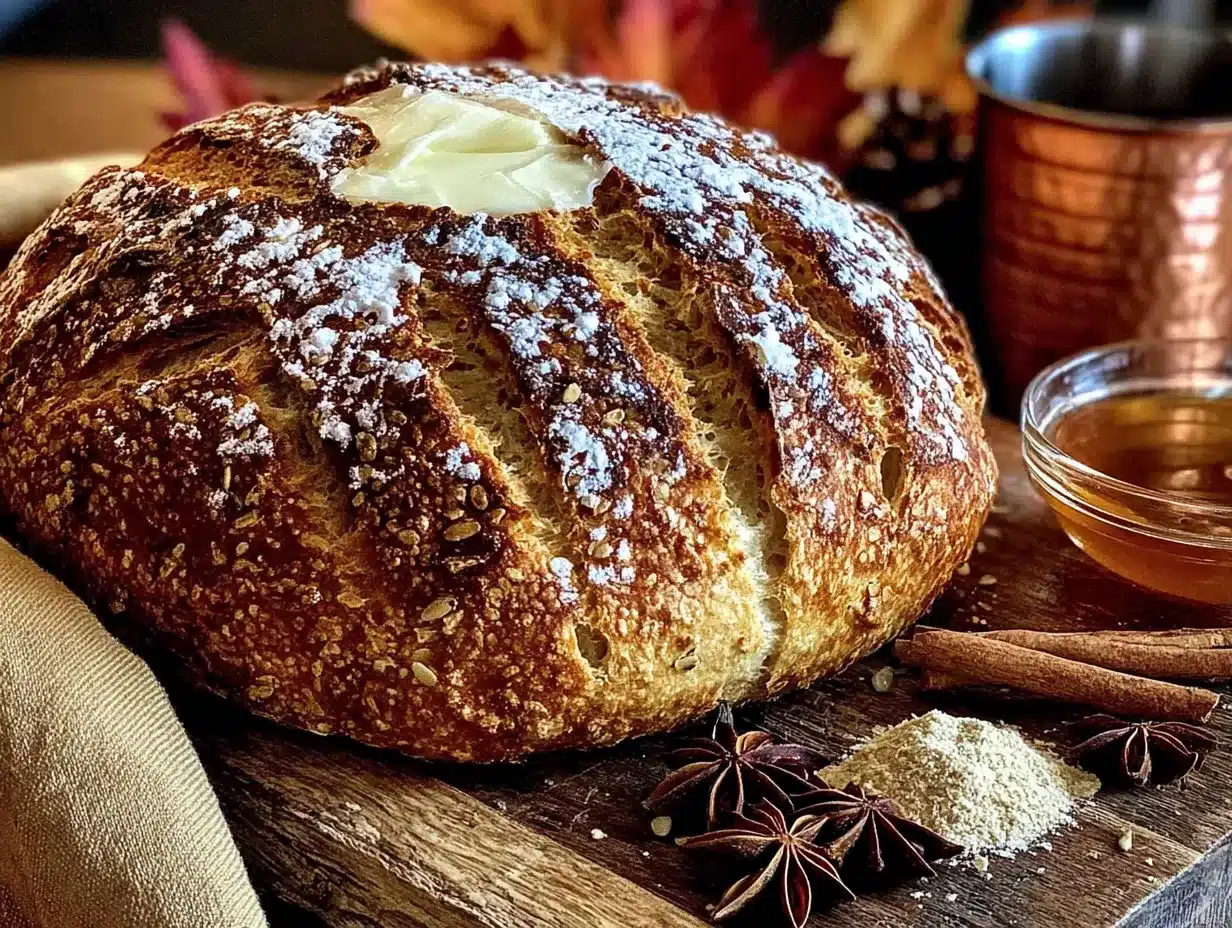
Alright, let’s get to the fun part. This Easy Pumpkin Sourdough Discard Bread comes together in about 10 minutes of active work. The hardest part is waiting for it to bake!
- Preheat & Prep: Preheat your oven to 350°F (175°C). Spray your 9×5-inch loaf pan with non-stick spray, then line it with a strip of parchment paper, leaving a little overhang on the two long sides. This creates handles for lifting the bread out later.
- Mix the Dry Ingredients: In a medium bowl, whisk together 1 ¾ cups (220g) all-purpose flour, 1 teaspoon baking soda, ½ teaspoon baking powder, 1 teaspoon pumpkin pie spice, 1 teaspoon ground cinnamon, and ½ teaspoon salt. Give it a good whisk to make sure everything is evenly distributed and there are no clumps of baking soda.
- Combine the Wet Ingredients: In a large bowl, whisk together 1 cup (200g) granulated sugar and ½ cup (100g) packed light brown sugar. Add ½ cup (120ml) vegetable oil and whisk until combined. It will look a little grainy, and that’s okay. Then add 2 large eggs (room temperature) and whisk until smooth and glossy. The mixture should look slightly thicker now.
- Add the Pumpkin & Discard: Add 1 cup (245g) pumpkin puree and ½ cup (120g) sourdough discard to the wet ingredients. Whisk until fully incorporated. The batter will be a beautiful orange color and smell amazing already. Don’t overmix here — just until it’s combined.
- Fold in the Dry Ingredients: Pour the dry ingredients into the wet ingredients. Use a rubber spatula to gently fold everything together. Use a “cut and fold” motion — scrape down the sides and bottom of the bowl, then fold the batter over itself. Stop mixing as soon as you no longer see streaks of flour. A few small lumps are totally fine. Overmixing will make the bread tough.
- Pour & Smooth: Pour the batter into your prepared loaf pan. Use the spatula to spread it into an even layer. Give the pan a gentle tap on the counter to release any air bubbles. The batter will be thick, not runny like a cake batter.
- Bake: Place the pan in the preheated oven and bake for 50-60 minutes. At the 30-minute mark, check the top. If it’s browning too quickly, tent the pan loosely with a piece of aluminum foil. The bread is done when a toothpick inserted into the center comes out clean or with just a few moist crumbs attached. The internal temperature should be around 200-205°F (93-96°C).
- Cool: Let the bread cool in the pan on a wire rack for 15 minutes. Then, using the parchment paper handles, lift the bread out of the pan and transfer it directly to the rack to cool completely. This is important! If you slice it while it’s still warm, it will be gummy and fall apart. Patience, my friend.
A little note from my kitchen to yours: The first time I made this, I was so excited that I tried to slice it after only 10 minutes of cooling. It was a crumbly mess. I learned my lesson the hard way. Let it cool completely — at least an hour. Trust me, it’s worth the wait.
Cooking Tips & Techniques
I’ve made this bread more times than I care to admit, and I’ve picked up a few tricks along the way. Here’s what I wish someone had told me.
- Don’t Overmix the Batter: I know I said it already, but it’s the most common mistake. Mixing develops gluten, and too much gluten makes bread tough and chewy. We want tender, not tough. Fold just until the flour disappears.
- Check Your Oven Temperature: Ovens lie. I’m convinced of it. An oven thermometer is a $10 investment that will save you from overbaked or underbaked disasters. My oven runs about 25°F hot, so I set it to 325°F to get a true 350°F.
- The Toothpick Test is King: Don’t rely on the timer alone. Every oven is different. Start checking at 50 minutes. If the toothpick comes out with wet batter, give it 5 more minutes. If it comes out with a few moist crumbs, it’s done. If it comes out clean, you might have overbaked it slightly.
- Room Temperature Ingredients Matter: Cold eggs can seize up the batter, making it lumpy. Room temperature ingredients emulsify better, giving you a smoother, more even crumb. It’s a small step that makes a big difference.
- How to Avoid a Soggy Bottom: If your bread seems done on top but the bottom is still wet, it might be because your pan is too dark or your oven runs cold. Try placing the loaf pan on a baking sheet for the last 10 minutes of baking to help the bottom cook through.
I once forgot the baking soda entirely. The bread came out like a dense, flat brick. It was still edible (I ate it with a lot of butter), but it was not the fluffy loaf I was going for. So, double-check your ingredients before you start!
Variations & Adaptations
This recipe is incredibly versatile. Here are a few ways I’ve changed it up depending on my mood or what I have in the pantry.
- Vegan Version: Swap the eggs for two “flax eggs” (2 tablespoons ground flaxseed mixed with 6 tablespoons water, let sit for 5 minutes to gel). Use a plant-based oil like coconut or avocado. For the discard, make sure your starter is fed with water and flour — some people use milk in their starter, which isn’t vegan.
- Gluten-Free Version: Use a 1:1 gluten-free baking flour blend (I like King Arthur’s). Add 1 teaspoon of xanthan gum if your blend doesn’t already contain it. The texture will be a little more crumbly, but the flavor is still spot on.
- Chocolate Chip Pumpkin Sourdough Bread: This is my personal favorite. Fold in 1 cup of semi-sweet or dark chocolate chips into the batter just before pouring it into the pan. The warm, melty chocolate with the tangy pumpkin is a match made in heaven.
- Spiced Maple Glaze: For a real treat, whisk together 1 cup powdered sugar, 2 tablespoons maple syrup, and 1 tablespoon milk (or plant-based milk) until smooth. Drizzle it over the cooled bread. It takes it from “simple snack” to “dessert.”
- Savory Pumpkin Bread: Reduce the sugar to ½ cup total (use all brown sugar), and add 1 cup of shredded sharp cheddar cheese, ¼ cup of chopped fresh sage, and a pinch of black pepper. It’s amazing with a bowl of soup, like this creamy roasted red pepper tomato bisque.
Serving & Storage Suggestions
This bread is incredibly forgiving when it comes to serving and storing, which is another reason I love it.
Serving: It’s perfect at room temperature, but I love it slightly warm. Toast a slice and spread it with a generous pat of salted butter — the contrast of the warm, tangy bread and the cold, salty butter is everything. It’s also fantastic with a smear of cream cheese or a dollop of Greek yogurt. For a cozy fall breakfast, serve it alongside a warm creamy homemade pumpkin chai latte.
Storage: Store the bread in an airtight container at room temperature for up to 4 days. The moisture from the pumpkin keeps it from drying out. If you live in a humid climate, you can store it in the fridge, but it might dry out a little faster.
Freezing: This bread freezes beautifully! Let it cool completely, then wrap it tightly in plastic wrap, followed by a layer of aluminum foil. Freeze for up to 3 months. When you’re ready to eat it, let it thaw overnight in the fridge or on the counter for a few hours. You can also freeze individual slices for quick breakfasts — just pop them in the toaster straight from the freezer.
Reheating: The best way to reheat a slice is in a toaster or toaster oven. It brings back that slightly crisp edge. If you’re reheating a whole loaf, wrap it in foil and warm it in a 300°F (150°C) oven for 10-15 minutes.
Nutritional Information & Benefits
This isn’t a health food, but it does have some redeeming qualities! Here’s a rough estimate for one slice (based on 12 slices per loaf).
- Calories: ~280
- Fat: ~12g
- Carbohydrates: ~40g
- Fiber: ~2g
- Sugar: ~22g
- Protein: ~4g
The Good Stuff: Pumpkin is packed with Vitamin A (beta-carotene), which is great for your eyes and immune system. It’s also a good source of fiber. The sourdough fermentation process can make the bread slightly easier to digest for some people compared to regular quick breads. Plus, using your discard means less food waste, which is a win for everyone.
Dietary Considerations: This recipe is vegetarian. It can be made vegan and gluten-free with the substitutions mentioned above. It does contain gluten (unless using GF flour) and eggs (unless using flax eggs).
Conclusion
So there you have it. My Easy Pumpkin Sourdough Discard Bread is proof that you don’t need a complicated recipe to make something truly special. It’s the bread I turn to when I want the comfort of baking without the stress of a finicky dough. It’s the bread that uses up that jar of discard I’ve been meaning to deal with, and it turns it into something that makes my whole kitchen smell like October.
I really hope you give this one a try. Don’t be afraid to play with the add-ins or adjust the spices to your liking. Baking should be fun, not a chore. And honestly, even if your loaf comes out a little lopsided or cracks on top, it’s still going to taste incredible. That’s the beauty of homemade bread.
When you make it, I’d love to hear how it goes. Did you add chocolate chips? Did you make the maple glaze? Did you serve it with butter and a cup of coffee? Drop a comment below and let me know! And if you loved it, share it with a friend who also has a jar of sourdough discard staring at them from the fridge. Happy baking, friends!
Frequently Asked Questions
Can I use active sourdough starter instead of discard?
Yes, you can! If you use active, bubbly starter, your bread will be a little lighter and fluffier, and it will have a milder tang. The recipe will work the same way. Just know that you’re using a fed starter, so the flavor profile will shift slightly.
My bread came out too dense. What went wrong?
This is usually due to overmixing the batter or using too much pumpkin puree. Make sure you’re measuring your flour correctly (spoon it into the cup, don’t scoop it) and that your baking soda and baking powder are fresh. Also, check your oven temperature — a cooler oven won’t give the bread the lift it needs.
Can I make this into muffins instead of a loaf?
Absolutely! Grease a 12-cup muffin tin and divide the batter evenly. Bake at 350°F (175°C) for 18-22 minutes, or until a toothpick inserted into the center comes out clean. You might get 12-14 muffins depending on how full you fill the cups.
How do I know if my sourdough discard is still good to use?
If your discard has been sitting in the fridge for a while, it might have a layer of dark liquid (hooch) on top. Just stir it back in or pour it off — it’s fine to use. If you see any mold (fuzzy green or black spots), throw it away. A healthy discard should smell sour and yeasty, not like alcohol or nail polish remover.
Can I add nuts or chocolate chips to this recipe?
Yes, please do! Fold in up to 1 cup of your favorite add-ins (chocolate chips, pecans, walnuts, dried cranberries) into the batter just before pouring it into the pan. Toss them in a tablespoon of flour first to prevent them from sinking to the bottom of the loaf.
Pin This Recipe!
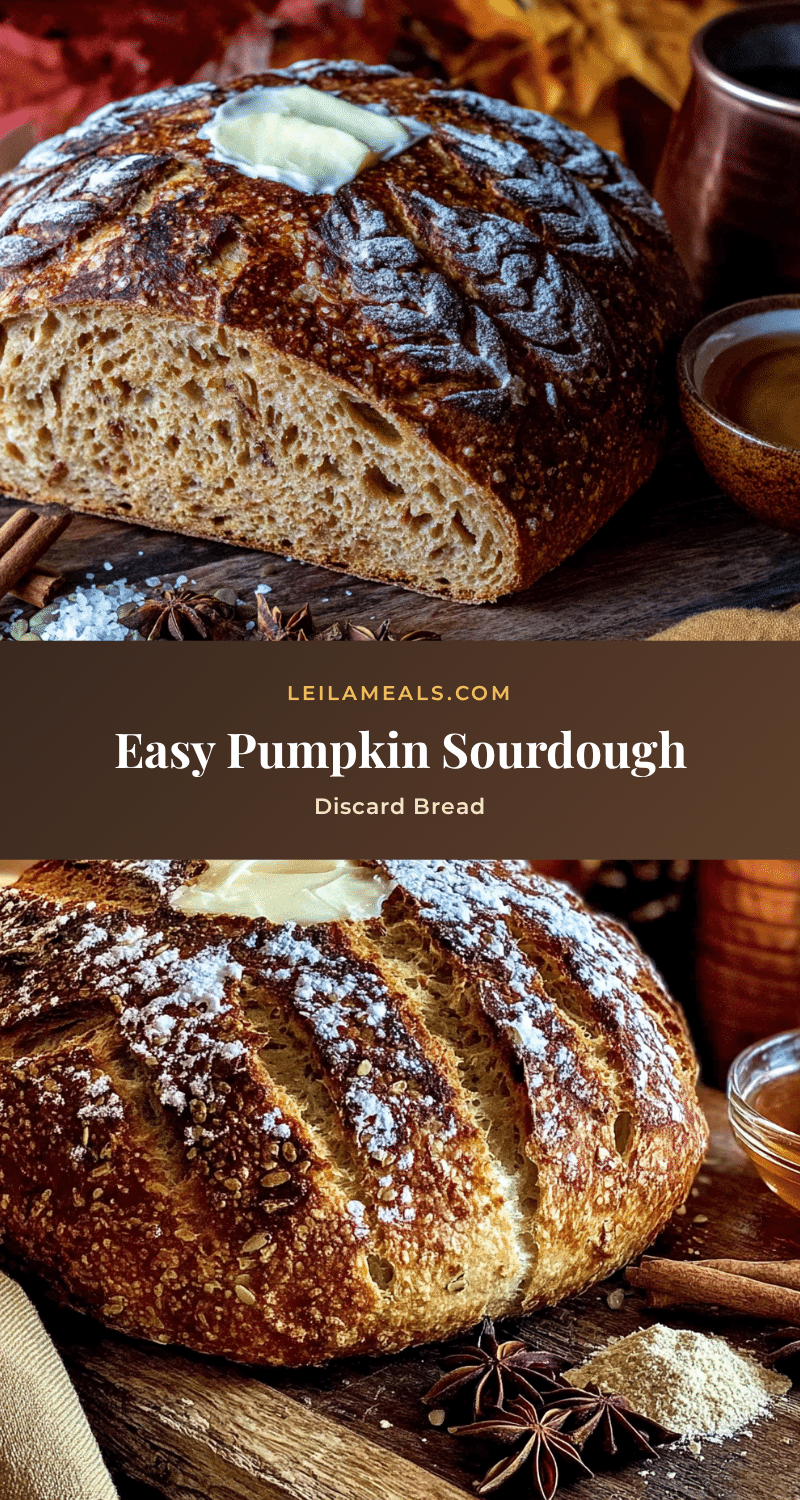
Best Easy Pumpkin Sourdough Discard Bread Recipe
This Easy Pumpkin Sourdough Discard Bread is a tender, moist quick bread that uses up your sourdough discard and pumpkin puree. It’s forgiving, flavorful, and makes your house smell like fall.
- Prep Time: 15 minutes
- Cook Time: 55 minutes
- Total Time: 1 hour 10 minutes
- Yield: 12 servings 1x
- Category: Quick Bread
- Cuisine: American
Ingredients
- 1 ¾ cups (220g) all-purpose flour
- 1 teaspoon baking soda
- ½ teaspoon baking powder
- 1 teaspoon pumpkin pie spice
- 1 teaspoon ground cinnamon
- ½ teaspoon salt
- 1 cup (200g) granulated sugar
- ½ cup (100g) packed light brown sugar
- ½ cup (120ml) vegetable oil
- 2 large eggs, room temperature
- 1 cup (245g) pumpkin puree (100% pure, not pie filling)
- ½ cup (120g) sourdough discard (unfed, straight from fridge)
Instructions
- Preheat oven to 350°F (175°C). Spray a 9×5-inch loaf pan with non-stick spray and line with parchment paper, leaving overhang on the long sides.
- In a medium bowl, whisk together flour, baking soda, baking powder, pumpkin pie spice, cinnamon, and salt.
- In a large bowl, whisk together granulated sugar and brown sugar. Add vegetable oil and whisk until combined. Add eggs and whisk until smooth and glossy.
- Add pumpkin puree and sourdough discard to the wet ingredients. Whisk until fully incorporated.
- Pour dry ingredients into wet ingredients. Use a rubber spatula to gently fold until just combined (a few lumps are fine). Do not overmix.
- Pour batter into prepared loaf pan and spread evenly. Tap pan gently on counter to release air bubbles.
- Bake for 50-60 minutes. At 30 minutes, tent with foil if browning too quickly. Bread is done when a toothpick inserted in center comes out clean or with a few moist crumbs (internal temp 200-205°F).
- Cool in pan on wire rack for 15 minutes. Use parchment handles to lift bread out and transfer to rack to cool completely (at least 1 hour) before slicing.
Notes
Let bread cool completely before slicing to avoid a gummy texture. For best results, use room temperature eggs. If your pumpkin puree is watery, blot it with a paper towel before adding. Optional add-ins: 1 cup chocolate chips, ½ cup toasted pecans or walnuts, or 1 tablespoon fresh rosemary.
Nutrition
- Serving Size: 1 slice
- Calories: 280
- Sugar: 22
- Sodium: 280
- Fat: 12
- Saturated Fat: 2
- Carbohydrates: 40
- Fiber: 2
- Protein: 4
Keywords: pumpkin sourdough discard bread, easy pumpkin bread, sourdough discard recipe, fall baking, quick bread


