It was the first real snow of December, and the only thing I wanted was a piece of meat that would take its time. I had a 7-pound bone-in rib roast sitting on the counter, the butcher’s paper still crinkled at the edges, and the house was quiet except for the hum of the oven heating up. I remember pressing my finger into the fat cap, feeling the cold give way to the warmth of my hand, and thinking—this is the kind of cooking that asks you to slow down. Not hurry. Not multitask. Just… be there.
I’d spent years chasing the perfect prime rib. I’d tried high-heat blasts, reverse sears, and even a method involving a paper bag (don’t ask). But it wasn’t until a friend—a retired chef who cooks like he breathes—told me to “stop fighting the meat” that I finally got it. He handed me a bundle of fresh rosemary and thyme from his garden, shrugged, and said, “Let the butter do the talking.” That conversation stuck. So did the roast.
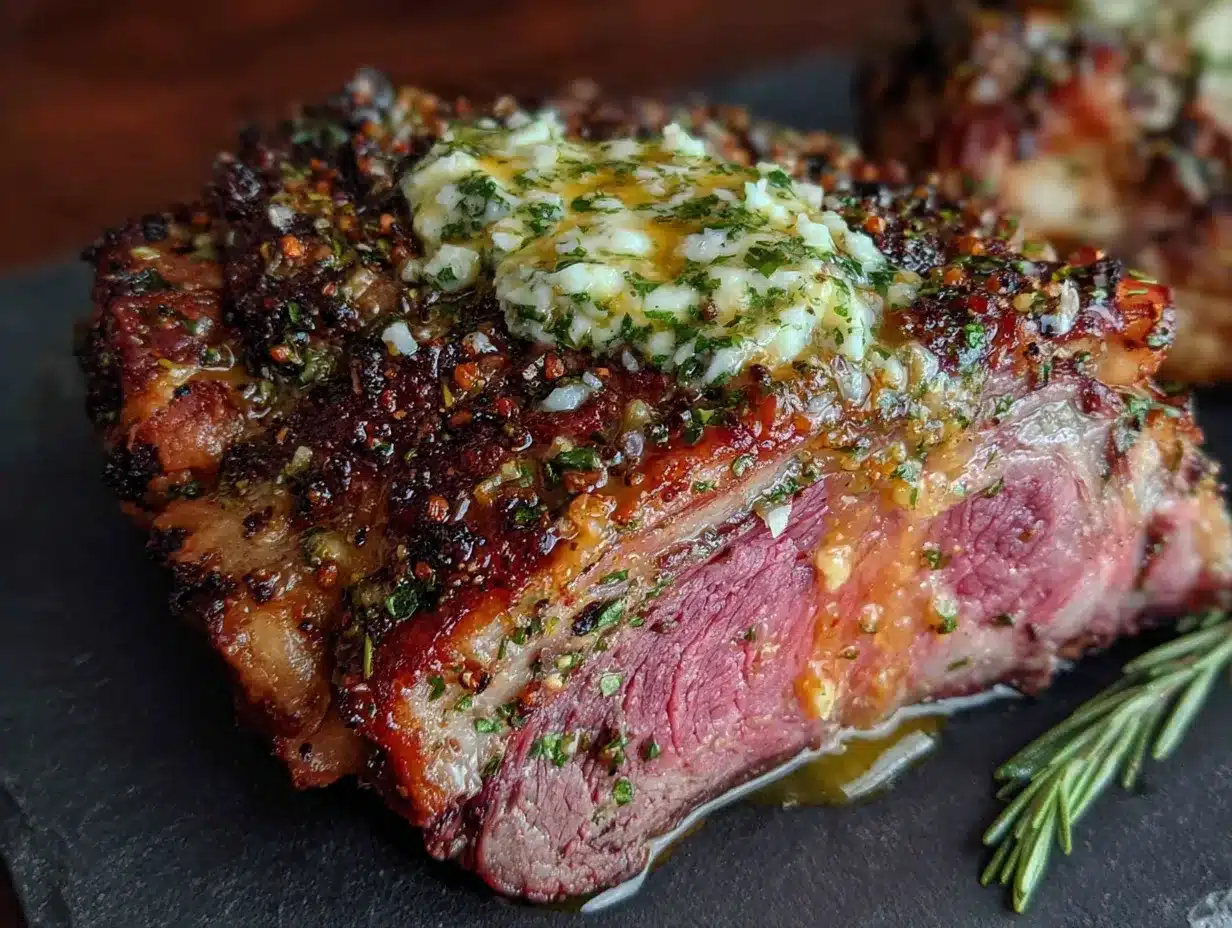
This Perfect Slow-Roasted Prime Rib with Garlic Herb Butter is the result of that lesson. It’s not fussy. It’s not fast. But it is, without a doubt, the most tender, flavorful piece of beef I’ve ever pulled from my oven. The garlic herb butter melts into every crevice, the slow heat coaxes out that deep, beefy richness, and the crust—oh, the crust—is exactly what you want: deeply browned, salty, and crisp without being tough. If you’ve ever felt intimidated by cooking a big roast, this is the recipe that changes that.
Why You’ll Love This Recipe
This isn’t just another prime rib recipe. It’s the one I’ve tested, tweaked, and served to everyone from my picky mother-in-law to a group of friends who still text me about it months later. Here’s why it works:
- Foolproof Slow-Roast Method: Cooking at a low temperature (250°F) means the meat cooks evenly from edge to center. No gray band of overcooked meat. No cold middle. Just perfectly rosy, juicy beef from end to end.
- Garlic Herb Butter That Actually Sticks: Instead of just rubbing it on the surface, you’ll cut small slits into the roast and stuff them with butter. This ensures the flavor penetrates deep into the meat, not just the crust.
- Simple, High-Quality Ingredients: You don’t need a dozen exotic spices. Good beef, fresh herbs, real butter, and a generous hand with salt—that’s it. The kind of ingredients you probably already have or can easily find.
- Perfect for Special Occasions: Christmas dinner, New Year’s Eve, a milestone birthday, or a Sunday that just feels like it deserves something special. This roast delivers every time, and it looks stunning on the table.
- Comfort Food, Elevated: There’s something deeply satisfying about slicing into a perfectly cooked prime rib. The way it yields under the knife, the steam rising, the first bite that makes everyone at the table go quiet for a second. That’s what this recipe is about.
I’ve made this roast for quiet dinners and crowded holiday tables, and it never fails. It’s the kind of recipe that makes you look like a hero in the kitchen—without the stress.
What Ingredients You Will Need
This recipe uses simple, high-quality ingredients to let the beef shine. The magic is in the technique, not a long list of obscure items.
- 1 bone-in prime rib roast (7-8 pounds) — Look for a roast with a thick, even fat cap and good marbling. I prefer prime grade for special occasions, but choice grade works beautifully too. Ask your butcher to tie the bones back onto the roast for even cooking and easy carving.
- 1 cup (2 sticks) unsalted butter, softened — The base of our garlic herb butter. Use a good-quality butter here—it makes a difference. I like Kerrygold for its richness and creamy texture.
- 8 cloves garlic, minced — Fresh garlic is non-negotiable. Don’t use the jarred stuff; it lacks the pungent, sweet flavor that mellows beautifully during the slow roast.
- 2 tablespoons fresh rosemary, finely chopped — Woody, piney, and aromatic. I grow my own, but any fresh rosemary from the store works perfectly.
- 2 tablespoons fresh thyme leaves — Earthy and slightly floral, thyme pairs beautifully with beef and garlic.
- 1 tablespoon fresh sage, finely chopped (optional, but lovely) — Adds a subtle, savory depth that complements the rosemary and thyme.
- 2 tablespoons kosher salt — Use a coarse salt like Diamond Crystal or Morton’s. It sticks better to the meat and seasons more evenly than fine table salt.
- 1 tablespoon freshly ground black pepper — Freshly ground is key here. Pre-ground pepper lacks the punch and fragrant heat you want on that crust.
- 2 cups beef broth (for the pan) — This creates a natural jus as the roast cooks. Use a low-sodium broth so you can control the salt level.
- 1 tablespoon Worcestershire sauce (optional, for the jus) — Adds a subtle umami kick to the pan juices.
Ingredient Tip: If you can’t find a bone-in roast, a boneless ribeye roast works too. Just reduce the cooking time slightly—boneless roasts cook faster. Also, let your roast sit at room temperature for about 2 hours before cooking. This is crucial for even cooking and a perfect medium-rare center.
Equipment Needed
You don’t need a professional kitchen to pull this off. Here’s what you’ll need:
- Large roasting pan with a rack — The rack lifts the roast above the pan juices, allowing hot air to circulate and ensuring even cooking. If you don’t have a rack, you can use a few rolled-up balls of aluminum foil to prop the roast up.
- Instant-read thermometer or probe thermometer — This is non-negotiable. Guessing the internal temperature of a large roast is a recipe for disaster. A probe thermometer that stays in the meat while it cooks is a game-changer.
- Sharp chef’s knife — For trimming the fat cap and later carving the roast. A dull knife will shred the beautiful crust and tear the tender meat.
- Carving board with a juice well — A board with a groove catches all those precious juices. If you don’t have one, place a rimmed baking sheet under your cutting board.
- Small bowl — For mixing the garlic herb butter.
- Kitchen twine (if not pre-tied) — To tie the bones back onto the roast if your butcher hasn’t already done so.
- Aluminum foil — For tenting the roast after it comes out of the oven.
Budget-Friendly Tip: You don’t need an expensive roasting pan. A heavy-duty disposable aluminum pan works perfectly for this recipe, and it makes cleanup a breeze.
Preparation Method
Take your time here. The prep is simple, but each step matters.
- Take the chill off the roast. Remove the prime rib from the refrigerator about 2 hours before cooking. Pat it dry with paper towels. Let it sit at room temperature on a cutting board. This step is crucial—a cold roast will cook unevenly, giving you a raw center and an overcooked outer ring.
- Make the garlic herb butter. In a small bowl, combine the softened butter, minced garlic, chopped rosemary, thyme, and sage (if using). Mix until everything is evenly distributed. The butter should be soft and spreadable but not melted. Set aside at room temperature.
- Season the roast. Generously season the entire roast with kosher salt and black pepper. Don’t be shy—you want a good crust. Use your hands to press the seasoning into the fat cap and all sides of the meat.
- Stuff the butter. Using a small, sharp knife, cut 1-inch deep slits all over the top and sides of the roast—about 12 to 15 slits total. Take small pieces of the garlic herb butter and push them deep into each slit. Don’t worry if a little butter oozes out; it will baste the roast as it cooks. Rub any remaining butter all over the surface of the meat.
- Preheat the oven. Set your oven to 250°F (120°C). Place the oven rack in the center position.
- Set up the roast. Place the seasoned roast bone-side down on the rack inside your roasting pan. Pour the beef broth into the bottom of the pan—not over the roast. This will create steam and form the base for your jus.
- Slow roast. Insert your probe thermometer into the thickest part of the meat, avoiding the bone. Roast at 250°F for approximately 3 to 4 hours, or until the internal temperature reaches 125°F for medium-rare. For medium, pull it at 130°F. For medium-well, pull it at 135°F. Remember, the temperature will rise another 5 to 10 degrees while it rests.
- Rest the roast. Once the target temperature is reached, remove the roast from the oven. Transfer it to a carving board and tent it loosely with aluminum foil. Let it rest for at least 30 minutes. This is not optional—resting allows the juices to redistribute throughout the meat. If you cut into it too soon, all those beautiful juices will run out onto the board instead of staying in the meat.
- Crank the heat (optional but recommended). While the roast rests, increase your oven temperature to 500°F (260°C). After the 30-minute rest, remove the foil and place the roast back in the oven for 8 to 10 minutes. This final blast of high heat creates an incredible, crackling crust. Watch it closely so it doesn’t burn.
- Carve and serve. Remove the bones by slicing along them with your knife. Then slice the roast against the grain into ½-inch to ¾-inch thick slices. Arrange on a platter and spoon some of the pan juices over the top.
Pro Tip: If you’re serving a crowd, slice the roast just before serving. Prime rib cools down quickly once sliced, so keep the carved pieces covered with foil until everyone is ready to eat.
Cooking Tips & Techniques
I’ve made this roast more times than I can count, and I’ve learned a few things the hard way. Here’s what I wish someone had told me:
- Don’t skip the rest. I know it’s tempting to slice into that beautiful roast immediately, especially when everyone is hungry and the house smells incredible. But trust me—resting is the difference between a juicy roast and a dry one. I once carved a roast after only 15 minutes of rest, and the juice puddle on my cutting board was heartbreaking. Give it the full 30 minutes.
- Use a probe thermometer. I cannot stress this enough. Opening the oven door to check the temperature with an instant-read thermometer lets heat escape and extends your cooking time. A probe thermometer with an alarm lets you monitor the temperature without opening the door once.
- Let the butter come to room temperature. Cold butter won’t spread evenly into those slits. Leave it out for at least an hour before you start prepping. If you forget, you can microwave it in 5-second bursts, but be careful not to melt it.
- Season the day before if you can. For the absolute best flavor, season the roast with salt and pepper the night before and leave it uncovered in the fridge. This dry-brines the meat, allowing the salt to penetrate deep into the fibers. Just let it come to room temperature before cooking.
- The final sear is optional but worth it. If you’re short on time or don’t want to deal with the oven temperature swing, you can skip the final high-heat blast. The slow-roasted crust will still be delicious—just a bit more delicate. But if you want that dramatic, crunchy crust, the 500°F finish is the way to go.
Variations & Adaptations
This recipe is a fantastic base, and it’s easy to adapt to your tastes or dietary needs.
- Herb Swap: Not a fan of rosemary? Try using tarragon or marjoram instead. Both pair beautifully with beef and garlic. I once made this with a mix of tarragon and chives, and it was surprisingly bright and fresh.
- Spicy Kick: Add 1 teaspoon of red pepper flakes to the garlic herb butter for a subtle heat that builds as you eat. Alternatively, rub the roast with a light coating of Dijon mustard before applying the butter for a tangy, spicy crust.
- Garlic Lover’s Version: Roast a whole head of garlic until soft and sweet (wrap it in foil and roast at 400°F for 40 minutes). Squeeze the roasted garlic cloves into the butter and mash them in. It’s milder and sweeter than raw garlic, and it’s absolutely divine.
- Dairy-Free Option: Substitute the butter with a high-quality vegan butter or a generous amount of olive oil. The texture will be slightly different, but the flavor will still be excellent. Just make sure the oil is well-seasoned.
- Smoked Prime Rib: If you have a smoker, this recipe translates beautifully. Smoke the roast at 225°F for 4 to 5 hours, using hickory or oak wood. The garlic herb butter works just as well in the smoker, and the smoky flavor is a whole new level of delicious.
Serving & Storage Suggestions
Prime rib is a showstopper, but it’s also incredibly practical for leftovers—if you have any.
- Serving Temperature: Prime rib is best served warm, not piping hot. Let the sliced meat sit at room temperature for a few minutes after carving. This allows the juices to settle and the flavor to fully develop.
- Presentation: Arrange the slices on a large platter, slightly overlapping. Spoon a little of the pan juices over the top for moisture and shine. Garnish with fresh sprigs of rosemary and thyme for a beautiful, rustic look.
- Classic Pairings: Serve with creamy horseradish sauce, a rich and creamy soup for a starter, or roasted butternut squash soup for a seasonal touch. Yorkshire pudding, roasted potatoes, and a simple green salad with a sharp vinaigrette are also classic choices.
- Storage: Store leftover prime rib in an airtight container in the refrigerator for up to 4 days. The meat will continue to absorb flavors, making leftovers even more delicious.
- Reheating: The best way to reheat prime rib without drying it out is to place slices in a skillet with a splash of beef broth or au jus. Warm over low heat, turning occasionally, until heated through—about 5 minutes. Alternatively, you can reheat slices in a 300°F oven, covered with foil, for 10 to 15 minutes.
- Freezing: Cooked prime rib freezes beautifully. Wrap slices tightly in plastic wrap, then in aluminum foil, and freeze for up to 3 months. Thaw overnight in the refrigerator before reheating.
Leftover Idea: Shred leftover prime rib and use it in smoked brisket sliders for an incredible twist on a classic sandwich. The tender, buttery beef is perfect on a toasted bun with a little horseradish cream.
Nutritional Information & Benefits
Prime rib is a rich dish, but it also offers some nutritional benefits when enjoyed in moderation.
- Estimated Values (per 6-ounce serving, without added butter): Calories: 450-500, Protein: 45g, Fat: 30g, Saturated Fat: 12g, Cholesterol: 140mg, Iron: 15% DV, Vitamin B12: 80% DV, Zinc: 40% DV.
- High-Quality Protein: Beef is an excellent source of complete protein, which is essential for muscle repair and overall health. A single serving provides a significant portion of your daily protein needs.
- Rich in B Vitamins: Prime rib is particularly high in Vitamin B12, which supports nerve function and red blood cell formation. It also contains B6 and niacin, which help convert food into energy.
- Mineral Content: Beef is a great source of heme iron, which is more easily absorbed by the body than plant-based iron. It also provides zinc, which supports immune function, and selenium, an antioxidant.
- Dietary Considerations: This recipe is naturally gluten-free, low-carb, and keto-friendly. It is not suitable for vegetarian, vegan, or dairy-free diets (unless using the dairy-free butter option mentioned above).
- Personal Note: I don’t eat prime rib every week, and I don’t think anyone should. But for a special occasion, it’s a nutrient-dense, satisfying meal that feels like a celebration. Pair it with a big green salad or roasted vegetables to balance the richness.
Conclusion
This Perfect Slow-Roasted Prime Rib with Garlic Herb Butter is more than just a recipe—it’s an experience. It’s the smell that fills your house for hours, the anticipation as you watch the temperature climb, and the quiet satisfaction of slicing into a perfectly cooked roast. It’s the kind of meal that brings people together, makes them slow down, and reminds them why home-cooked food is so special.
I’ve made this roast for Christmas dinners, New Year’s Eve feasts, and quiet Sunday suppers. Every time, it delivers. And every time, I’m reminded that the best cooking isn’t about complexity—it’s about patience, good ingredients, and a little bit of love.
I’d love to hear how yours turns out. Did you stick with the classic herb butter, or did you try one of the variations? Drop a comment below and let me know. And if you snap a photo, tag me—I love seeing your beautiful roasts on the table. Happy cooking, friends.
Frequently Asked Questions
How do I know when my prime rib is done without a thermometer?
Honestly, I don’t recommend it. Prime rib is too expensive to guess. But if you absolutely must, you can use the “hand test” — press the meat with your finger. Medium-rare feels like the fleshy part of your palm below your thumb when your hand is relaxed. But please, buy a thermometer. It’s worth every penny.
Can I cook prime rib from frozen?
Technically yes, but I strongly advise against it. Cooking from frozen will result in uneven cooking—the outside will be overcooked before the center even starts to thaw. Always thaw your roast in the refrigerator for 2 to 3 days before cooking.
Why is my prime rib tough?
Tough prime rib is usually the result of overcooking. The low-and-slow method is designed to keep the meat tender. If you cooked it at too high a temperature or beyond medium-well, the connective tissue will tighten and squeeze out moisture, leaving you with dry, tough meat. Next time, pull it out at 125°F for medium-rare.
Can I prepare the garlic herb butter in advance?
Absolutely. You can make the butter up to 3 days ahead. Wrap it tightly in plastic wrap or store it in an airtight container in the refrigerator. Let it come to room temperature before using so it spreads easily into the slits.
What do I do with the leftover bones?
Don’t throw them away! The bones are packed with flavor. Use them to make a rich beef stock or broth. Simply roast the bones at 400°F for 30 minutes, then simmer them in a pot with water, onion, carrots, celery, and herbs for 4 to 6 hours. It’s the base for the most incredible soups and stews.
Pin This Recipe!
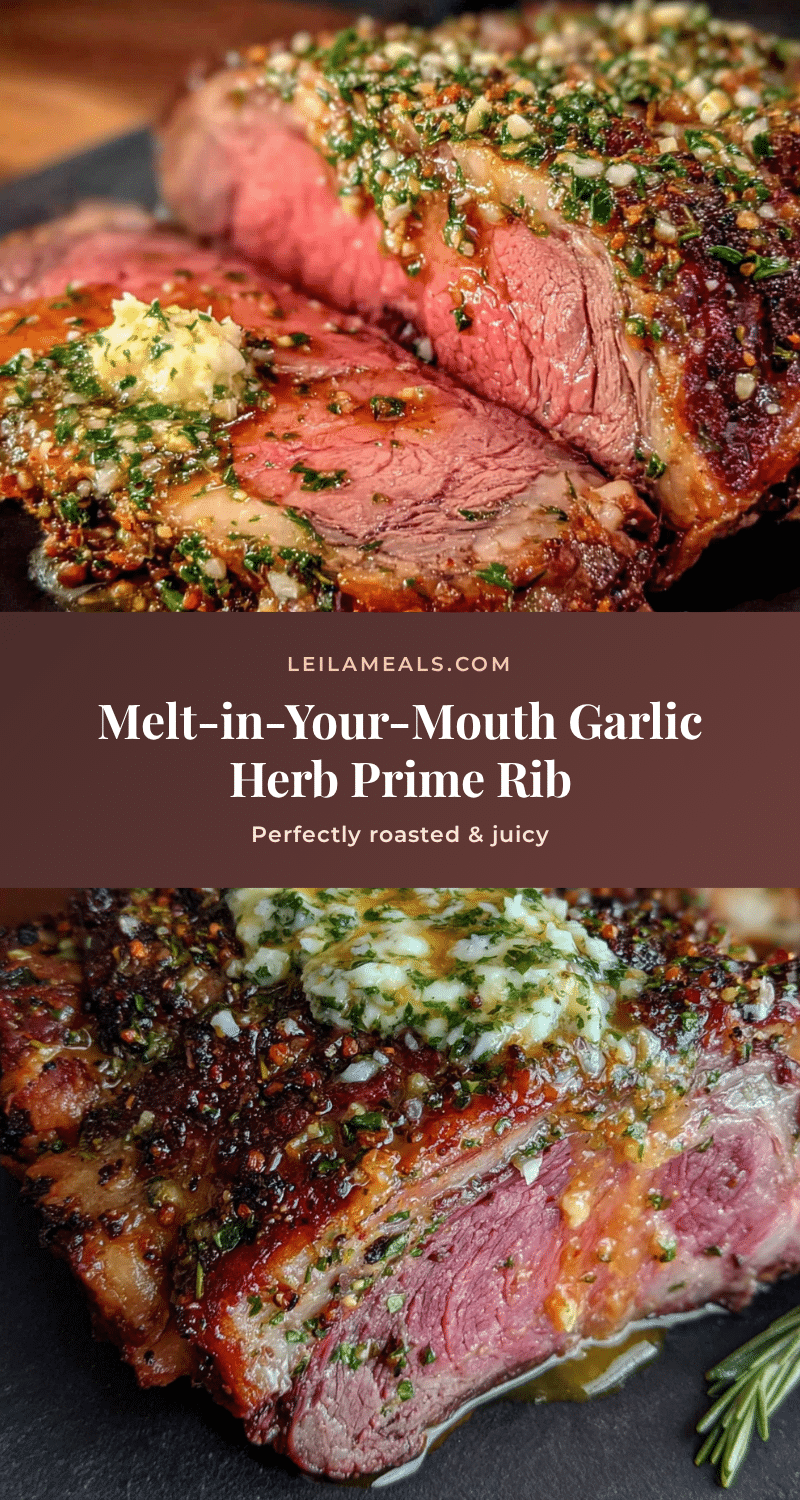
Perfect Slow-Roasted Prime Rib with Garlic Herb Butter
This foolproof prime rib recipe uses a low-temperature slow-roast method and a garlic herb butter that’s stuffed into slits for deep flavor. The result is a tender, juicy roast with a perfectly browned crust, ideal for special occasions.
- Prep Time: 20 minutes
- Cook Time: 3 hours 30 minutes
- Total Time: 4 hours 20 minutes
- Yield: 8 servings 1x
- Category: Main Course
- Cuisine: American
Ingredients
- 1 bone-in prime rib roast (7–8 pounds)
- 1 cup (2 sticks) unsalted butter, softened
- 8 cloves garlic, minced
- 2 tablespoons fresh rosemary, finely chopped
- 2 tablespoons fresh thyme leaves
- 1 tablespoon fresh sage, finely chopped (optional)
- 2 tablespoons kosher salt
- 1 tablespoon freshly ground black pepper
- 2 cups beef broth (low-sodium)
- 1 tablespoon Worcestershire sauce (optional, for the jus)
Instructions
- Remove the prime rib from the refrigerator about 2 hours before cooking. Pat it dry with paper towels and let it sit at room temperature.
- In a small bowl, combine the softened butter, minced garlic, chopped rosemary, thyme, and sage (if using). Mix until evenly distributed.
- Generously season the entire roast with kosher salt and black pepper, pressing the seasoning into the fat cap and all sides.
- Using a small, sharp knife, cut 1-inch deep slits all over the top and sides of the roast (about 12 to 15 slits). Push small pieces of the garlic herb butter into each slit. Rub any remaining butter all over the surface.
- Preheat the oven to 250°F (120°C). Place the oven rack in the center position.
- Place the seasoned roast bone-side down on a rack inside a roasting pan. Pour the beef broth into the bottom of the pan (not over the roast).
- Insert a probe thermometer into the thickest part of the meat, avoiding the bone. Roast at 250°F for approximately 3 to 4 hours, or until the internal temperature reaches 125°F for medium-rare (130°F for medium, 135°F for medium-well).
- Remove the roast from the oven. Transfer it to a carving board and tent loosely with aluminum foil. Let it rest for at least 30 minutes.
- While the roast rests, increase the oven temperature to 500°F (260°C). After the rest, remove the foil and place the roast back in the oven for 8 to 10 minutes to create a crust. Watch closely to prevent burning.
- Remove the bones by slicing along them with a knife. Slice the roast against the grain into ½-inch to ¾-inch thick slices. Arrange on a platter and spoon pan juices over the top.
Notes
Let the roast sit at room temperature for about 2 hours before cooking for even cooking. Use a probe thermometer to avoid opening the oven door. Resting for at least 30 minutes is crucial for juicy meat. The final high-heat blast is optional but recommended for a crisp crust. Season the roast the day before for even better flavor.
Nutrition
- Serving Size: 6 ounces
- Calories: 475
- Sodium: 800
- Fat: 30
- Saturated Fat: 12
- Protein: 45
Keywords: prime rib, slow-roasted prime rib, garlic herb butter, beef roast, holiday roast, Christmas dinner, New Year's Eve