I want a salad that actually feels like a meal right now—something that makes the kitchen smell like Sunday afternoon and doesn’t leave me hungry twenty minutes later. And I have everything except one thing. Well, technically I have the walnuts, the pear, and the butternut squash sitting on my counter, but I’m missing the goat cheese. That’s what happens when you plan a recipe in your head at the grocery store and then forget to actually put the cheese in the cart. Classic move.
So here I am, staring at my half-empty fridge, trying to figure out if this salad works without the tangy crumbles I was counting on. And you know what? It does. Actually, it works better than I expected. The roasted vegetables bring this deep, caramelized sweetness that doesn’t need much help, and the pear adds just enough fresh crunch to keep things interesting. The walnuts toast up in the oven while everything else roasts, so you get that warm, nutty flavor running through every bite.
Honestly, this cozy roasted fall vegetable and pear salad with walnuts has become my go-to for those days when I want something that feels special but doesn’t require a whole production. It’s the kind of salad that makes you forget you’re eating vegetables—in the best way possible. The kind you’d actually look forward to making again.
I’ve made this salad maybe a dozen times now, tweaking things here and there, and I think I’ve finally nailed the balance. It’s hearty enough for a main dish but fancy enough to serve at a dinner party. And the best part? You probably already have most of the ingredients in your kitchen right now. Except maybe the goat cheese. Don’t be like me.
Why You’ll Love This Recipe
Let me tell you why this salad has earned a permanent spot in my fall rotation. After testing this recipe multiple times (and eating way more salad than I’d like to admit), here’s what makes it stand out:
- Quick & Easy : Everything comes together in under 45 minutes, and most of that time is hands-off roasting. Perfect for busy weeknights when you want something warm and satisfying without standing over the stove.
- Simple Ingredients : No fancy grocery trips required. You likely already have olive oil, salt, pepper, and maple syrup in your pantry. The vegetables are all fall staples you can find at any grocery store.
- Perfect for Fall Gatherings : This salad shines at Thanksgiving, Friendsgiving, or any cozy dinner party. It’s impressive enough to bring to a potluck but simple enough to make on a random Tuesday.
- Crowd-Pleaser : I’ve served this to picky eaters, vegetable skeptics, and full-on salad haters—and they all came back for seconds. Something about the roasted sweetness and crunchy walnuts wins everyone over.
- Unbelievably Delicious : The combination of warm roasted vegetables, cool fresh greens, creamy cheese, and toasted nuts creates this perfect bite every single time. It’s comfort food disguised as a salad.
What makes this recipe different from all the other fall salads out there? It’s the technique. Roasting the vegetables until they’re actually caramelized—not just warm—makes all the difference. I also toss them with a touch of maple syrup before roasting, which creates this gorgeous glaze that complements the pear beautifully. And the dressing? It’s a simple maple-Dijon vinaigrette that ties everything together without overpowering the natural flavors.
This isn’t just another fall salad recipe. It’s the one that makes you close your eyes after the first bite. The one that proves salads can be just as satisfying as any warm, hearty meal. It’s comfort food reimagined—healthier, faster, but with the same soul-soothing satisfaction. Perfect for impressing guests without stress, or turning a simple weeknight dinner into something memorable.
What Ingredients You Will Need
This recipe uses simple, wholesome ingredients that work together to create something truly special. Most of these are pantry staples or easy-to-find fall produce, so you won’t need to hunt down anything obscure.
For the Roasted Vegetables
- Butternut squash, peeled and cubed into ½-inch pieces (about 3 cups) – Look for squash that feels heavy for its size with firm, unblemished skin. Pre-cut squash works great if you’re short on time.
- Brussels sprouts, trimmed and halved (about 2 cups) – Choose bright green sprouts that feel firm and compact. Smaller sprouts tend to be sweeter and less bitter.
- Red onion, cut into wedges (1 medium) – Red onion gets wonderfully sweet when roasted. You could use yellow onion, but red adds a nicer color contrast.
- Olive oil (3 tablespoons) – Use a good quality extra virgin olive oil for roasting. It makes a difference in flavor.
- Maple syrup (1 tablespoon) – Pure maple syrup, not pancake syrup. This creates that beautiful caramelization on the vegetables.
- Salt and black pepper – To taste. Don’t be shy with the salt—it helps bring out the vegetables’ natural sweetness.
- Dried thyme (½ teaspoon) – Thyme pairs beautifully with roasted fall vegetables. You can substitute fresh thyme if you have it (use 1 teaspoon).
For the Salad
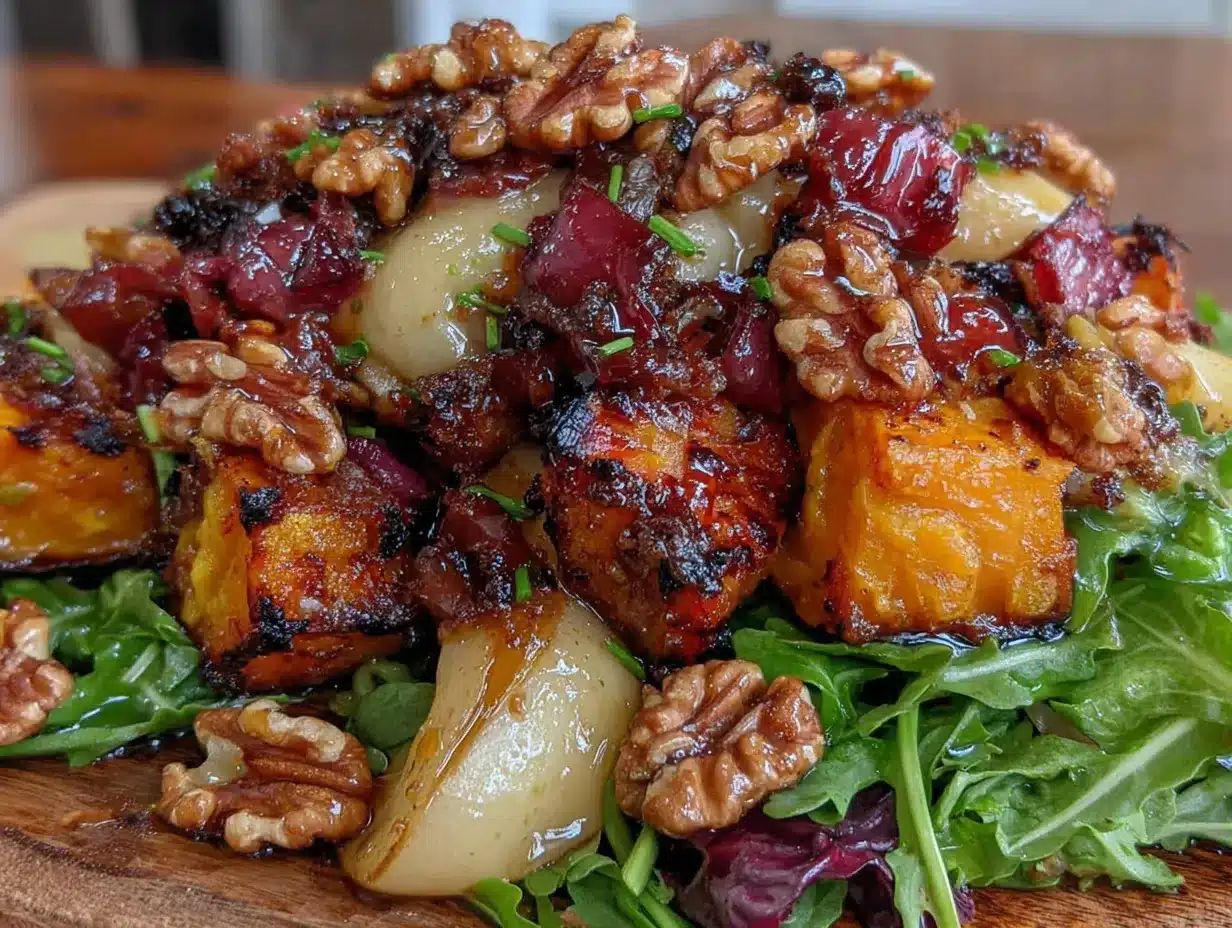
- Mixed greens (5 ounces) – I prefer a mix of arugula and baby spinach for peppery and mild notes. Spring mix works great too.
- Ripe but firm pear, thinly sliced (1 large) – Bosc or Anjou pears hold up well in salads. Make sure it’s ripe but still firm enough to slice without falling apart.
- Toasted walnuts (½ cup) – Toast them yourself for the best flavor. I recommend buying raw walnuts and toasting them fresh—it takes 5 minutes and makes a huge difference.
- Goat cheese or feta cheese, crumbled (⅓ cup) – Goat cheese adds creamy tanginess, but feta works beautifully too. Leave it out for a dairy-free version.
- Dried cranberries (¼ cup) – Adds a pop of sweetness and color. You can substitute dried cherries or chopped dried apricots.
For the Maple-Dijon Vinaigrette
- Olive oil (¼ cup)
- Apple cider vinegar (2 tablespoons) – Adds bright acidity that cuts through the richness.
- Maple syrup (1 tablespoon)
- Dijon mustard (1 teaspoon) – Helps emulsify the dressing and adds subtle tang.
- Salt and pepper – To taste.
Ingredient Tips & Substitutions: If you can’t find butternut squash, try sweet potatoes or cubed pumpkin instead. For the Brussels sprouts, you can swap in broccoli florets or cauliflower—they roast similarly and taste great. No pears? Use a crisp apple like Honeycrisp or Fuji. And if walnuts aren’t your thing, pecans or sliced almonds work just as well. I personally love using walnuts in baked goods too, so I always keep a bag on hand.
Equipment Needed
You don’t need anything fancy to make this salad, which is part of why I love it. Here’s what you’ll need:
- Baking sheet (large, rimmed) – A half-sheet pan works perfectly. Line it with parchment paper for easier cleanup.
- Chef’s knife – A sharp knife makes quick work of cubing squash and halving Brussels sprouts.
- Cutting board – Preferably large enough to handle all your chopping.
- Mixing bowls – One large for the salad, one medium for the dressing.
- Whisk – For emulsifying the vinaigrette. A fork works in a pinch.
- Small skillet – For toasting the walnuts. You can also toast them on the baking sheet with the vegetables.
- Salad servers or tongs – For tossing everything together.
If you don’t have a baking sheet with a rim, any oven-safe pan will work—just watch that nothing rolls off. And honestly, I’ve made the dressing in a mason jar before (just shake it up), which is even easier than whisking. For the walnuts, you can toast them in the microwave for 1-2 minutes if you’re in a hurry, but watch them closely—they burn fast.
Preparation Method
Let me walk you through this step by step. I’ve made this salad enough times to know where things can go wrong, so I’ll share those little tricks along the way.
Step 1: Preheat and Prep (5 minutes)
Preheat your oven to 425°F (220°C). Line a large baking sheet with parchment paper for easy cleanup. While the oven heats, start prepping your vegetables.
Step 2: Roast the Vegetables (25-30 minutes)
In a large bowl, toss the cubed butternut squash, halved Brussels sprouts, and red onion wedges with 3 tablespoons olive oil, 1 tablespoon maple syrup, ½ teaspoon dried thyme, and a generous pinch of salt and pepper. Make sure everything is evenly coated—use your hands if needed.
Spread the vegetables in a single layer on the prepared baking sheet. Don’t overcrowd them, or they’ll steam instead of roast. If they’re crowded, use two baking sheets. Roast for 25-30 minutes, flipping halfway through, until the vegetables are tender and caramelized at the edges. The squash should be fork-tender and the Brussels sprouts should have crispy, dark edges.
Here’s something I learned the hard way: cut your vegetables to roughly the same size so they cook evenly. Squash cubes that are too big will still be hard when the Brussels sprouts are already burning. Aim for ½-inch pieces.
Step 3: Toast the Walnuts (5 minutes)
While the vegetables roast, toast the walnuts. Heat a small skillet over medium heat and add the walnuts. Cook for 3-5 minutes, stirring frequently, until they’re fragrant and lightly golden. Watch them carefully—walnuts go from perfectly toasted to burnt in about 30 seconds. Remove them from the pan immediately so they don’t continue cooking.
Alternatively, you can add the walnuts to the baking sheet during the last 5 minutes of roasting. Just scatter them around the vegetables and let them toast alongside everything else.
Step 4: Make the Vinaigrette (5 minutes)
In a small bowl or mason jar, combine ¼ cup olive oil, 2 tablespoons apple cider vinegar, 1 tablespoon maple syrup, 1 teaspoon Dijon mustard, and a pinch of salt and pepper. Whisk vigorously until emulsified, or shake the mason jar like you mean it. Taste and adjust seasoning—you want a balance of sweet, tangy, and savory.
Pro tip: Make the dressing while the vegetables roast so the flavors have time to meld. It tastes even better after sitting for 10-15 minutes.
Step 5: Assemble the Salad (5 minutes)
In a large bowl, add the mixed greens. Drizzle with about half the dressing and toss gently to coat. Add the warm roasted vegetables, sliced pear, toasted walnuts, crumbled goat cheese, and dried cranberries. Drizzle with remaining dressing and toss gently one more time.
The warm vegetables will slightly wilt the greens, which is exactly what you want. It creates this lovely warm-cold contrast that makes the salad so satisfying. Serve immediately while the vegetables are still warm.
Cooking Tips & Techniques
After making this salad more times than I can count, here are the things I wish someone had told me:
Don’t skip the maple syrup on the vegetables. I know it sounds like an extra step, but that tablespoon of maple syrup is what creates the gorgeous caramelization. Without it, the vegetables roast fine, but they won’t have that sweet, sticky glaze that makes this salad special. Trust me on this one.
Cut your squash carefully. Butternut squash can be tricky to peel and cube. Here’s my method: Cut off both ends, then use a vegetable peeler to remove the skin. Cut the squash in half where the narrow neck meets the bulbous bottom. Slice the neck into rounds, then cubes. Scoop out the seeds from the bottom half, then cube that too. It takes practice, but you’ll get faster.
Toast your nuts fresh. I cannot stress this enough. Pre-toasted walnuts from a bag are fine, but freshly toasted walnuts are a game-changer. The flavor is richer, the texture is crunchier, and they stay crisp longer in the salad. If you’re meal-prepping, toast the nuts separately and add them just before serving.
Warm salad, cold greens. The magic of this salad is the temperature contrast. Make sure your greens are cold from the fridge when you add the warm vegetables. That slight wilt on the bottom layer combined with crisp, cool greens on top creates the perfect texture experience.
Dress lightly at first. You can always add more dressing, but you can’t take it away. Start with half the dressing, toss, then add more if needed. This prevents soggy salad and lets the natural flavors shine through.
One mistake I made early on was adding the pears too early. They’d get soggy and brown from the dressing. Now I add them right before serving and toss gently so they stay intact. If you’re prepping ahead, keep the pears separate and add them at the last minute.
Variations & Adaptations
One of the best things about this salad is how adaptable it is. Here are some variations I’ve tried and loved:
Make It a Meal
Add grilled chicken, roasted chickpeas, or crispy tofu to turn this into a hearty main dish. I’ve also added leftover honey turkey from another recipe, and it was fantastic. The sweetness of the turkey complements the roasted vegetables beautifully.
Seasonal Swaps
In early fall, swap the butternut squash for roasted sweet potatoes or delicata squash (which doesn’t need peeling). In late fall, add roasted cauliflower or parsnips for variety. You can even use leftover roasted vegetables from a Sunday meal prep.
Dairy-Free Version
Skip the goat cheese or use a dairy-free alternative like cashew cheese or nutritional yeast for a cheesy flavor. The salad is still delicious without it—the walnuts and dressing provide plenty of richness.
Nut-Free Option
Replace walnuts with roasted pumpkin seeds (pepitas) or sunflower seeds. They add the same crunch and toast up beautifully. Just watch the timing—seeds toast faster than nuts.
Different Dressing
If you’re not in the mood for maple-Dijon, try a balsamic vinaigrette instead. The tangy sweetness works just as well with roasted vegetables and pears. Or go for a creamy tahini dressing for something completely different.
I once made this salad with roasted delicata squash and pomegranate seeds instead of cranberries—it was stunning for a holiday table. The bright red pomegranate seeds against the golden squash and green greens made it look like a magazine cover.
Serving & Storage Suggestions
This salad is best served immediately while the vegetables are still warm and the greens are crisp. But I know life happens, so here’s how to handle leftovers and prep ahead.
Serving Temperature: Serve the salad slightly warm—the vegetables should be hot from the oven, the greens cold from the fridge. That temperature contrast is what makes this salad so memorable. If you’re serving a crowd, keep the roasted vegetables warm in a low oven (200°F) while you prepare everything else.
Presentation: For a beautiful presentation, arrange the salad on a large platter instead of tossing everything in a bowl. Layer the greens first, then scatter the warm vegetables, sliced pears, walnuts, cranberries, and cheese on top. Drizzle with dressing right before serving. It looks stunning and lets everyone see all the components.
Complementary Dishes: This salad pairs beautifully with creamy chicken and wild rice soup for a cozy fall dinner. It also works as a side dish for roasted chicken, pork tenderloin, or a holiday turkey. For a lighter meal, serve it alongside crusty bread and a glass of crisp white wine.
Storage: Store leftover components separately for best results. Keep the roasted vegetables in an airtight container in the refrigerator for up to 4 days. Store the dressing in a jar in the fridge for up to a week. Keep the greens, pears, and toasted walnuts at room temperature (walnuts lose their crunch in the fridge).
Reheating: To revive leftover salad, reheat the vegetables in a 350°F oven for 5-10 minutes, or in the microwave for 1-2 minutes. Toss with fresh greens and a splash of dressing. The flavors actually develop overnight—the roasted vegetables become even sweeter and more caramelized.
Make-Ahead Tips: This salad is perfect for meal prep. Roast the vegetables and toast the walnuts up to 3 days ahead. Make the dressing up to a week ahead. Slice the pears right before serving to prevent browning. When you’re ready to eat, just toss everything together with fresh greens.
Nutritional Information & Benefits
This salad is packed with nutrients that make you feel good about eating it. Here’s a rough breakdown per serving (based on 4 servings):
- Calories: Approximately 350-400
- Protein: 8-10 grams
- Fat: 22-25 grams (mostly healthy fats from olive oil and walnuts)
- Carbohydrates: 35-40 grams
- Fiber: 8-10 grams
- Sugar: 15-18 grams (natural sugars from vegetables and maple syrup)
Health Benefits: Butternut squash is loaded with vitamin A (great for eye health) and vitamin C (immune support). Brussels sprouts are a cruciferous vegetable packed with fiber, vitamin K, and antioxidants. Walnuts are one of the best plant-based sources of omega-3 fatty acids, which support brain health. Pears provide additional fiber and vitamin C. And the olive oil in the dressing offers heart-healthy monounsaturated fats.
Dietary Considerations: This salad is naturally vegetarian and gluten-free. To make it vegan, simply omit the goat cheese or use a plant-based alternative. It’s also dairy-free without the cheese. For a lower-carb version, reduce the maple syrup in the dressing and skip the dried cranberries.
Potential Allergens: This recipe contains tree nuts (walnuts) and dairy (goat cheese). If you’re serving guests with allergies, label the dish clearly or offer nut-free and dairy-free alternatives on the side.
I personally love that this salad feels indulgent while being genuinely good for you. It’s the kind of meal that satisfies your craving for comfort food without the heavy feeling afterward. Plus, all those colorful vegetables mean you’re getting a wide range of nutrients in every bite.
Conclusion
This cozy roasted fall vegetable and pear salad with walnuts has become my favorite way to celebrate the season. It’s warm and comforting, yet light and fresh—a balance that’s surprisingly hard to find in a salad. The caramelized vegetables, sweet pears, crunchy walnuts, and tangy cheese all come together in a way that feels both familiar and special.
What I love most about this recipe is how forgiving it is. You can swap vegetables, change the cheese, use different nuts, or adjust the dressing to your taste. It’s a template for fall salads, not a rigid formula. So feel free to make it your own—that’s what cooking is all about.
I’d love to hear how this salad turns out for you! Did you try a variation I haven’t thought of? Did you serve it at a holiday dinner? Drop a comment below and let me know. And if you’re looking for more cozy fall recipes, don’t miss my pumpkin cinnamon rolls with maple cream cheese glaze—they’re the perfect sweet ending to this meal.
Until next time, happy cooking—and don’t forget the goat cheese this time.
Frequently Asked Questions
Can I make this salad ahead of time?
Yes! You can roast the vegetables and toast the walnuts up to 3 days ahead. Make the dressing up to a week ahead. Store everything separately and assemble just before serving. Add the pears and greens fresh for best results.
What can I substitute for butternut squash?
Sweet potatoes, delicata squash, or cubed pumpkin all work beautifully. If you’re in a pinch, even carrots or parsnips roast well and add natural sweetness. Just cut everything to similar sizes for even cooking.
How do I keep the pears from browning?
Toss the sliced pears with a little lemon juice or apple cider vinegar right after cutting. This prevents oxidation and keeps them looking fresh. Or slice them right before serving—it only takes a minute.
Is this salad gluten-free?
Yes, absolutely! All the ingredients in this recipe are naturally gluten-free. Just double-check your Dijon mustard and any packaged ingredients to ensure they’re certified gluten-free if that’s a concern.
Can I serve this salad cold?
You can, but it’s best warm. The magic of this salad is the temperature contrast between warm vegetables and cool greens. If you’re making it ahead, reheat the vegetables before assembling. Cold roasted vegetables are still tasty, just less exciting.
Pin This Recipe!
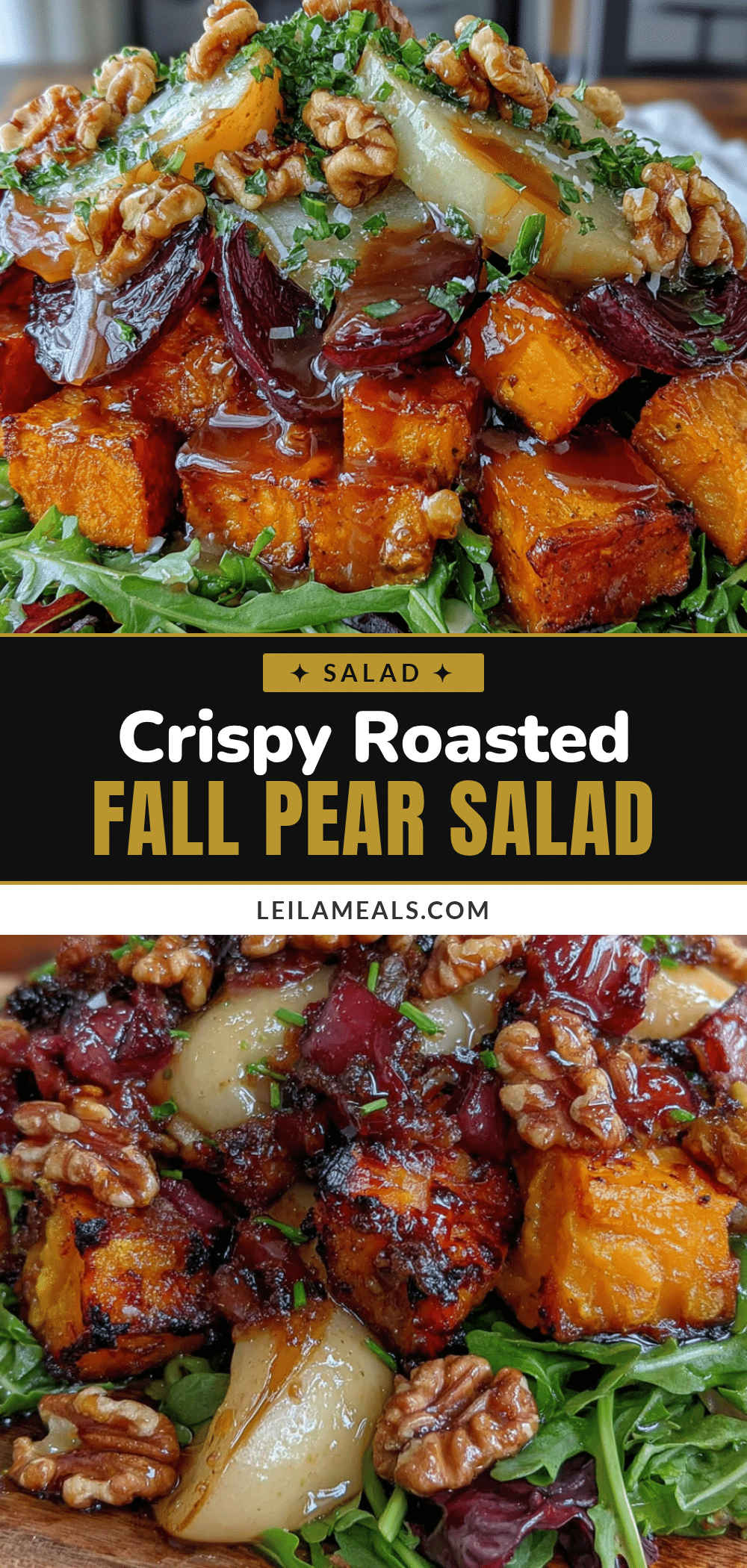
Cozy Roasted Fall Vegetable and Pear Salad with Walnuts
A hearty and satisfying fall salad featuring caramelized roasted butternut squash, Brussels sprouts, and red onion, tossed with fresh greens, sliced pear, toasted walnuts, and a tangy maple-Dijon vinaigrette. Perfect as a main dish or a stunning side for holiday gatherings.
- Prep Time: 15 minutes
- Cook Time: 30 minutes
- Total Time: 45 minutes
- Yield: 4 servings 1x
- Category: Salad
- Cuisine: American
Ingredients
- 1 medium butternut squash, peeled and cubed into ½-inch pieces (about 3 cups)
- 2 cups Brussels sprouts, trimmed and halved
- 1 medium red onion, cut into wedges
- 3 tablespoons olive oil
- 1 tablespoon maple syrup
- ½ teaspoon dried thyme
- Salt and black pepper to taste
- 5 ounces mixed greens (arugula and baby spinach or spring mix)
- 1 large ripe but firm pear (Bosc or Anjou), thinly sliced
- ½ cup raw walnuts, toasted
- ⅓ cup crumbled goat cheese or feta cheese
- ¼ cup dried cranberries
- ¼ cup olive oil
- 2 tablespoons apple cider vinegar
- 1 tablespoon maple syrup
- 1 teaspoon Dijon mustard
- Salt and pepper to taste
Instructions
- Preheat oven to 425°F (220°C). Line a large baking sheet with parchment paper.
- In a large bowl, toss cubed butternut squash, halved Brussels sprouts, and red onion wedges with 3 tablespoons olive oil, 1 tablespoon maple syrup, ½ teaspoon dried thyme, and a generous pinch of salt and pepper until evenly coated.
- Spread vegetables in a single layer on the prepared baking sheet. Roast for 25-30 minutes, flipping halfway through, until tender and caramelized at the edges.
- While vegetables roast, toast walnuts in a small skillet over medium heat for 3-5 minutes, stirring frequently, until fragrant and lightly golden. Remove from pan immediately.
- In a small bowl or mason jar, combine ¼ cup olive oil, 2 tablespoons apple cider vinegar, 1 tablespoon maple syrup, 1 teaspoon Dijon mustard, and a pinch of salt and pepper. Whisk or shake until emulsified.
- In a large bowl, add mixed greens. Drizzle with about half the dressing and toss gently to coat.
- Add warm roasted vegetables, sliced pear, toasted walnuts, crumbled goat cheese, and dried cranberries. Drizzle with remaining dressing and toss gently.
- Serve immediately while vegetables are still warm.
Notes
For best results, cut vegetables to uniform ½-inch pieces for even roasting. Toast walnuts fresh for optimal flavor. Add pears just before serving to prevent sogginess. The salad is best served warm with cold greens for temperature contrast. Store leftover components separately: roasted vegetables in the fridge for up to 4 days, dressing in the fridge for up to a week, and walnuts at room temperature.
Nutrition
- Serving Size: 1 serving
- Calories: 375
- Sugar: 17
- Sodium: 320
- Fat: 24
- Saturated Fat: 4
- Carbohydrates: 38
- Fiber: 9
- Protein: 9
Keywords: fall salad, roasted vegetable salad, pear salad, butternut squash salad, Brussels sprouts salad, maple Dijon vinaigrette, vegetarian, gluten-free, Thanksgiving salad